Category: Non classifié(e)

  • Le soulagement de la douleur, une difficulté : problèmes d’accès à la marijuana médicinale  en Australie et au Canada

    Le soulagement de la douleur, une difficulté : problèmes d’accès à la marijuana médicinale en Australie et au Canada

    J’ai très vite compris que le Grand Nord blanc et son antipode ont beaucoup en commun : nous sommes tous deux des démocraties parlementaires; nous sommes tous deux avides de noyer les frites dans la sauce (même si les Australien-nes les appellent « chips » et n’ajoutent pas de fromage); et bien sûr, nous avons tous deux un système universel de soins de santé.

    Chacun de nos pays est fier, à juste titre, de son système de santé. Australien-nes et Canadien-nes, en étant témoins du débat qui fait rage actuellement aux États-Unis sur l’universalité des soins de santé, peuvent se dire : « Oh, comme c’est primitif, nous avons fait ça il y a longtemps. » Pourtant, malgré nos systèmes fantastiques, tant au Canada qu’en Australie, les patients ont encore du mal à accéder à un médicament antidouleur qui est vital, entièrement naturel et qui s’est révélé avoir toute une gamme d’autres avantages pour la santé, notamment en aidant des enfants atteints d’épilepsie à réduire leur risque de crise (Thomas & Cunningham, 2019). Je parle bien sûr du cannabis.

    Au Canada, la marijuana médicinale n’est pas un médicament remboursé par les assurances gouvernementales. Par conséquent, les coûts sont prohibitifs. En 2019, au Canada, le coût de la marijuana médicinale était en moyenne 75 % plus élevé par gramme que celui de la marijuana non médicinale. Cela peut sembler peu, mais lorsque l’on achète en quantité plus importante, pour remplir une ordonnance, ces coûts s’additionnent. La marijuana médicinale n’est pas assurée en Australie non plus; une cure de six à huit semaines de marijuana médicinale peut coûter plus de 750 dollars australiens (662 dollars canadiens). Cela peut entraîner une augmentation rapide des coûts des soins de santé; en Australie, le coût du traitement d’un enfant épileptique au moyen d’une dose standard de marijuana médicinale est de 60 000 dollars australiens (52 573 dollars canadiens) par année. Comme ces coûts ne sont pas couverts par l’assurance, il s’agit d’une facture médicale écrasante pour de nombreuses familles.

    Au Canada, certains changements ont été apportés pour répondre à cette situation. Des organismes comme CanniMed accordent un tarif de compassion pour le coût de la marijuana médicinale aux personnes qui touchent des prestations d’invalidité ou de chômage; et Anciens Combattants Canada couvre également ses membres inscrit-es pour l’utilisation de marijuana médicinale. Malheureusement, ce ne sont que deux exceptions. Un grand nombre de Canadien-nes à faible revenu qui ont besoin de marijuana médicinale demeurent incapables de surmonter les coûts prohibitifs. En Australie, les gouvernements de certains États ont cherché à contrer les charges financières par des programmes d’accès compassionnel, comme le cadre mis en place dans l’État de Victoria en vertu de la loi de 2016 sur l’accès à la marijuana médicinale. Ce programme subventionne le coût de la marijuana, mais uniquement pour des enfants épileptiques et seulement si les autres traitements ont échoué. Bien qu’il s’agisse d’une protection importante pour des enfants vulnérables, le régime est actuellement plafonné à 90 participant-es, ce qui en limite également la portée.

    De même, l’Australie et le Canada sont tous deux confrontés à des problèmes régionaux, car la marijuana médicinale est beaucoup plus accessible dans les villes que dans les zones rurales. Dans ces deux pays, des rapports troublants font état de personnes qui doivent faire des heures de route, à partir de leur région, afin de faire exécuter des ordonnances, soit en raison d’un manque de cliniques, soit (comme cela s’est produit au Manitoba en mars 2018) à cause de l’épuisement des stocks dans les cliniques.

    Bien sûr, le vent tourne au Canada. La marijuana étant légalisée pour un usage récréatif, les médecins hésitent de moins en moins à la prescrire. À mesure que la normalisation de l’utilisation de marijuana se poursuit, les compagnies d’assurance et les organismes gouvernementaux se rapprochent de la couverture de la marijuana médicinale. La culture légale de la plante de cannabis contribue également à combler le fossé pour les communautés rurales qui, autrement, pourraient avoir du mal à accéder à de la marijuana médicinale.

    Parallèlement, l’illégalité de la marijuana en Australie crée des obstacles supplémentaires à l’atteinte de résultats de santé, ce qui met en danger les personnes marginalisées qui ont besoin de ce médicament. Alors que les personnes riches peuvent surmonter les coûts prohibitifs de l’accès au soulagement de la douleur, les familles à faible revenu sont obligées de choisir entre une douleur atroce et le risque d’arrestation. Ceci est un autre rappel brutal du fait que notre approche aux drogues est dépassée et a de réels effets négatifs qui touchent de manière disproportionnée des groupes défavorisés.

    Le régime prohibitif de l’Australie est au moins sensé d’un point de vue logique : nous sommes encore à nous habituer à ce que la marijuana soit utilisée à des fins récréatives, ce qui entraîne une hésitation quant à son utilisation médicale. Malgré la lente décriminalisation de l’usage récréatif de la marijuana dans certains États et territoires, il reste encore beaucoup à faire avant d’arriver à une réglementation légale à grande échelle. Mais il est triste de constater qu’au Canada, alors qu’il est aussi facile d’acheter de la marijuana en boutique que de l’alcool, des fournisseurs d’assurance maladie et le gouvernement tardent encore à reconnaître les bienfaits médicaux de cette substance.

    Les Australien-nes et les Canadien-nes ont le droit d’être fiers et fières de leurs systèmes de soins de santé. Mais n’oublions pas qu’en ce qui concerne la marijuana médicinale, nous avons encore un long chemin à parcourir. Si les deux pays ne prennent pas de mesures plus importantes pour en améliorer l’accessibilité, nos prétentions de supériorité ne seront guère plus que de la poudre aux yeux.


    Thomas, Rhys H & Cunningham, Mark O (2019). Cannabis and epilepsy. Practical Neurology, 10, 465-471.
  • De l’antipode au Downtown Eastside : l’expérience d’un Australien dans des SPS et dans la communauté des soignant-es qui sauvent des vies

    De l’antipode au Downtown Eastside : l’expérience d’un Australien dans des SPS et dans la communauté des soignant-es qui sauvent des vies

    En tant qu’Australien à Vancouver, j’ai l’habitude de semer un peu la confusion dans l’esprit des gens. Parfois, les gens ne savent pas si je suis d’origine britannique ou néozélandaise. Parfois, ma façon de commander un café fait froncer les sourcils aux baristas. Et un jour, j’ai fait l’erreur d’utiliser l’expression argotique « that’s fair dinkum » (qui signifie « c’est la vérité ») dans une conversation avec un ami canadien qui insistait pour dire que l’australien devait être une langue en soi.

    Mais dans le domaine des politiques sur les drogues au Canada, j’observe une chose qui crée plus de confusion que n’importe quel détail d’accent linguistique. Lorsque je dis à quelqu’un que « l’Australie est loin derrière le Canada en matière de réduction des méfaits », sa mâchoire tombe. Réponse fréquente : « Mais l’Australie a des sites d’injection sécuritaire depuis les années 1990! » – et ce n’est vrai qu’à moitié.

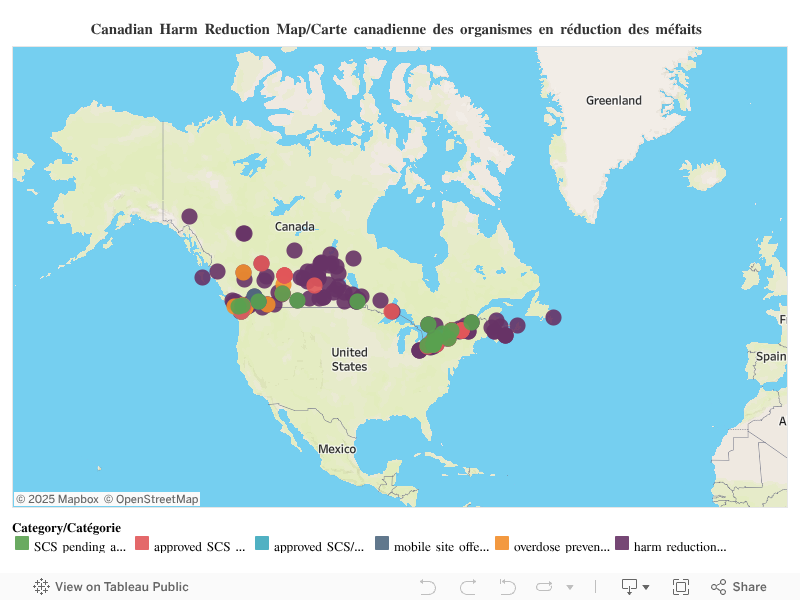
    L’Australie possède actuellement deux centres d’injection supervisée. L’un est géré par la Uniting Church, à Sydney, et l’autre est un établissement gouvernemental qui a vu le jour en 2018 dans ma ville natale, Melbourne. Donc, l’Australie est en retard dès qu’il est question de chiffres : la ville de Vancouver compte dans un seul pâté de bâtiments un plus grand nombre d’établissements de réduction des méfaits que tout le continent australien. Mais il y a d’autres choses à copier du Canada.

    (Interactive Map)


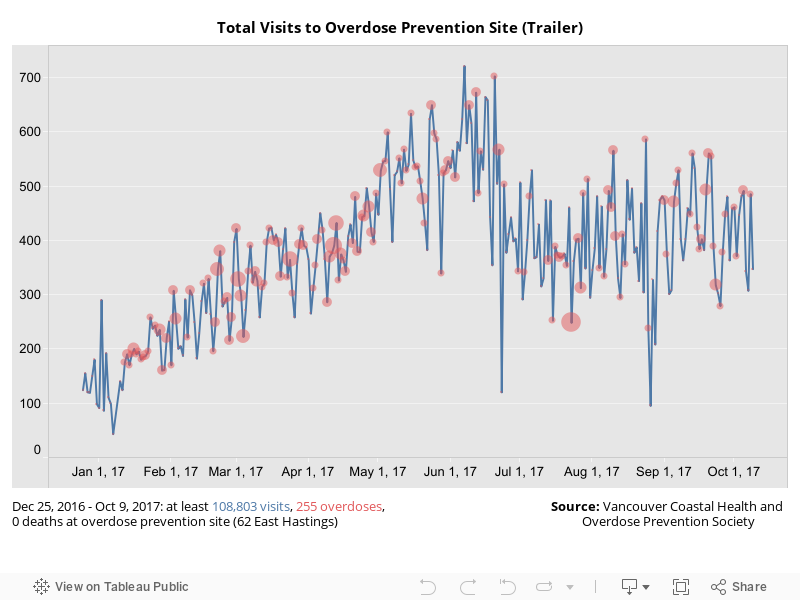
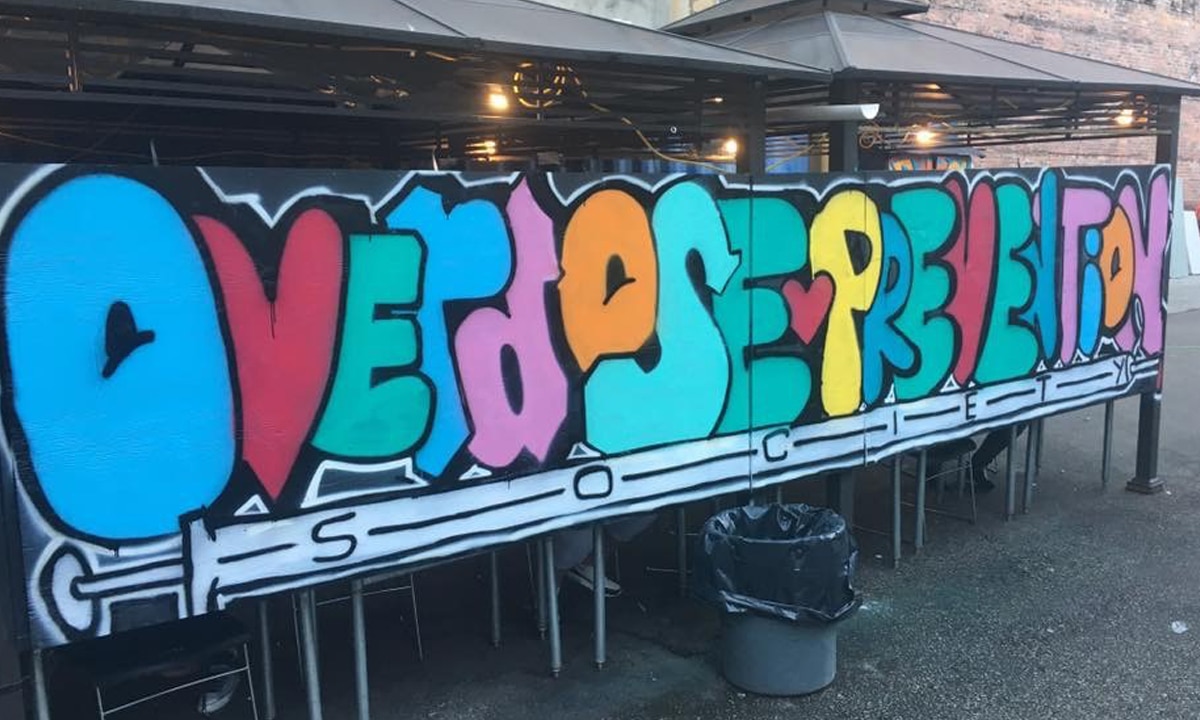
    J’effectue un stage à la Coalition canadienne des politiques sur les drogues (CCPD), depuis janvier, et après mes débuts j’ai saisi l’occasion de faire du bénévolat une fois par semaine à l’Overdose Prevention Society (OPS), qui gère un site à bas seuil en prévention des surdoses. Je voulais aider un organisme qui sauve des vies et mieux comprendre un point de vue de l’extérieur du monde universitaire, sur les politiques en matière de drogues. Ceci m’a vite rappelé l’importance des sites de prévention des surdoses : dès mon premier soir de travail, il y a eu trois surdoses en trois heures. Grâce à l’intervention des employé-es, des bénévoles et des services paramédicaux, les trois personnes ont survécu – trois vies sauvées. Ceci se produit tous les jours. Et le nombre de décès évités est beaucoup plus grand.

    (Interactive Graph)


    Mais il y a une autre différence entre les sites de prévention des surdoses (SPS) et les sites d’injection sécuritaire du pays d’où je viens. Un SPS est un programme dirigé par des pair-es; le personnel et les superviseur-es vivent dans le Downtown Eastside et plusieurs de ces personnes ont été ou sont actuellement des personnes qui consomment des substances ou qui ont une expérience de l’itinérance. Le fait de payer des membres de la communauté pour travailler dans le site leur procure une « sécurité » (une occasion de gagner de l’argent légalement) tout en offrant une oreille empathique aux participant-es, plutôt que d’avoir des personnes privilégiées qui leur parlent avec condescendance. En tant qu’observateur extérieur, c’est très inspirant de voir le respect que les superviseur-es et le personnel inspirent aux participant-es.

    (Photo credit: Rafal Gerszak, The Globe and Mail | Trey Helten, Manager of the Overdose Prevention Society)

    Vous ressentez un sentiment de réelle communauté en regardant simplement l’espace et en observant les interactions informelles entre les gens. Le tableau d’affichage situé à côté du bureau d’accueil est recouvert d’œuvres d’art et de poèmes créés par des membres de la communauté. Il y a des canapés, sur lesquels certaines personnes dorment, et une grande table dans l’espace « chill », où les gens peuvent prendre place en attendant qu’un isoloir se libère ou simplement pour discuter avec d’autres. Même les pseudonymes utilisés pour s’inscrire sont des expressions créatives et personnalisées, un mélange d’insinuations, de jeux de mots ou de mots ou phrases significatifs de leur vie. Tout cela se combine pour donner le sentiment que cet espace appartient aux participant-es.

    Le bénévolat au SPS fait partie des points forts de mon séjour à Vancouver. C’est un environnement vraiment positif, ce qui peut sembler étrange puisque ma première expérience a consisté à intervenir dans trois cas de surdose, mais je le pense vraiment. Le personnel est vraiment gentil et chaleureux, et c’est toujours génial quand j’ai la chance de discuter avec un-e participant-e au moment de son arrivée. En plus de me permettre de rencontrer des gens inspirants, le SPS me donne beaucoup d’espoir, tout comme il le fait pour les innombrables membres de la communauté qui utilisent ses services vitaux. Lorsqu’on travaille dans le domaine des politiques sur les drogues, il est facile de devenir pessimiste alors que des gouvernements, la police et des personnes mal informées mettent des obstacles sur la voie du progrès. Mais le SPS est un rappel du fait que, malgré ces obstacles, des gens font chaque jour une différence positive dans la crise des surdoses.

    (Photo credit: Rafal Gerszak, The Globe and Mail | Sarah Blyth, executive director at the Overdose Prevention Society)

    C’est ce qui manque à l’Australie. Outre le fait que les gens sont mal informés sur les sites d’injection sécuritaire, il nous manque une approche communautaire à la réduction des méfaits. L’Australie devrait se concentrer sur la création d’espaces qui sont non seulement physiquement sûrs, mais qui permettent aux gens de se rassembler, de bâtir une communauté et de trouver de l’espoir. Bref, l’Australie n’a pas seulement besoin de plus de sites d’injection sécuritaire : elle a besoin de plus d’espaces comme les SPS. Et c’est la vérité – comme on dit chez moi, « that’s fair dinkum ».

    Daniel Gates est stagiaire de recherche à la Coalition canadienne des politiques sur les drogues; il poursuit un double diplôme en droit et en relations internationales à la Monash University (Australie). L’Overdose Prevention Society accepte les dons de vêtements, de couvertures et de nourriture. Vous pouvez déposer vos dons au 58, rue Hastings Est, à Vancouver, entre 8 h et 21 h, 7 jours par semaine. Vous pouvez également leur faire un don d’argent en ligne ici.

  • For drug policy, the university of life imparts the most important lessons of all

    For drug policy, the university of life imparts the most important lessons of all

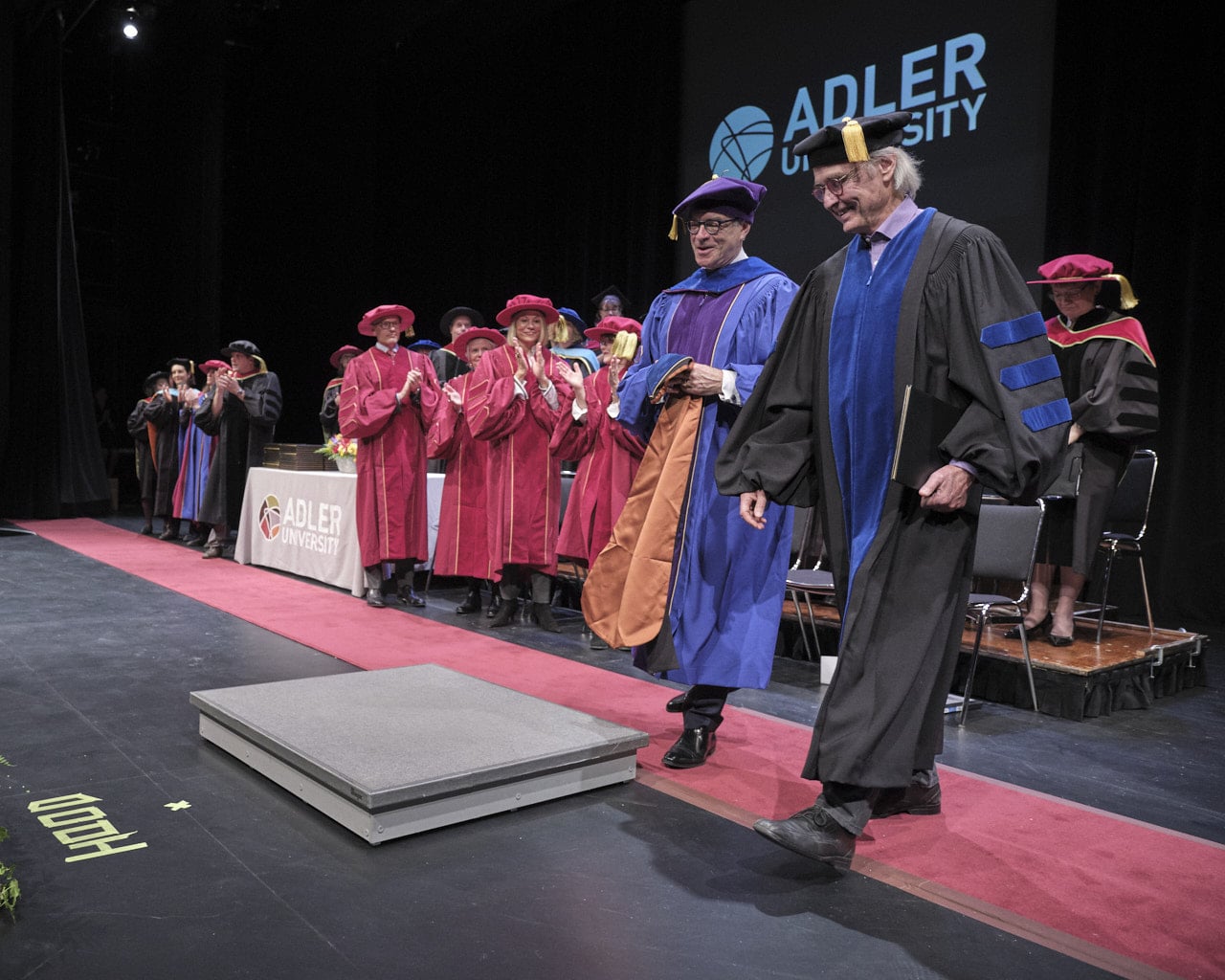
    The following commencement address was delivered on October 27, 2019 to the graduating class of Adler University’s Vancouver Class of 2019 by Donald MacPherson, executive director of the Canadian Drug Policy Coalition (Simon Fraser University), as he received an Honorary Doctorate in honor of his work to improve Canada’s approach to illegal drugs. 

    Thank you so much for this incredible honor. I am delighted to receive this honorary doctorate from Adler University. It means a lot to me and I am quite moved by your decision. 

    I do have a confession though: I am a lapsed Masters candidate—lapsed, indeed expired, like a parking meter. Out of time. They gave up on me. Yes, I received that letter informing me of my new status as a Masters candidate from the Ontario Institute for Studies in Education many years ago. After two years full-time and two years part-time—ok I’m slow, I guess so slow that I lapsed—my status expired within the academic system. The finality of it all! Don’t get me wrong. It was the best thing I’ve ever done to go down that Masters rabbit hole.  The people, the program, the opportunity to spend time going deep into how people learn, how change comes about, and to learn about social movements around the world was one of the best things that I have ever done! 

    Credit: Jerald Walliser | Donald MacPherson receiving an honourary doctorate from Adler University | October 2019

    But not finishing what I had started took me to some very dark places. I was so terribly hard on myself and coming down from the mountain without reaching the peak was difficult and devastating for some time. But coming down from the mountain is often the best decision lest the mountain engulf you. So, take care of yourselves and each other as you pursue your next steps. The work I know you are engaged with can be overwhelming, confusing, and challenging. 

    I had good excuses though for lapsing out on my Masters.  I remember my thesis advisor coming across me changing the diaper of our second child on my desk at the university—she is with us today just over there—and he admonished me: “Donald, no more babies till you get that thesis finished.” Shortly after that my wife and I packed up our two kids and headed to Vancouver—me always intending to complete the program from afar. In Vancouver, we had a third child and I began working at the Carnegie Community Centre, at the corner of Main and Hastings, in the middle of what was to become the largest open drug scene in Canada and the confluence of an HIV epidemic among injection drug users and Canada’s worst overdose death epidemic. I was carried away and soon to be on a mission. And remained lapsed! 

    I feel like I must only accept this honor on behalf of the many in the community and around the world who are working to change what are truly barbaric and simplistic historic approaches to the complex bio-psycho-social-cultural-developmental and often spiritual phenomenon: using psychoactive substances. So many have dedicated their lives to ending the devastating injustices of a global war on drugs, which really is a war on vulnerable, criminalized, and objectified people around the world. After all, those with privilege and power who use illegal drugs rarely meet the players in the criminal justice system. 

    The recognition by Adler that the work to change the way things are in this country, and indeed the world, in the area of drug policy means a lot to me and indeed tells me much about the depth of commitment to social change of this university. The issue of drug policy reform has NOT been taken up as a critical social justice issue by so many governments, institutions, and other organizations that claim to pride themselves on supporting social innovation and change. Our drug policies are deadly public policies, and so many institutions are complicit in maintaining them. 

    Credit: Jerald Walliser | Donald MacPherson giving commencement speech to Adler University’s Vancouver Class of 2019 | October 2019

    The commitment to community engagement by this university is a critical part of understanding the catastrophic failure of our current approaches. My education on drug policy issues came directly from the community here in Vancouver; [namely], from working on the corner of Main and Hastings for ten years, talking to people who used drugs and community members about the absurdity of our approach to people who use criminalized substances, which has played out with the same ineffective and harmful results over and over again. That is where I learned so much. 

    But what advice do I have for you from my many years as a lapsed Masters candidate and drug policy reform advocate? 

    Don’t look for jobs. Make them up! Look around and see what needs to be done and write the job description you want to have and shop it around. Sometimes it even exists out in the world, but you just haven’t found it. But knowing what it is helps you to navigate towards it. At other times your proposed job description will compel people to think about what is needed. I didn’t know I had these powers but the last three jobs I have had came from a real effort on my part to be clear on the context of the work that I wanted, as in the Carnegie Centre work, or to create opportunities to fill in a missing role in the orchestra of people working towards change, as in the City of Vancouver Four Pillars drug policy work and as in my current role as director of the Canadian Drug Policy Coalition, an organization I co-founded with a number of other Canadians committed to working together to reform Canada’s badly outdated drug policies. 

    Know that this is a critical time for social change. The structures and systems of the past have been found to be wanting in so many areas— economics, climate change, drug policy, housing to name a few—and there are real generational shifts and accelerations taking place that you will be a part of. Just ask dear Greta Thunberg who spoke so eloquently on Friday (October 25) about the need for climate action. Listen to her speech in Vancouver and learn from it.   

    Be bold. Think bold, take risks, but be strategic. It is past time for bold action on any number of issues we face every day here in Vancouver and Canada. 

    Credit: Jerald Walliser | Donald MacPherson giving commencement speech to Adler University’s Vancouver Class of 2019 | October 2019

    Canada’s response to the devastating loss of almost 13,000 people to illicit drug toxicity deaths in the past three years and three months has been pathetic and bound by blinkered thinking; stubborn adherence to policies that have failed miserably; and risk averse bureaucracies and politicians who refuse to even learn enough about the reality of this disaster, its impacts on families, and communities to be able to converse intelligently in public about the potential interventions that might work to stop this epidemic. The inability to even say the words that represent new and bold ideas in this recent election campaign is astounding. 

    Some have even weaponized ideas that are in fact at the leading edge of public health and social justice thinking. One politician accused the leader of a party of planning to legalize hard drugs if elected—something she implied would be tantamount to chaos in our communities and death for our young people! We already have chaos and death and transnational organized criminal organizations selling drugs to our youth. That is the result of our current approach. She had no idea that the recommendations from two of Canada’s largest health authorities were just that: create a legal regulated market with currently illegal drugs. The Chief Medical Health Officers for Vancouver Coastal Health, Patricia Daly, and Toronto Public Health, Eileen de Villa, have both called for a legal regulated supply of opioids for people who use them so that they stop being poisoned to death in numbers that are at historic levels.

    If our politicians have diverged so far from the evidence and advice of senior public health officials in the context of a national public health emergency, we have some major knowledge translation work to do!

    Words matter. Find those new ideas and say them loud and often. Write about them. Put them on the record in your conversations with your bosses, your peers, and your community and institutions of government. Put them on the record in public hearings and processes. This will breathe life into them. 

    Learn how to say things to leaders and others with power that make them uncomfortable. It’s an art to do this, but start getting better at it. If something looks like an absurd way to proceed, it probably is—so say it! 

    And of course, always challenge yourself. Don’t get too comfortable in your work. Don’t become part of an “industry” servicing these complex societal problems within institutional systems that so often resist real change. This is a time of reconciliation with Indigenous peoples, and a time when maintaining the status quo is killing people, a time when it is imperative to plan for and support engaging people with lived experience in all aspects of research and program development and implementation. Work from within if you are within. Institutional change is an important part of the way forward. There are thousands of willing people and many resources that can be harnessed to support radical change within in many community institutions in my opinion. 

    And lastly, go find your peeps in other places. Go to international conferences that engage people working on the frontlines of responding to critical health, social, and economic crises globally. I often get asked how I continue to do this work after so many years of pushing for change that never seems to be coming fast enough. My answer is that there is an amazing global community of people in every country working hard to overturn draconian, harmful, and misguided drug policies that are causing immense harm to communities around the world. When we all get together it is powerful and accelerates our learning. We gain perspective, knowledge, and come to know that we are not alone in what is a global movement for change. And of course, the parties are spectacular! 

    Best to you all at Adler in the coming months and years. May the road rise up to meet the class of 2019. I am so thankful that you are here! 

    Thank you very much. 

  • What a Liberal minority government means for drug policy in Canada

    What a Liberal minority government means for drug policy in Canada

    Back in 2005, it was a dark time for drug policy in Canada. A Conservative government under Stephen Harper was openly hostile towards harm reduction efforts and fought the provision of life-saving services at Insite, North America’s first supervised consumption site, all the way to the Supreme Court of Canada. They would eventually lose.

    In 2015, the federal Liberals under Justin Trudeau brought a wave of optimism—“sunny ways,” they called it. But since then, nearly 13,000 people in Canada have died from accidental drug poisoning and overdose, and the body count has cast a pall over this government’s first term in office during what is undoubtedly one of the worse human rights disasters of our time.

    Now, with a second mandate, the Liberals have another chance to do what is right: embrace evidence-based policies that will help end the deaths and human suffering crippling communities across Canada. But this time, there is one key difference that is cause for cautious optimism: with a minority government, the Liberals are now beholden to other parties for their power to govern, and at least two—the New Democratic and Green parties—have espoused progressive, bold ideas that the Liberals failed to embrace fully during their first term.

    Both have called for the decriminalization of drugs (for personal possession), a step Portugal took in 2001, which has shown positive health and social outcomes. The Greens went one step further and stated their support for a safe and regulated supply of currently-illegal drugs (“safe supply”). This would directly address the root cause of this human rights and public health crisis: a toxic drug supply that is the product of an illegal, unregulated market created through prohibition. Jagmeet Singh, leader of the federal NDP, stated he would have called a national public health emergency on the first day of his government if he had won. This is a declaration the Liberals failed to call in their five years of governing—one which would have mobilized additional resources, underscored the urgency of this crisis among Canadians, and helped remove the deep stigma around substance use entrenched in society. Now, hopefully pressured by the NDP, the Liberals have a second chance to make that declaration.

    With a minority government, we expect to hear strengthened calls for action and pressure from other political parties to act, and a renewed openness to exploring bold new initiatives led by people affected by substance use. That is because two parties in Ottawa have vocally called for change (decriminalization and legal regulation), and now one of them holds some degree of power to influence the trajectory of government. The NDP’s support is necessary to pass legislation, and keeping them on side is in the best interest of the governing Liberals.

    The run-up to an election is also never an ideal time to take political risks, but now the Liberals have no such obstacle. The willingness and openness to do what is right should be an easier political path for a party that has just started its second term. And now, dependent on the support of other parties to maintain their tenuous grasp on power, the Liberals can let these parties champion in Parliament the politically contentious yet desperately needed policy solution to end the drug poisoning crisis they’ve been reluctant to implement.

    (Interactive Map)

    To be fair, the federal Liberals have done a vastly better job than the Conservatives would have in the area of harm reduction. During their five years in power they approved at least 40 supervised consumption sites (including mobile sites) and streamlined the process to applying for and opening these life-saving facilities. They have also begun to explore safe supply initiatives; and in general taken steps in the right direction, but never enough or with large enough strides to prevent the catastrophic loss of life unfolding across Canada. It is now time to take those steps. They have both the time, and support to do so. We hope to see not only more supervised consumption sites, but more stable funding and resources for those already saving countless lives every day.

    With a new mandate and two parties supporting bold policy changes, Justin Trudeau has more latitude than ever to do what is right. It is precisely during times of crisis such as this where leadership is tested, and leadership can shine. We hope this will be one of those moments.

  • A record number of people have died from overdose in Ontario, but do politicians care enough to act?

    A record number of people have died from overdose in Ontario, but do politicians care enough to act?

    (Interactive Graph)

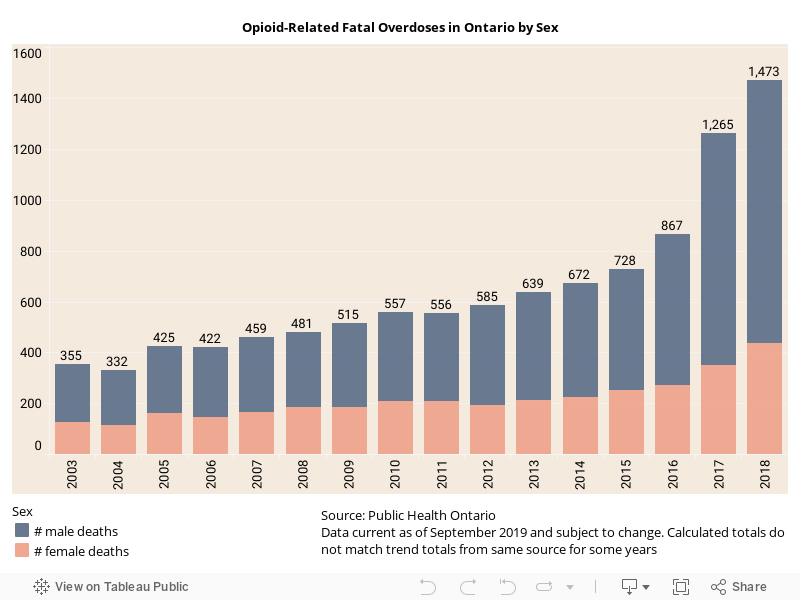
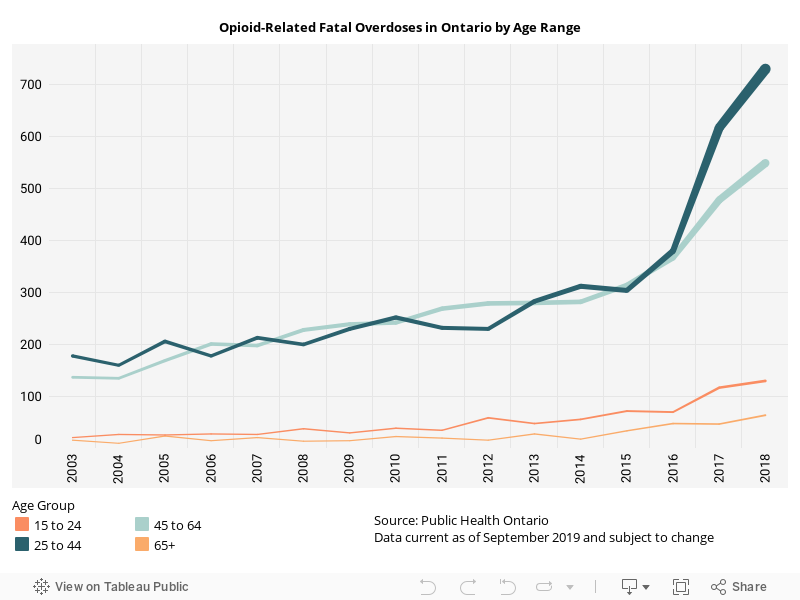
    The answer to the headline’s question seems to be a resounding “no.” How else could one explain the catastrophic loss of life unfolding in Canada’s largest province. Nearly 1,500 people died in Ontario last year from accidental drug poisoning—a record number representing a two hundred per cent increase from a decade ago.

    Behind each number was a human being—a friend or family member with aspirations and dreams in life cut short because of Canada’s fatally flawed drug policies. Prohibition is the root cause of this crisis, not the drugs people take.

    And as communities continue to hemorrhage human lives, politicians with the power to enact life-saving change are failing to take the necessary steps that are proportional to the scale of this crisis: decriminalization and the legal regulation of drugs. It is considered too “politically risky” to embrace evidence-backed solutions people on the frontlines have been advocating since the beginning when those solutions run afoul of our outdated moral views on substance use.

    And as people die, the federal government refuses to declare a national public health emergency for what Gillian Kolla, a harm reduction worker and public health researcher at the University of Toronto, called “the largest health crisis of our generation.”

    A white tent behind a park sign
    Temporary overdose prevention site in Toronto, Ontario; 2017

    At this critical point in Canada’s history, where complacency is fueling death, it has largely been volunteer networks of community activists and people who use drugs who have shown the courage to do what is needed by setting up overdose prevention sites to save lives. Without this leadership and conviction the death toll would have been exponentially worse, yet this community is continually fighting for resources and support from a provincial government that shows tepid interest in evidence-backed solutions. Premier Doug Ford himself has publicly stated his opposition to supervised consumption sites.

    In this hostile climate, exhausted by grief and the wretched routineness of hearing about yet another fatal overdose, the frontline harm reduction community continues to save lives. Who else is there to do the work when much of society and government have turned their back on you?

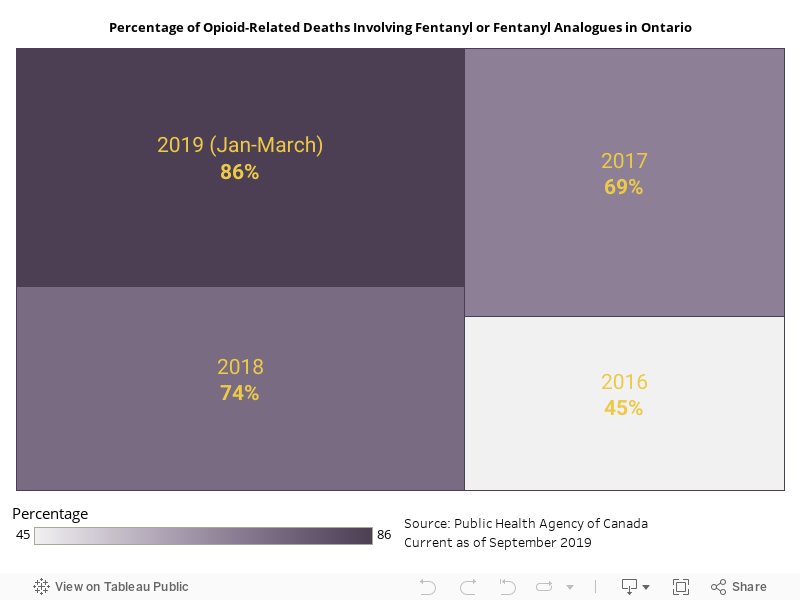
    Government investment in harm reduction services and a commitment to peer-led initiatives have failed grow proportional to the dire need. Data from the Public Health Agency of Canada reveals a sharp increase in the presence of fentanyl and fentanyl analogues in Ontario’s drug supply; and at last check, almost 90% of fatal drug poisoning/overdose cases involved these substances.

    (Interactive Graph)

    This is a direct result of our current drug policies that rely on prohibition and criminalization of people who use drugs—a system founded on racism and colonialism whose legacy continues to disproportionately affect people of colour and Indigenous communities today.

    “The largest health crisis of our generation.”

    ~Gillian Kolla, University of Toronto

    What is especially tragic is that the fatal overdoses most deeply affect those in the prime of their lives: Ontarians between the ages of 25 and 44. Across Canada, nearly 13,000 people have died from opioid-related causes in approximately three years. Last year, one person died every two hours, and for the first time in over four decades, life expectancy at birth has stopped rising because of overdose.

    (Interactive Graph)

    This is a crisis unlike any Ontario has seen before. The severe acute respiratory syndrome (SARS) public health emergency in 2003 killed 44 people, yet mobilized hundreds of thousands of dollars of funding and captured media headlines for weeks. It is clear that with respect to overdose and drug poisoning the lack of appropriate action is fueled by stigma and the biases society holds towards substance use and people who use drugs. History will remember unkindly the collective apathy of those who had the power to enact life-saving changes in this catastrophe yet didn’t. The current inaction is not about a lack of government resources, but rather a lack of will.

  • A Roadmap for Canada’s Drug Policy Future: The Peter Wall International Research Roundtable

    A Roadmap for Canada’s Drug Policy Future: The Peter Wall International Research Roundtable

    The first steps for systemic change are usually the hardest. But thanks to an international community of experts, including and especially those with lived expertise on the frontlines of Canada’s drug policy crisis, we’ve surmounted that hurdle.

    Last month, over 40 researchers, frontline advocates, policymakers, and other experts convened in Vancouver for the Peter Wall Institute for Advanced Studies International Research Roundtable. The end vision of our collaboration is at once simple and dauntingly complex: to realize legal regulation of drugs in Canada to stem the tide of fatalities crippling communities across the country and end the ongoing harms of prohibition. A regulated legal supply of drugs would mean a safer supply of drugs to those who use them, elimination of the toxic drug market controlled by organized crime groups, and financial resources to invest in people who need access to health, housing, and social services.

    DONATE to Support Drug Policy Reform


    A group of people are seated at circular tables arranged throughout a room. Two people, a man and a woman, are speaking and addressing the crowd at the front of the room.
    Peter Wall International Research Roundtable (April 2019)

    We began this task by tapping into the collective expertise and wisdom of the people in the room, workshopping ideas, brainstorming solutions, and refining tactics that will bring us to our end goal. It was just a start, but critical if we are to realize the systemic change Canada needs, where principles of human rights and public health that are informed by evidence guide policy decisions—not public sentiment and the moralization of behaviour.

    We as a collective began several important initiatives during our four days together:

    • developing a strategic road map—with concrete steps—for Canada to shift away from the policies of prohibition towards those that promote public health, human rights, and social inclusion based on the legal regulation of currently illegal substances;
    • outlining areas of further research to inform this strategy and identify regulatory models for the Canadian context;
    • outlining a knowledge translation strategy aimed at building momentum for policy change; and
    • identifying opportunities for international collaborations that will support our goals.
    Six people are standing in front of a banner posing for a picture.
    From left to right: Steve Rolles, Garth Mullins, Zara Snapp, Scott Bernstein, Suzanne Fraser, Akwasi Owusu-Bempah

    Many important advocates and international experts generously offered their insight, and their involvement was critical in shaping the contours of important discussions over the four days:


    • Zoë Dodd, a passionate long-time human rights and harm reduction leader in Toronto who has for years stood on the frontlines of a grassroots lifesaving efforts
    • Steve Rolles, an expert in substances regulation from the UK who advised the Canadian government on its cannabis regulatory framework
    • Dr. Debra Meness, a skilled physician trained in both Western and traditional Ojibwe medicine from the Kitigan Zibi Anishinaabeg First Nation
    • Paul Salembier, a legal mind skilled at crafting laws and precise legal language that could save lives

    There were many, many more, and we thank them all.

    A large crowd is sitting in a theatre listening to a man on stage.
    Audience members during Peter Wall International Research Roundtable public event (April 2019)

    The Research Roundtable culminated in a public forum at SFU Woodward’s, Systems Change: Envisioning a Canada Beyond Prohibition, where activist and award-winning broadcaster Garth Mullins guided our imaginations toward a world where prohibition was a thing of the past. What would that world look like? What would it take to get us there?

    A panel of men and women sit on stage in front of a large screen displaying a promo slide of the event. To the left, a man is standing, talking to the crowd.
    Peter Wall International Research Roundtable public event (April 2019)

    The event was recorded as an episode of the Crackdown podcast and featured Akwasi Owusu-Bempah (University of Toronto); Steve Rolles (Transform Drug Policy Foundation, UK); Zara Snapp (Instituto RIA, Mexico); and Suzanne Fraser (Curtin University, Australia).

    There are mountains of evidence that the ill-conceived “war on drugs” (prohibition) has had significant negative impacts on individuals, families and communities around the world. Far from making citizens safer, prohibition and a criminal justice approach has spawned an illegal market flush with toxic drugs that kills indiscriminately (over 10,000 in Canada in the less than three years).

    Prohibition has also needlessly criminalized and ruined the lives of vulnerable people who should have never seen the inside of a jail cell. It forces individuals to turn to more dangerous methods of consumption and dissuades those who want help from accessing it. In short: it has been an abysmal failure.

    DONATE to Fund the Next Phase of our Legal Regulation Model

    (Interactive Graph)

    But one area of hope was a more clearly-defined path toward the future: creating regulatory models for opioids, stimulants, sedatives and psychedelics. Tapping into the collective knowledge in the room, we workshopped models of how four drugs might be available to consumers in a post-prohibition world, considering questions such as:

    • who might have access to drugs;
    • how would they access them;
    • how much can they get, and
    • where can they consume them.

    This focus group was only the first of what we anticipate will be up to 20 focus groups across Canada to gather feedback about what Canadians would imagine a legal system would look like. With the online platform we are developing, we hope to engage an additional 40,000 Canadians in these decisions over the next two years!

    Scott Bernstein, Canadian Drug Policy Coalition Director of Policy (April 2019)

    Politicians with the power to enact life-saving changes to drug policy have long argued that the lack of viable models for legal regulation were a barrier to action. This project will describe a way forward to legal regulation of all drugs and no longer will they have an excuse for inaction.

    Peter Wall International Research Roundtable breakout session (April 2019)

    Over the four days, we explored three themes in service of our mission to advance the legal regulation of all drugs in Canada: the regulation of opioids as a response to the overdose crisis; the impact of criminal justice policies on people who use drugs; and the intersections of drug policy and the social determinants of health, including poverty, housing, stigma, income, access to healthcare.

    It was from these vantage points the wealth of knowledge in the room surfaced solutions and strategies to make our shared vision a reality. The Roundtable engendered many important discussions over the four days.

    It is now time to turn words into action.

    The Peter Wall International Research Roundtable was supported by the Peter Wall Institute for Advanced Studies, Community Action Initiative, BCCDC Foundation for Public Health, and SFU Woodward’s.

  • National Day of Action on the Overdose Crisis 2019

    National Day of Action on the Overdose Crisis 2019

    Three years after a public health emergency was called in British Columbia, the need and urgency to end the drug war is more pressing than it has ever been. The Public Health Agency of Canada recently released a grim statistic: more than ten thousand people in Canada have died from fatal overdose in under three years.

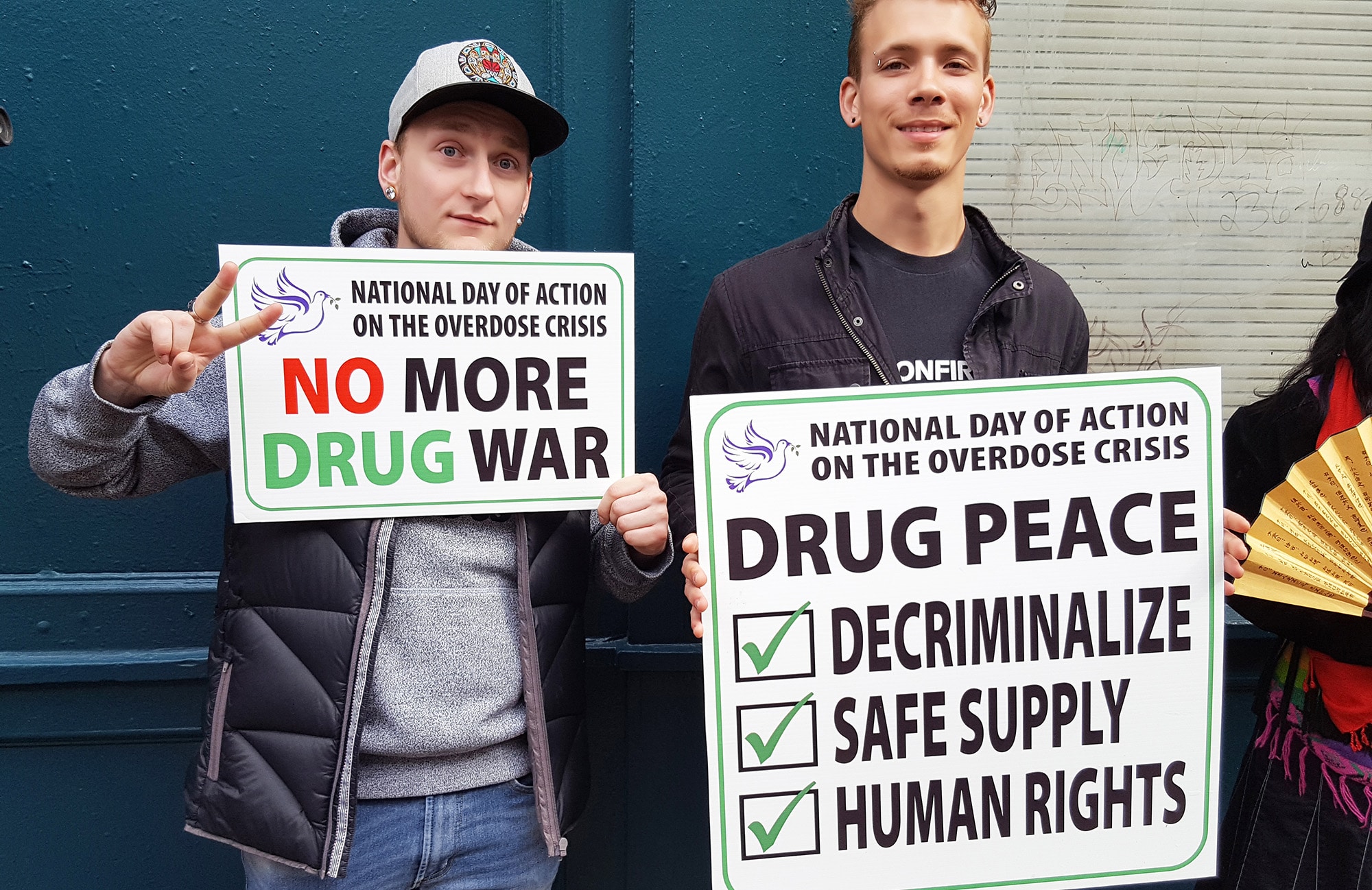
    Members of Moms Stop the Harm are all too familiar with the pain of loss. They came to the National Day of Action on the Overdose Crisis to remember their loved ones and fight for policy reform. At the heart of this crisis is a simple answer that remains painfully out of reach: a safe supply of drugs.

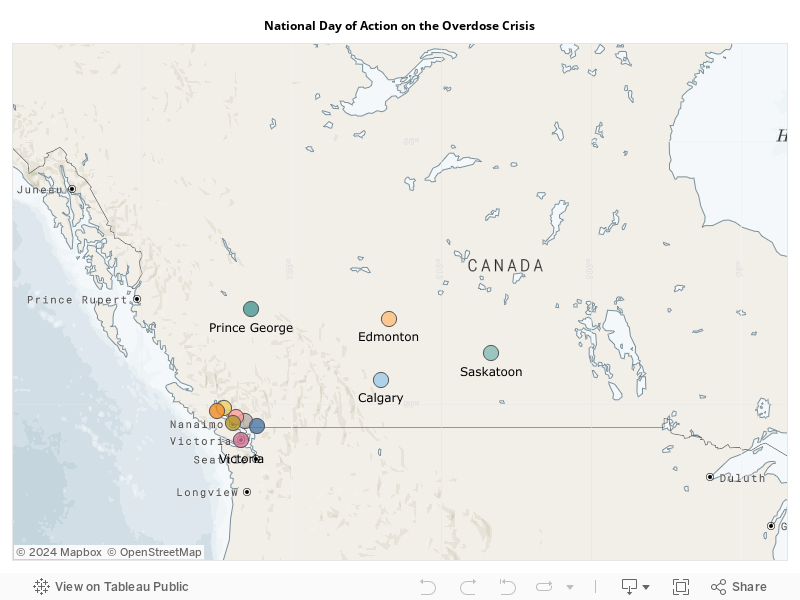
    Hundreds of people gathered at 10:30 a.m. outside of Insite, North America’s first sanctioned supervised injection site, for the National Day of Action. A band welcomed the crowd as people brought floats and carried signs.

    The tragedy touches all corners of society and attracted people from across the province. Similar events were happening in other provinces as well.

    (Interactive Map)

    The day was a national call for action. In 2017 alone, 4034 people died from fatal overdose across Canada.

    The drug war has been a catastrophic failure. Prohibition and criminalization have handed the global supply of drugs into the hands of highly organized, transnational criminal organizations where an insatiable drive for profit blinds them from the human toll. Drugs, now laced with fentanyl and its analogues, are ravaging communities with little regard for the safety of consumers.

    Canadian Drug Policy Coalition executive director Donald MacPherson addressed the media, echoing concerns around Canada’s fatal drug policies, which have created the current crisis, underscoring the need for a safe drug supply. The logic supporting this is so simple and strong, yet stigma born out of years of criminalization has shut down progress on this potentially powerful means to saving lives.

    After initial speeches outside of Insite by organizers and an opening performance by Culture Saves Lives, the massive crowd marched up Hastings Street, flanked by police and followed by media.

    They ended up at the steps of the Vancouver Art Gallery where members of the community and their supporters spoke about the devastating toll of overdose deaths and unrelenting courage of people affected by the structural violence of prohibition.

    “We’re out there saving lives every day. We got a lot of power as people in the Downtown Eastside.”

    Malcolm (Western Aboriginal Harm Reduction Society)

    Despite the pain and grief etched on so many faces, there were strands of hope that connected people during the rally. Frontline workers, peers, and people who use drugs who have shouldered this crisis and life-saving responses including overdose prevention sites, supervised consumption services, naloxone distribution, and simply being there for people when needed, renewed a commitment to fight for their right to safety, security, and dignity.

    The fight continues; and so will we.

  • STIMULUS 2018: DRUGS, POLICY AND PRACTICE IN CANADA

    STIMULUS 2018: DRUGS, POLICY AND PRACTICE IN CANADA

    From October 3 – 5, 2018, advocates and those inspired to create new approaches to drugs will be together in Edmonton, AB. This has been a CDPC vision for a long time. We are extremely excited to be a key organizer along with our partners.

    Register here

    The conference will include a variety of activities including, workshops, plenaries, panels, oral presentations, photography, poster presentations, spoken word, art showings, book readings, community tours, plus a film festival.

    The conference is filling up fast and our full program will be up on the website in a couple of days. There will be a wide variety of sessions including an abstract driven track – thanks to all who submitted incredibly interesting abstracts. There will be five plenary sessions, one looking at the state of drug policy in Canada today, a people with lived experience plenary, a plenary highlighting those who are pushing the boundaries of innovation, a discussion on the impact of cannabis regulation on the broader drug policy picture, and a ‘where to from here?’ session to close the conference.

    We’ll have a film festival running throughout the conference, a public event staged by MomsStopTheHarm will bring the community of Edmonton into the conference to engage an amazing group of family leaders from across the country and a coalition of drug checking organizations will be putting on a workshop on the latest efforts in Canada to implement these services.

    Stimulus 2018: Drugs, Policy and Practice in Canada
    October 3-5, 2018

    Shaw Conference Centre
    Edmonton, Alberta, Canada

    Join us as work to end the unprecedented overdose crisis and churning policy challenges in Canada. Register here

    Twitter and Facebook: @stimulus2018

    Conference organizing partners: Alberta’s harm reduction organizations, Alberta Advocates Who Educate and Advocate Responsibly (AAWEAR), Canadian Drug Policy Coalition, Canadian Association of People who Use Drugs (CAPUD), Canadian AIDS Society, Association Québécoise des Centres D’intervention en Dépendance (AQPSUD), Canadian HIV/AIDS Legal Network

    If you are an individual or business interested in sponsoring this event, please visit the sponsorship page. If you have questions regarding the conference, please direct them here.

  • INTÉRÊT GRANDISSANT À L’INTERNATIONAL POUR L’ANALYSE DE SUBSTANCES : POINTS FORTS DE HR17

    INTÉRÊT GRANDISSANT À L’INTERNATIONAL POUR L’ANALYSE DE SUBSTANCES : POINTS FORTS DE HR17

    Avec une attention internationale grandissante sur les impacts et le grand potentiel des services d’analyse de substances, un certain nombre d’évènements à la conférence de HR17 ont présenté des résultats de recherche ainsi que l’expérience sur le terrain de cette pratique novatrice de réduction des méfaits.

    Pour la première fois de son histoire, la 25e Conférence internationale sur la réduction des méfaits (HR17) tenue à Montréal, au Canada, a donné une place importante à l’analyse de substances dans leur programmation. L’analyse de substances est une intervention de réduction des méfaits qui fournit aux personnes qui consomment des drogues de synthèse des informations sur la pureté, la puissance et la composition de celles-ci. La hausse de l’intérêt international pour la mise en place de services de l’analyse de substances a permis à plusieurs personnes d’assister à un atelier parallèle, un panel et une conférence de presse. Ceux-ci ont abordé les répercussions de l’analyse de substances sur la santé et le bien-être des personnes qui utilisent de la drogue dans divers milieux ainsi que les multiples comportements liés à l’usage de drogue. À l’occasion d’une conférence sur la réduction des méfaits dans le contexte d’une crise de surdose d’opioïdes, l’analyse de substances sous forme de bandes de tests de fentanyl était offerte sur place dans la salle médicale de la conférence.

    Le 14 mai 2017 avant l’ouverture officielle de HR17, les membres d’un Groupe de travail national canadien sur l’analyse de substances ont organisé un « atelier sur les services d’analyse de substances ». Un évènement gratuit et ouvert à tous, l’atelier a été suivi par des intervenants locaux et internationaux venant d’une variété de disciplines. Certains ayant des connaissances très approfondies tandis que d’autres venaient pour apprendre davantage sur les principes fondamentaux de l’analyse de substances, les différents modèles d’évaluation de la recherche ainsi que de prestation de services actuellement utilisés dans le monde. Parmi les conférenciers figurent Helena Valente (Université de Porto, Portugal), Brun Gonzalez (Programa de Análisis de Sustancias, Mexico) et Mireia Ventura (Energy Control, Espagne). Les participants ont eu la chance d’avoir accès à différents points de vue des intervenants sur la raison d’être de l’analyse de substances, des méthodes efficaces réalisées sur le terrain et sur la façon de développer et de soutenir les programmes existants. Les intervenants ont convenu que l’analyse de substances offre beaucoup plus que les résultats des tests. Elle comprend l’éducation et le soutien concernant l’usage de drogues et rejoint surtout les personnes qui utilisent des drogues, mais n’interagissent pas avec les services de santé au sujet de leur consommation de drogue. Traditionnellement, la majorité des efforts de réduction des méfaits ont mis l’accent sur les personnes qui s’injectent des drogues. M. Gonzalez a qualifié l’analyse de substances comme étant essentiel au « spectre complet de la réduction des méfaits », une approche qui fournit des services appropriés à toutes les personnes qui consomment des substances psychoactives malgré où il se trouve dans leur trajectoire de consommation. Des preuves grandissantes suggèrent que la plupart des gens ont l’intention de changer leurs comportements si leurs résultats après une analyse de leurs drogues révèlent certains contenus inattendus ou inconnus qu’ils envisageaient de prendre (par exemple, ne pas prendre la substance, réduire leur dosage, ne pas l’utiliser seul, etc.). Mme Valente a souligné que, bien que les preuves empiriques indiquent que l’analyse de substances est une intervention utile, aller au-delà de la recherche sur l’intention du comportement constituera une étape importante dans l’établissement de données probantes pour soutenir l’extension de ces services. La Dre Ventura a souligné la valeur de l’analyse de substances dans le suivi des marchés de la drogue et permettrait aux décideurs et aux autorités sanitaires de disposer de données pour notamment répondre aux tendances dangereuses du terrain. De plus, elle note que son organisme, Energy Control, est responsable de la détection d’environ 65% des nouvelles substances psychoactives. Cette information est ensuite transmise à son gouvernement. Les participants ont quitté l’atelier dynamisés, ayant élargi leurs réseaux ainsi que leurs connaissances sur l’analyse de substances.

    Un panel en simultané intitulé «Drug Checking: From Dance Clubs to the Dark Web» a continué la discussion sur l’analyse de substances le 15 mai 2017 et a permis aux délégués de la conférence d’apprendre encore plus sur les évaluations de projets novateurs sur l’analyse de substances. Le Dr Mark Lysyshyn a présenté un exemple venant de Vancouver, l’une des villes du Canada confrontées à une crise importante de surdose d’opioïdes. Ils ont offert aux personnes fréquentant le site d’injection supervisé (SIS) Insite des bandes de tests afin qu’ils puissent vérifier si leurs substances contenaient du fentanyl. Les recherches du Dr Lysyshyn ont révélé que le fait de proposer l’analyse de substances pour le fentanyl permettait aux clients d’utiliser les résultats afin de réduire les risques, par exemple, en réduisant leur dose qui diminuerait ainsi leur risque de surdose. Ceci suggère que l’analyse de substances pourrait être une intervention utile pour prévenir les décès par surdose dans les sites d’injection supervisés. Les présentateurs ont également participé à une conférence de presse plus tôt dans la journée où les journalistes ont eu la possibilité de poser des questions ciblées sur leur recherche sur l’analyse de substances. Julie-Soleil Meeson, membre du Groupe de travail national canadien sur l’analyse de substances, a également fait des remarques lors de la conférence de presse sur les efforts déployés partout au Canada pour mettre en œuvre des projets concrets d’analyse de substances.

    Au-delà de la diffusion de l’information sur la recherche sur l’analyse de substances, HR17 était également un point de diffusion pour les bandes de tests de fentanyl, certains délégués de la conférence les ramenant à leurs organisations au Canada et à l’étranger. Bien qu’aucun résultat n’ait été recueilli durant la conférence, le bouche-à-oreille a indiqué qu’une quantité notable de résultats des bandes de tests était positive pour la présence de fentanyl.

    Nous espérons que l’accent mis sur l’analyse de substances à HR17 a non seulement créé un espace pour apprendre et pour partager, mais a également inspiré la poursuite des efforts visant à créer des stratégies de réduction des méfaits qui répondent aux divers besoins des personnes qui utilisent des drogues.

    Écrit par: Tara Marie Watson, Caleb Chepesiuk et Nazlee Maghsoudi et traduit par Julie-Soleil Meeson, tous membres du Groupe de travail national canadien sur l’analyse des substances.