Êtes-vous prêt(e) à aider ?
Soutenez des politiques sur les drogues basées sur la justice sociale, la compassion et les preuves. Inscrivez-vous à notre newsletter pour obtenir des mises à jour et découvrez comment vous pouvez agir avec nous.

Il faut reconnaître que 2020 a été un désastre. Il est possible d’exprimer le nombre de victimes en chiffres, mais on ne peut pas calculer l’impact et les dommages actuels. Amis, membres de la famille, partenaires et collègues ont perdu leurs vies, un grand nombre d’entre eux seuls, et la plupart, à cause des politiques sur les drogues échouées.
Nous sommes bien conscients des difficultés rencontrées au cours de l’année passée. Toutefois, il faut reconnaître les actes de courage, d’ingéniosité et de détermination qui ont contribué à faire évoluer la situation en matière de santé publique, de réduction des méfaits et de politique sur les drogues. Avec la pandémie de la COVID-19, le grand public a pu voir et comprendre les inégalités sanitaires profondes qui affectent la société canadienne. Ainsi, le discours public et la conscience du public se sont ouverts aux questions qui concernent la consommation supervisée, la décriminalisation des drogues et un approvisionnement sûr— comme ils ne l’avaient jamais fait auparavant.

En 2020, le nombre de surdoses a continué à augmenter, mais la pandémie de la COVID-19 a également privé les Canadiens de leurs soutiens réguliers. Elle a peut-être finalement permis à certaines personnes de trouver un abri, mais le risque de surdose a aussi augmenté, puisque ces personnes vivaient désormais seules.
En 2021, il y a beaucoup de travail à faire. Il y a encore des drogues toxiques dans le marché illégal. La stigmatisation et la discrimination repoussent encore les gens à l’ombre. Les gouvernements municipaux et provinciaux continuent de rejeter toute évidence de la réduction des méfaits et de ses effets positifs. De plus, il faut encore faire changer d’avis nos dirigeants élus et les convaincre de soutenir une politique progressiste sur les drogues.
En 2021, la Coalition canadienne des politiques sur les drogues se concentrera sur la décriminalisation et la réglementation légale des drogues afin de mettre fin aux méfaits du marché des drogues toxiques. Pour y parvenir, nous mènerons une série de grands projets, chacun ayant son propre public et son propre objectif, afin de pousser le Canada vers un avenir sans méfait lié à la politique sur les drogues.

Au premier plan de nos efforts se trouve le projet Aller de l’avant : mettre fin à la crise des surdoses. Ce projet national de dialogues sur la santé publique vise à aider les Canadiens à comprendre que nous poursuivons tous les mêmes objectifs : une société en sécurité et sans danger, ne souffrant pas des méfaits d’un approvisionnement toxique de drogues. À travers le Canada, ce projet permettra de rassembler les dirigeants des communautés afin de définir des valeurs et des objectifs communs, ainsi qu’une vision partagée du changement, permettant ainsi aux Canadiens de travailler ensemble à la recherche de solutions. Aller de l’avant vise à rapprocher les communautés et à établir ainsi une base solide de soutien public ce qui permettra de stimuler nos autres initiatives et efforts majeurs.
Le projet Broken Drug Policies est un projet similaire en Colombie-Britannique, qui vise à accélérer la réforme des politiques sur les drogues en s’appuyant sur les progrès déjà réalisés au niveau provincial. Broken Drug Policies aidera le public à comprendre comment les systèmes interconnectés (de soins de santé, de justice pénale, de services sociaux et d’emploi) affectent la consommation de substances. Ce projet soulignera également que les citoyens ont le pouvoir d’influencer ces systèmes afin de créer des changements.
Le Projet D’encadrement Actualisé examinera en profondeur comment un système légal de réglementation des drogues pourrait fonctionner. Seule un approvisionnement sûr et réglementé de drogues permettra de mettre fin à cette épidémie de décès par surdose, mais la première étape essentielle pour y parvenir est d’envisager un tel avenir. Dans le cadre de ce projet, la CCPD consultera les parties clés, notamment les consommateurs de drogues, afin de déterminer les facteurs qui contribueraient au succès d’un système légal de réglementation. Comment les gens auraient-ils accès à des drogues plus sécuritaires? Qui pourrait les obtenir? Quand et où pourraient-ils les obtenir? Tous ces points seront examinés afin de définir les grandes lignes d’un changement qui pourrait sauver des vies.

Imagine Safe Supply se joint à cet effort afin de définir le concept de l’approvisionnement sûr, mais aussi de préciser ce que cela signifie pour les personnes les plus directement touchées par les méfaits de notre politique actuelle sur les drogues : les consommateurs de drogues. Il est indispensable de comprendre en profondeur ce concept pour mettre en place une politique transformatrice.
Avec le déploiement des vaccins de la COVID-19, on est ravi de démarrer la planification de Stimulus 2022 : Drogues, politiques et pratiques au Canada. Cette conférence sur la réduction des méfaits est la plus grande du pays. Elle réunira des spécialistes de la réduction des méfaits, des personnes qui consomment des drogues, des responsables gouvernementaux, des leaders communautaires, des défenseurs et des universitaires et leur permettra de partager leurs connaissances ainsi que de renforcer la communauté pour mieux répondre à la crise des surdoses la plus grave de l’histoire du Canada.
En regardant vers 2021 avec espoir, il faut être unis, aujourd’hui plus que jamais, alors que nous progressons sur cette voie qui nous permettra de changer les politiques sur les drogues échouées et de sauver des vies. C’est pourquoi nous vous demandons de nous soutenir.

Vancouver, Coast Salish Territories – Today, the Mayor of Vancouver, supported by Vancouver Coastal Health, announced a motion that could lead to the decriminalization of simple drug possession in Vancouver. If the motion is passed, Vancouver City Council will request an exemption from the federal government — under the Controlled Drugs and Substances Act — that would protect all people in Vancouver from the enforcement of simple drug possession as a criminal offence. If implemented properly, this could eliminate all criminal consequences for possessing drugs for personal use. Decriminalization would be a critical move towards addressing record overdose deaths and rampant stigma against people who use drugs, reducing barriers to accessing services, and avoiding ineffective and unnecessary use of public funds.
In May, Pivot Legal Society, the Canadian Drug Policy Coalition (CDPC), and the HIV Legal Network called on the federal government to use this same exemption power to decriminalize simple drug possession. To date, more than 170 civil society organizations have endorsed this call. Following their October release of a report on drug decriminalization in Vancouver, Pivot launched an email petition urging Vancouver’s Mayor and Council to apply for a local exemption and take more meaningful action than simply calling on other levels of government to do the right thing. Last week, the HIV Legal Network released a primer for municipal and provincial governments on why and how to request an exemption from the federal Health Minister to effectively decriminalize simple drug possession.
READ MORE: The City of Vancouver announcement on decriminalization
Pivot, CDPC, and the HIV Legal Network welcome Vancouver’s leadership in seeking to curb an ineffective and deadly war on people who use drugs. We urge City Councillors to quickly and unequivocally adopt the proposed motion as presented, without proposing administrative sanctions or other amendments that would weaken its positive outcomes. In addition, we urge cities and provinces across the country to take similar action. Inaction will only lead to more preventable deaths and infections. Caitlin Shane, Drug Policy Staff Lawyer at Pivot Legal Society, says all municipalities and provinces must urgently tackle the drug policy crisis ravaging communities across the country: “Overdose fatalities have ballooned during COVID-19, far surpassing the number of fatalities caused by the coronavirus itself. Criminalizing people who use drugs is a public health disaster that causes untold harms to poor and racialized communities. Decriminalization is a key step towards reducing over-policing and rampant incarceration, and re-allocating funds to health, harm reduction, and safe supply efforts.”
READ MORE: Pivot Legal Society’s Report: Act Now! Decriminalizing Drugs in Vancouver
Scott Bernstein, Director of Policy at CDPC, calls the announcement bold and necessary:
“A growing chorus of civil society and rights organizations, the Canadian Association of Chiefs of Police, public health officers, and people who use drugs across the country have decried the failure of drug prohibition and significant harms caused by treating a public health crisis as a criminal law issue. We are pleased that Vancouver is heeding these calls.”
Sandra Ka Hon Chu, Director of Research and Advocacy at the HIV Legal Network, urges other cities, provinces, and territories to follow Vancouver’s lead and apply for a similar exemption:
“Policymakers have a responsibility to adopt measures that uphold the health and safety of people who use drugs in their respective jurisdictions. Requesting an exemption from the federal Minister of Health is simple and vital. Municipal and provincial actors can take concrete actions now to move from harmful, failed criminalization to evidence-based public health approaches that respect human rights.”
— 30 —
Media Contacts
Sozan Savehilaghi, Pivot Legal Society Email: [email protected] Direct: 604-255-9700 ext. 154
Peter Kim, Canadian Drug Policy Coalition Email: [email protected] Direct: 604-787-4043
Janet Butler-McPhee, HIV Legal Network Email: [email protected] Direct: 647-295-0861
About Pivot Legal Society
Pivot Legal Society is a leading Canadian human rights organization that uses the law to address the root causes of poverty and social exclusion in Canada. Pivot’s work includes challenging laws and policies that force people to the margins of society and keep them there. Since 2002 Pivot has won major victories for sex workers’ rights, police accountability, affordable housing, and health and drug policy. http://www.pivotlegal.org/our_story
About Canadian Drug Policy Coalition
The Canadian Drug Policy Coalition (CDPC) is a coalition of over 60 organizations and 7,000 individuals working to support the development of progressive drug policy grounded in science, guided by public health principles, and respectful of human rights. CDPC operates as a project within Simon Fraser University’s Faculty of Health Sciences. CDPC seeks to include people who use drugs and those harmed by the war on drugs in moving toward a healthier Canadian society free of stigma and social exclusion. https://drugpolicy.ca/
About HIV Legal Network
The HIV Legal Network, formerly the Canadian HIV/AIDS Legal Network, promotes the human rights of people living with, at risk of or affected by HIV or AIDS, in Canada and internationally, through research and analysis, litigation and other advocacy, public education and community mobilization. http://www.hivlegalnetwork.ca/
overdose deaths in ontario during covid overdose deaths in ontario during covid
Click HERE for more resources
« The rising rate of opioid-related deaths across Canada has been an ongoing and significant national public health crisis for over a decade.1 In just the first three months of 2020, there were 1,018 opioid- related deaths recorded in Canada, the vast majority of which (96%) were accidental.2 In the midst of this ongoing crisis, the emergence of the COVID-19 pandemic in Ontario led to the provincial declaration of a state of emergency on March 17, 2020.3 Within Ontario, the first wave of the pandemic was addressed with public health restrictions to mitigate the spread of COVID-19, which included physical distancing measures that resulted in reduced capacity for pharmacies, outpatient clinics, and harm reduction sites providing care to people who use drugs. Despite the intention to reduce the impact of COVID-19, there is concern that these measures could lead to unintended harms. »

Vancouver, C.-B. — Jamais auparavant dans l’histoire du Canada les collectivités n’ont été confrontées à deux catastrophes de santé publique simultanées, comme la crise des surdoses, nourrie par un approvisionnement en drogues toxiques, et la pandémie de coronavirus qui a perturbé les routines quotidiennes et la société. Au cœur de ces crises convergentes se trouvent les personnes qui font usage de substances, dont la situation s’est aggravée à tous les égards en raison de la COVID-19. Alors que les décès par surdose augmentent au pays, leur santé et leur sécurité sont plus précaires que jamais.
En réponse à cette période sans précédent, la Coalition canadienne des politiques sur les drogues de l’Université Simon Fraser, en partenariat avec le Morris J. Wosk Centre for Dialogue, lance Aller de l’avant : mettre fin à la crise des surdoses—18 dialogues sur la santé publique prévus aux quatre coins du Canada, au cours des deux prochaines années, afin d’identifier des solutions à la crise des surdoses dans le contexte de la COVID-19 et de s’approcher de leur mise en œuvre, par le développement de consensus et d’une compréhension commune.
« La pandémie de COVID-19 a exposé la crise des décès dus à la toxicité des drogues illégales comme étant un échec catastrophique de l’approche actuelle du Canada en matière de drogues. Les gouvernements ont déplacé des montagnes pour répondre à la pandémie de COVID-19, mais n’ont pas encore établi d’approche pancanadienne cohérente après plus de 16,000 décès par surdose au cours des quatre dernières années et demie », a signalé Donald MacPherson, directeur général de la Coalition canadienne des politiques sur les drogues.
« Nous espérons que la série de dialogues Aller de l’avant informera, engagera et inspirera les Canadiens et Canadiennes à s’impliquer davantage dans l’élaboration d’une nouvelle approche face aux drogues, fondée sur des principes de santé publique et sur les droits de la personne, et conduisant à l’amélioration de la santé et de la sécurité de tous et toutes, dans nos communautés. »
~Donald MacPherson, Coalition canadienne des politiques sur les drogues
Plus précisément, Aller de l’avant comporte trois objectifs principaux :
Les dialogues se dérouleront virtuellement (dialogues réservés aux participants invités seulement) et inviteront des leaders de diverses communautés, notamment des personnes qui font usage de substances, des leaders du secteur communautaire et du monde des affaires, des responsables gouvernementaux, des membres des Premières Nations, des responsables de la santé publique et des représentant-es des forces de l’ordre à partager leurs histoires sur la façon de répondre aux défis de la crise des surdoses en contexte de pandémie et d’instabilité mondiale. En partageant leurs perspectives et leurs histoires, les communautés pourront arriver à reconnaître les points communs qui nous unissent plutôt que les différences qui nous séparent. Cela pourrait jeter les bases d’un changement transformateur.
Aller de l’avant débutera le 7 octobre à Montréal, avec notre partenaire communautaire, l’Association des intervenants en dépendance du Québec (AIDQ).
« Montréal étant l’un des épicentres de la COVID-19 au Canada, la vie des personnes qui font usage de substances est plus que jamais en danger, alors que le nombre de surdoses est en forte hausse », a affirmé Sandhia Vadlamudy, directrice générale de l’Association des intervenants en dépendance du Québec.
« La tenue d’un tel dialogue à Montréal, et dans toute autre ville, nous aidera à comprendre nos points de vue respectifs et à collaborer à l’adoption de meilleures solutions à long terme afin que tout le monde y gagne. »
~Sandhia Vadlamudy, Association des intervenants en dépendance du Québec
Le projet Aller de l’avant est financé par Santé Canada par le biais du Programme sur l’usage et les dépendances aux substances.
Contact
Peter Kim
Strategic Communications Manager
Canadian Drug Policy Coalition
[email protected]
604-787-4043
Download PDF Version of Release
– 30 –
À propos Coalition canadienne des politiques sur les drogues
La Coalition canadienne des politiques sur les drogues (CCPD) représente 50 organismes et 4 000 individus qui s’efforcent de soutenir l’élaboration de politiques progressistes en matière de drogues, fondées sur la science, guidées par des principes de santé publique et respectueuses des droits de la personne. La CCPD fonctionne en tant que projet au sein de l’Université Simon Fraser, sous l’égide du Centre de recherche appliquée en santé mentale et en toxicomanie. Elle cherche à inclure les personnes qui consomment des drogues et qui ont subi des préjudices de la guerre aux drogues dans la quête d’une société canadienne plus saine, exempte de stigmatisation et d’exclusion sociale.
À propos Morris J. Wosk Centre for Dialogue
Le Morris J. Wosk Centre for Dialogue de l’Université Simon Fraser génère un impact réel en réponse aux défis les plus urgents de la société, par le dialogue et l’engagement à co-créer des solutions, à échanger des connaissances, à soutenir l’apprentissage communautaire engagé et à renforcer les capacités des autres dans la connaissance et la pratique du dialogue. Nous nous efforçons de rassembler diverses voix, histoires, perspectives et expériences, dans le but d’élever la compréhension des autres et de nous-mêmes. Ce processus conversationnel se veut un outil pour nous aider à élucider des problèmes complexes auxquels personne ne détient la réponse.
À propos Association des intervenants en dépendance du Québec
L’AIDQ est un organisme à but non lucratif qui regroupe les intervenants de tous les milieux intéressés au domaine des dépendances au Québec, soit les milieux publics, communautaires et privés, ceux de la santé publique et des services sociaux, de l’éducation, ainsi que les milieux universitaire, de la recherche, de la sécurité publique et du monde du travail. L’AIDQ a pour mission de valoriser et de soutenir l’intervention dans la prévention, la réduction des méfaits, le traitement et la réinsertion sociale des personnes aux prises avec une dépendance et celles à risque de le devenir, par le développement des compétences, l’information, la concertation et la mise en commun des expertises.

ARCHES closes on international overdose awareness day, ARCHES closes on international overdose awareness day
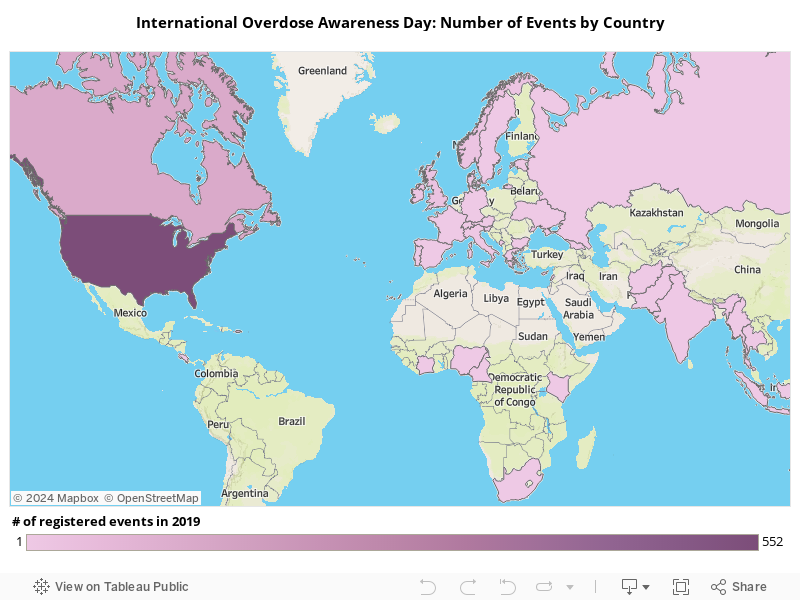
International Overdose Awareness Day began in Australia in 2001 as a bold and public call to combat stigma around drug use, honour the lives that have been lost to overdose, and educate society on the life-saving value of harm reduction. It has grown every year, with a record 874 global events and participation from 39 countries, including Canada, in 2019. These are all encouraging signs that society is waking up to (and communities are mobilizing around) the truth that drug prohibition has failed and a new human rights- and public health-based approach to drug policy is desperately needed.
(Interactive)
But it’s hard to sense this shift from the actions of the Alberta government, which recently cut funding to Canada’s busiest supervised consumption site, ARCHES, which forced its closure. The doors close today, International Overdose Awareness Day—a time when we should be moving towards progress through compassionate, evidence-based drug policy by embracing more harm reduction, not less. Instead, Alberta, in darkly ironic fashion, is sliding backwards—a regress that erodes the public health and safety of one of Canada’s hardest hit provinces when it comes to overdoses.
Since opening in March of 2018, ARCHES, located in Lethbridge, Alberta, saw an average 663 visits per day. “That’s more daily visits than the busiest sites in Toronto—a city of more than two million, and Vancouver—where Canada’s first supervised consumption site was founded in 2003,” according to the Star Edmonton. The number of lives saved and positive impact to the greater community is immeasurable, so it is both baffling and dangerous to shut the doors on such a vital health service. Research from chief coroners across Canada makes it clear that using drugs alone is extremely risky at a time when the drug market is so toxic. People will likely die without the supervised consumption services ARCHES provides and the supportive environment it affords.
In the first quarter of 2020, there were 127 fatal overdoses related to fentanyl in Alberta, an increase from the previous quarter where there were 105. 85% of the deaths this year occurred in larger urban centres like Edmonton, Calgary, Red Deer, and yes, Lethbridge1.
In such a climate of death and human suffering, governments should be expanding harm reduction, not scaling it back. Alberta’s provincial government decided to pull funding after a financial audit found suspected financial irregularities around spending and expenses. But this is no reason to punish the marginalized clients who use the facility daily—whose very lives depend on its services and the community of care that has formed around them.
TAKE ACTION: Sign the open letter to restore funding to ARCHES
The Government of Alberta announced a mobile site will replace the services lost with the closure of ARCHES. But advocates warn that this can in no way replace the scale of services and community building a site like ARCHES provided. They’ve done the math, and the numbers are a cause for deep concern.
Let’s do some math! @archesleth SCS sees 800 people a day.
— Overdose War Room (@ODWarRoom) August 19, 2020
They have 13 booths for injecting, snorting or consuming drugs from the unregulated market.
The 2 inhalation spaces (6-8 people total) have been closed because of #Covid19AB so lets put that aside for the moment. 1/4 pic.twitter.com/yufJ4eoNkW
Across Canada fatal overdoses are climbing, fuelled by the stress and public health strictures of COVID-19. In July, deaths hit a grim milestone in Toronto, claiming more lives than the coronavirus. Saskatchewan recorded more fatal overdoses in the first eight months of this year than all of 2018, “meaning the province may have set a new record for the number of people who have lost their lives to overdoses. The Saskatchewan Coroners Service says there were 40 confirmed and 139 suspected drug toxicity deaths between Jan. 1 and Aug. 6, for a total of 179,” writes Zak Vescera of the Chronicle Herald.

And in British Columbia, two consecutive months of record-breaking overdose deaths have both shattered and enraged the spirits of affected communities. This May there were 171 fatal overdoses; in June, 177; and in July, 175. Across Canada, grief, fatigue, and rage surface in equal measure as frontline communities fighting two public health crises (COVID-19 and overdoses) also battle hostile local governments threatening their ability to save lives.
READ MORE: COVID-19 harm reduction resources
Now more than ever, International Overdose Awareness Day is needed to affirm the value of harm reduction and the policy changes needed to stem the tide of fatal overdoses: decriminalization and a safe supply of drugs. At a federal level, there is slow and incremental progress. It is not nearly good enough, but better than the backwards direction we’re seeing from a provincial government that seems driven by ideology and out of touch with the science and evidence supporting harm reduction.
Though drug policy is a federal matter, provincial governments have the power to alleviate some of the harm created by prohibition—which is fuelling overdose death—by, for example, deprioritizing police enforcement of certain drug laws (de facto decriminalization) and choosing where to spend money. Their funding decisions can also create serious harm for affected communities, as will likely be the case in Lethbridge.
[1] https://open.alberta.ca/dataset/f4b74c38-88cb-41ed-aa6f-32db93c7c391/resource/45e03e51-0fa8-49f8-97aa-06b527f7f42c/download/health-alberta-opioid-response-surveillance-report-2020-q1.pdf

Inscrivez-vous dans le formulaire ci-dessous pour ajouter votre nom à la lettre ouverte.

viral and bacterial infections and covid-19, viral and bacterial infections and covid-19
Click HERE for more resources
« Without adequate access to harm reduction interventions, PWUD are potentially at greater risk of acquiring blood-borne viruses (BBVs) and severe bacterial infections. Individual, social, and structural determinants of health (e.g., unstable housing, incarceration, poverty, drug criminalization) associated with increased risk for bacterial infections and BBVs will likely place PWUD at greater risk of COVID-19 disease and death. »

impact of covid-19 on people who use drugs, impact of covid-19 on people who use drugs
Click HERE for more resources
« All respondents discussed the interconnected effects COVID-19 has had on their lives. Pandemic response measures such as physical distancing and social isolation have disrupted the healthcare and support services that people who use or have used substances and their communities typically rely on. As a result, best practices that existed before the pandemic to promote well-being, such as not using substances alone and having peer responders for accidental overdose, were now seen as putting people at risk. These effects of COVID-19 have exposed or aggravated health vulnerabilities for those who use substances, but have also encouraged creative, resilient responses to care for their well-being during this time. »
Source: Canadian Centre on Substance Use