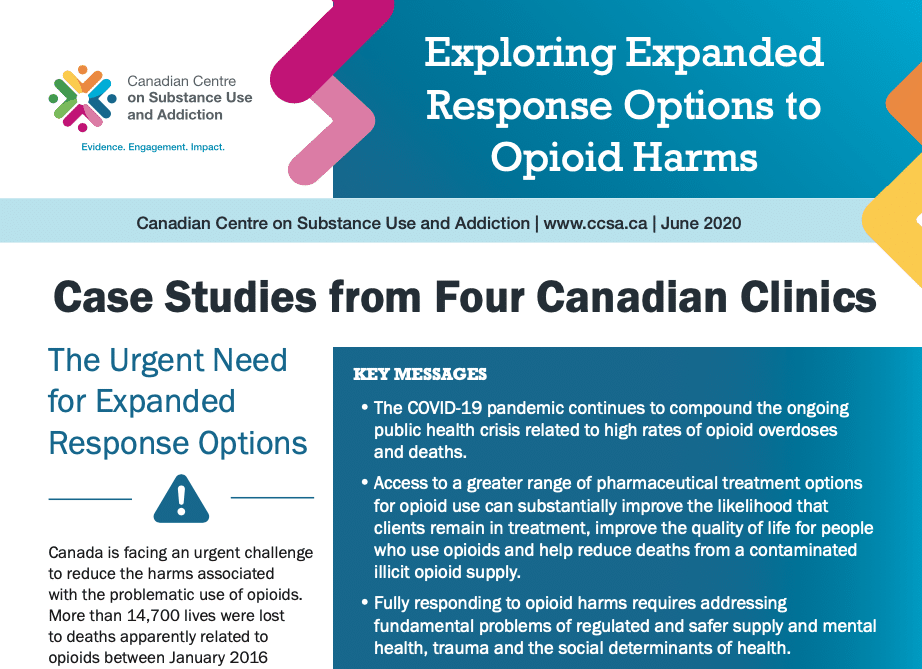
« Canada is facing an urgent challenge to reduce the harms associated with the problematic use of opioids. More than 14,700 lives were lost to deaths apparently related to opioids between January 2016 and September 2019. During that same period, there were 19,490 hospitalizations for poisoning related opioid to opioids (Special Advisory Committee on the Epidemic of Opioid Overdoses, 2019). The COVID-19 pandemic compounds this ongoing public health crisis. There is a heightened need to reduce avoidable pressures on healthcare systems and support people who use opioids who may be at increased risk or unable to self-isolate during the pandemic. »
Soutenez des politiques sur les drogues basées sur la justice sociale, la compassion et les preuves. Inscrivez-vous à notre newsletter pour obtenir des mises à jour et découvrez comment vous pouvez agir avec nous.
« This guidance document for community service providers was prepared by the Alberta Health Services (AHS) Harm Reduction Services Team in partnership with the Alberta Community Council on HIV (ACCH). It covers information on how community services may alter harm reduction practices during the COVID-19 pandemic with the goal of reducing the spread of COVID-19. This information can also be used by service providers to communicate information and education on reducing spread of COVID-19 while maintaining health and wellness along the spectrum of substance use. »
Êtes-vous prêt(e) à aider ?
Soutenez des politiques sur les drogues basées sur la justice sociale, la compassion et les preuves. Inscrivez-vous à notre newsletter pour obtenir des mises à jour et découvrez comment vous pouvez agir avec nous.
With global protests igniting around the killing of George Floyd in Minneapolis, calls to defund police are growing louder. For some, this may seem like an extreme proposition, but as the history of drug policy in Canada and globally has shown, the criminalization of drugs—and millions poured into police budgets to enforce associated laws—have fueled some of the greatest harms to society.
This interview by Black Lives Matter Toronto co-founder, Sandy Hudson, articulates the clear logic around defunding police and what that means: reallocated funds more intelligently and eliminating from police control those roles they are now performing that cause serious community-level harm, and getting other more capable organizations to carry out those activities. Social development is key to creating healthier and safer communities. We believe it would make society safer by reallocating resources into vital social programs—like housing and employment services—that would do a better job in creating safety for everyone.
Êtes-vous prêt(e) à aider ?
Soutenez des politiques sur les drogues basées sur la justice sociale, la compassion et les preuves. Inscrivez-vous à notre newsletter pour obtenir des mises à jour et découvrez comment vous pouvez agir avec nous.
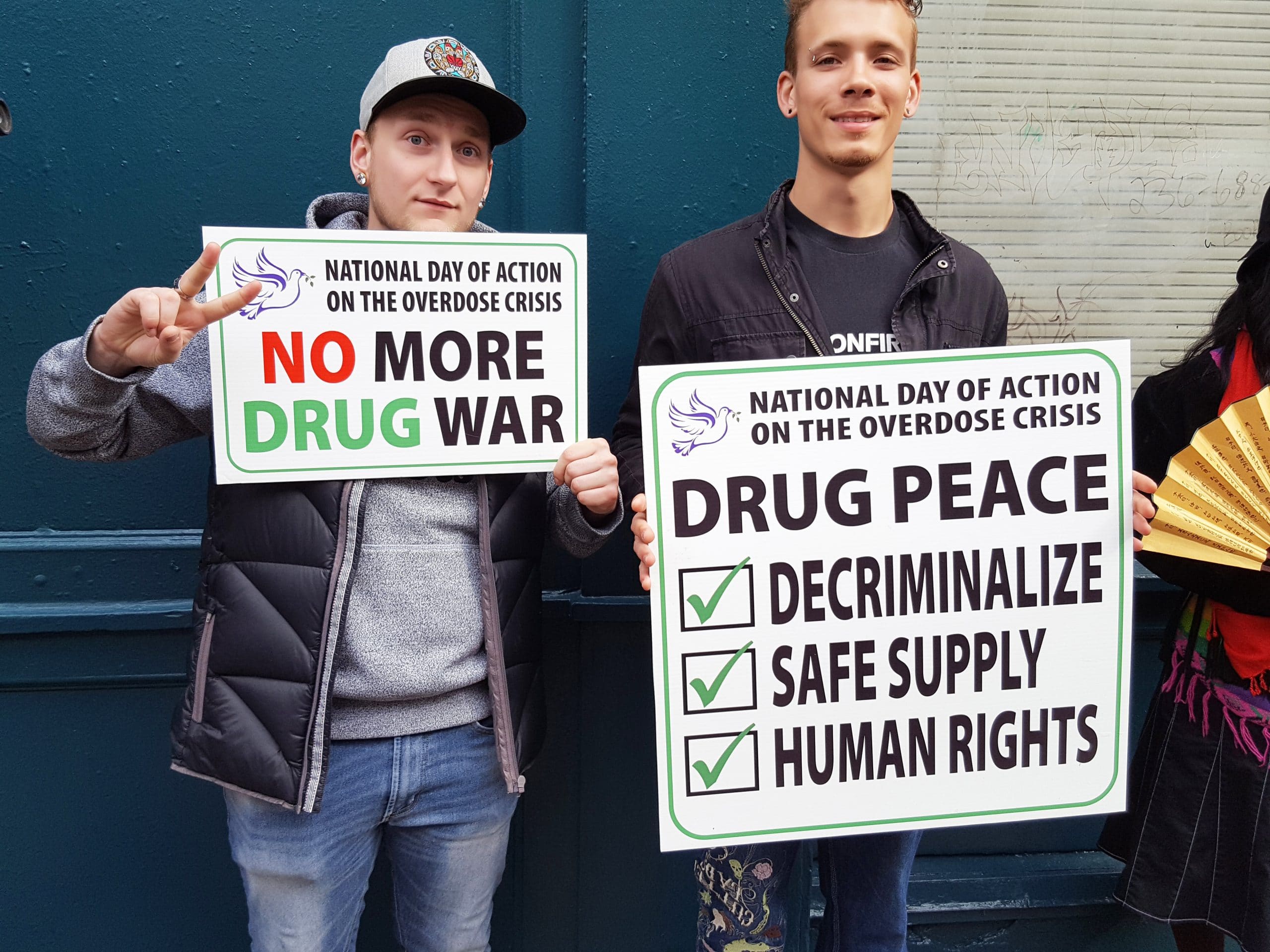
The significant resources pouring into enforcing inhumane drug laws that criminalize the possession of controlled substances for personal use is one of many areas in the purview of police that should be defunded. There is a mountain of evidence showing that criminalizing people who use drugs is extremely harmful. Currently amidst the COVID-19 pandemic, the criminalization of drugs forces people to consume substances in isolation and engage in survival strategies that increase their risk of fatal overdose.
The millions we spend on criminalizing drug use could instead be funnelled into harm reduction and drug treatment programs that have been proven to save lives and build community, rather than fuel harm. Police themselves have said that they “cannot arrest their way out of the overdose crisis.” The cost in taxpayer dollars, but more importantly human lives, could be reduced by moving away from policing in this area as has been done in other countries.
(Photo credit: Peter Kim | National Day of Action on the Overdose Crisis | 2018)
BC’s chief medical health officer, Dr. Bonnie Henry, recently lauded for her pandemic response by the New York Times, has called for the decriminalization of drugs. And this policy shift has been echoed by other leading health experts across Canada. This same shrinking of scope and defunding of budgets is possible in other areas of policing where public health and safety are being adversely impacted by police involvement, such as mental health calls.
The amazing efforts and courage of Black-led advocacy groups have pushed this issue to the forefront of our collective consciousness at a time when the world is on the cusp of transformative change. In addition to amplifying the messages and calls for change of the #BlackLivesMatter movement, we can play an important role by supporting its efforts on the ground to ensure this pivotal moment in history bends towards justice.
Please consider donating to Black Lives Matter Toronto or the Black Legal Action Centre to ensure the movement for change continues.
Soutenez des politiques sur les drogues basées sur la justice sociale, la compassion et les preuves. Inscrivez-vous à notre newsletter pour obtenir des mises à jour et découvrez comment vous pouvez agir avec nous.
« This document is one of a series of six national guidance documents, rapidly developed by the CRISM network at the request of the Government of Canada. Collectively, the six documents address urgent needs of people who use substances, service providers, and decision makers in relation to the COVID-19 pandemic. The urgent nature of this work required rapid development and dissemination of this guidance. This, and the continuing evolution of the knowledge base regarding COVID-19, precluded CRISM from conducting a comprehensive review of the relevant literature. However, when available, scientific evidence is cited in support of the expert advice offered herein. »
Soutenez des politiques sur les drogues basées sur la justice sociale, la compassion et les preuves. Inscrivez-vous à notre newsletter pour obtenir des mises à jour et découvrez comment vous pouvez agir avec nous.
« This alert is based on information collected by the Canadian Community Epidemiology Network on Drug Use (CCENDU) between March 31 and May 10, 2020. It focuses on the impact of containment efforts related to COVID-19 on the illegal drug supply and access to services, and the associated health harms. Although there were limited data sensitive to these changes collected systematically, there was a convergence of reports from multiple sources in several regions across Canada, so that CCSA and CCENDU judged it better to share imperfect, timely information than no information. »
Soutenez des politiques sur les drogues basées sur la justice sociale, la compassion et les preuves. Inscrivez-vous à notre newsletter pour obtenir des mises à jour et découvrez comment vous pouvez agir avec nous.
« The COVID-19 pandemic has further exposed stark health inequities and the many structural factors that increase people’s vulnerability to the virus. People who use drugs, and particularly those who are homeless or precariously housed, are more likely to have chronic health issues that will increase their risk of experiencing severe complications should they contract COVID-19. To minimize the risk of transmission and other drug-related health risks, public health officials have urged people who use drugs to continue using harm reduction services, including overdose prevention sites and supervised consumption sites.
Unfortunately, COVID-19 has forced many harm reduction sites across the country to close or reduce the scope of their services, and people who use drugs are navigating new gaps not only in the drug supply chain but also in the resources and supports they rely on, increasing their risk of HIV and hepatitis C (HCV) infection, overdose, and other harms to their health. Moreover, it is well established that continued police enforcement of simple drug possession laws and the attendant fear of arrest pushes people who use drugs to do so in isolation and compromises their ability to take critical safety precautions. This includes by deterring access to harm reduction services, to which people who use drugs cannot legally travel while in possession of the substances they wish to use there. »
Êtes-vous prêt(e) à aider ?
Soutenez des politiques sur les drogues basées sur la justice sociale, la compassion et les preuves. Inscrivez-vous à notre newsletter pour obtenir des mises à jour et découvrez comment vous pouvez agir avec nous.
« Many countries continue to incarcerate and criminalise people for possession or use of drugs, with criminalisation alone undermining employment, education and housing opportunities. In addition, many people who use drugs are often subject to human rights abuses by the state in jurisdictions which continue to criminalise them. The continued targeting of this group has not only a negative impact on the individuals in question, but their families and broader society as a whole.
The aim of this report is to inform the public and policymakers alike on the impact of decriminalising drug possession offences, showing that decriminalisation does not lead to increased rates of use while equally demonstrating that law enforcement led approaches have little impact on this metric. Rather, the decision to end the criminalisation of people who use drugs can negate the harms highlighted above when done effectively and produce positive social, health and economic outcomes, not just for the individual, but for society as a whole. »
Soutenez des politiques sur les drogues basées sur la justice sociale, la compassion et les preuves. Inscrivez-vous à notre newsletter pour obtenir des mises à jour et découvrez comment vous pouvez agir avec nous.
« The COVID-19 crisis is taking its toll on the global economy, public health and our way of life. The virus has now infected more than 3.6 million people worldwide, killed 250,000 and led Governments to take drastic measures to limit the spread of coronavirus disease 2019. Roughly half of the global population is living under mobility restrictions, international border crossings have been closed and economic activity has declined drastically, as many countries have opted for the closure of non- essential businesses.
Drug trafficking relies heavily on legal trade to camouflage its activities and on individuals being able to distribute drugs to consumers. The measures implemented by Governments to counter the COVID- 19 pandemic have thus inevitably affected all aspects of the illegal drug markets, from the production and trafficking of drugs to their consumption. »
Soutenez des politiques sur les drogues basées sur la justice sociale, la compassion et les preuves. Inscrivez-vous à notre newsletter pour obtenir des mises à jour et découvrez comment vous pouvez agir avec nous.