
“Your ministry and the Province bear responsibility to ensure the health and safety of people who use drugs. People continue to die as a result of a toxic drug supply, and the crisis continues to be exacerbated by the criminal enforcement of low-level drug offences, such as possession for personal use, and lagging health services and supports.”
Author: Canadian Drug Policy Coalition
-

A Roadmap for Canada’s Drug Policy Future: The Peter Wall International Research Roundtable
The first steps for systemic change are usually the hardest. But thanks to an international community of experts, including and especially those with lived expertise on the frontlines of Canada’s drug policy crisis, we’ve surmounted that hurdle.
Last month, over 40 researchers, frontline advocates, policymakers, and other experts convened in Vancouver for the Peter Wall Institute for Advanced Studies International Research Roundtable. The end vision of our collaboration is at once simple and dauntingly complex: to realize legal regulation of drugs in Canada to stem the tide of fatalities crippling communities across the country and end the ongoing harms of prohibition. A regulated legal supply of drugs would mean a safer supply of drugs to those who use them, elimination of the toxic drug market controlled by organized crime groups, and financial resources to invest in people who need access to health, housing, and social services.
DONATE to Support Drug Policy Reform

Peter Wall International Research Roundtable (April 2019) We began this task by tapping into the collective expertise and wisdom of the people in the room, workshopping ideas, brainstorming solutions, and refining tactics that will bring us to our end goal. It was just a start, but critical if we are to realize the systemic change Canada needs, where principles of human rights and public health that are informed by evidence guide policy decisions—not public sentiment and the moralization of behaviour.
We as a collective began several important initiatives during our four days together:
- developing a strategic road map—with concrete steps—for Canada to shift away from the policies of prohibition towards those that promote public health, human rights, and social inclusion based on the legal regulation of currently illegal substances;
- outlining areas of further research to inform this strategy and identify regulatory models for the Canadian context;
- outlining a knowledge translation strategy aimed at building momentum for policy change; and
- identifying opportunities for international collaborations that will support our goals.

From left to right: Steve Rolles, Garth Mullins, Zara Snapp, Scott Bernstein, Suzanne Fraser, Akwasi Owusu-Bempah Many important advocates and international experts generously offered their insight, and their involvement was critical in shaping the contours of important discussions over the four days:
- Zoë Dodd, a passionate long-time human rights and harm reduction leader in Toronto who has for years stood on the frontlines of a grassroots lifesaving efforts
- Steve Rolles, an expert in substances regulation from the UK who advised the Canadian government on its cannabis regulatory framework
- Dr. Debra Meness, a skilled physician trained in both Western and traditional Ojibwe medicine from the Kitigan Zibi Anishinaabeg First Nation
- Paul Salembier, a legal mind skilled at crafting laws and precise legal language that could save lives
There were many, many more, and we thank them all.

Audience members during Peter Wall International Research Roundtable public event (April 2019) The Research Roundtable culminated in a public forum at SFU Woodward’s, Systems Change: Envisioning a Canada Beyond Prohibition, where activist and award-winning broadcaster Garth Mullins guided our imaginations toward a world where prohibition was a thing of the past. What would that world look like? What would it take to get us there?

Peter Wall International Research Roundtable public event (April 2019) The event was recorded as an episode of the Crackdown podcast and featured Akwasi Owusu-Bempah (University of Toronto); Steve Rolles (Transform Drug Policy Foundation, UK); Zara Snapp (Instituto RIA, Mexico); and Suzanne Fraser (Curtin University, Australia).
There are mountains of evidence that the ill-conceived “war on drugs” (prohibition) has had significant negative impacts on individuals, families and communities around the world. Far from making citizens safer, prohibition and a criminal justice approach has spawned an illegal market flush with toxic drugs that kills indiscriminately (over 10,000 in Canada in the less than three years).
Prohibition has also needlessly criminalized and ruined the lives of vulnerable people who should have never seen the inside of a jail cell. It forces individuals to turn to more dangerous methods of consumption and dissuades those who want help from accessing it. In short: it has been an abysmal failure.
DONATE to Fund the Next Phase of our Legal Regulation Model
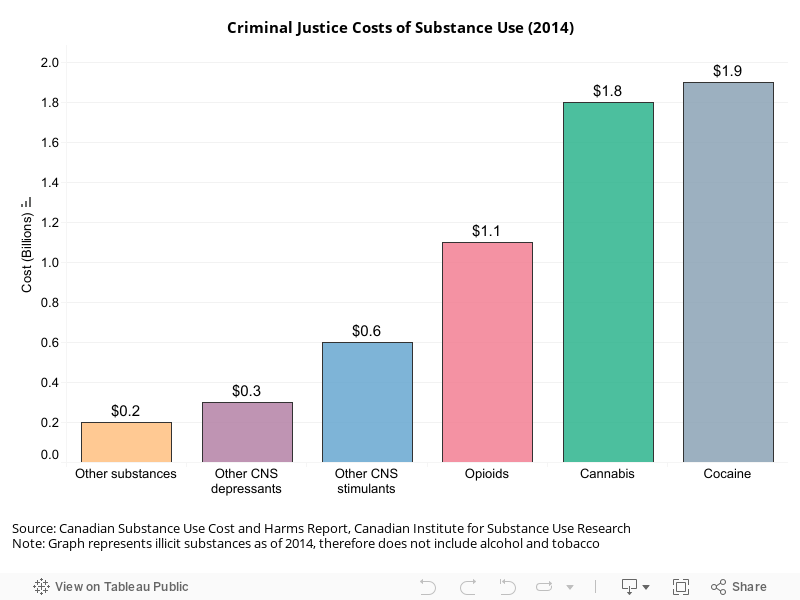
(Interactive Graph)
But one area of hope was a more clearly-defined path toward the future: creating regulatory models for opioids, stimulants, sedatives and psychedelics. Tapping into the collective knowledge in the room, we workshopped models of how four drugs might be available to consumers in a post-prohibition world, considering questions such as:
- who might have access to drugs;
- how would they access them;
- how much can they get, and
- where can they consume them.
This focus group was only the first of what we anticipate will be up to 20 focus groups across Canada to gather feedback about what Canadians would imagine a legal system would look like. With the online platform we are developing, we hope to engage an additional 40,000 Canadians in these decisions over the next two years!

Scott Bernstein, Canadian Drug Policy Coalition Director of Policy (April 2019) Politicians with the power to enact life-saving changes to drug policy have long argued that the lack of viable models for legal regulation were a barrier to action. This project will describe a way forward to legal regulation of all drugs and no longer will they have an excuse for inaction.

Peter Wall International Research Roundtable breakout session (April 2019) Over the four days, we explored three themes in service of our mission to advance the legal regulation of all drugs in Canada: the regulation of opioids as a response to the overdose crisis; the impact of criminal justice policies on people who use drugs; and the intersections of drug policy and the social determinants of health, including poverty, housing, stigma, income, access to healthcare.
It was from these vantage points the wealth of knowledge in the room surfaced solutions and strategies to make our shared vision a reality. The Roundtable engendered many important discussions over the four days.
It is now time to turn words into action.
The Peter Wall International Research Roundtable was supported by the Peter Wall Institute for Advanced Studies, Community Action Initiative, BCCDC Foundation for Public Health, and SFU Woodward’s.
-

Donald MacPherson, Canadian Drug Policy Coalition Executive Director, receives Lifetime Achievement Award
Vancouver, BC—The BC Centre on Substance Use (BCCSU) has awarded drug policy advocate, Donald MacPherson, with a Lifetime Achievement Award for his dedication to public health, human rights, and drug policy reform. This honour recognizes a passionate and visionary health advocate who has made substantial contributions to the advancement of evidence-based approaches to substance use and addiction.
“Donald has consistently put personal comfort aside to move drug policy forward, helping advance harm reduction and human rights for people who use drugs,” says Dr. Lindsey Richardson, who presented Donald with the Lifetime Achievement Award at the BC Substance Use Conference, organized by the BCCSU.
“Just as important as these accomplishments is how he approaches the people he works with as fulsome, complex humans, with hopes and dreams, and challenges and needs.”
~Dr. Lindsey Richardson, BCCSU
The inaugural award recognizes individuals who have made outstanding contributions in health and health policy, and who have demonstrated an enduring personal commitment to the advancement of health equity. “It is a real honour to receive this award from the BCCSU. It’s quite humbling as there are so many others in British Columbia who have done so much to move us towards a point where we have no choice but to acknowledge our current policies based on criminalization, punishment, and prohibition have been a catastrophic failure,” said Donald MacPherson, Executive Director of the Canadian Drug Policy Coalition.
“It is time for a true public health and human rights response to drugs in this country.”
~Donald MacPherson, Canadian Drug Policy Coalition
The Lifetime Achievement Award is awarded to national or international leaders who actively participate in health advocacy and activities at a local, provincial, national, and international level.
Contact
Peter Kim
Strategic Communications Manager
Canadian Drug Policy Coalition
[email protected]
604-787-4043Download PDF Version of Advisory
– 30 –
About Donald MacPherson
Donald MacPherson is the Executive Director of the Canadian Drug Policy Coalition and one of Canada’s leading figures in drug policy. He advocates drug policies based on principles of public health, scientific evidence, human rights, and social inclusion. He is involved in drug policy work at local, national, and international levels, and is a founding member of the Canadian Drug Policy Coalition. Formerly, MacPherson was North America’s first Drug Policy Coordinator at the City of Vancouver where he worked for 22 years. He is the author of Vancouver’s ground-breaking Four Pillars Drug Strategy, which called for new approaches to drug problems based on public health principles and the appropriate regulation of all psychoactive substances. MacPherson is also co-author of Raise Shit! Social Action Saving Lives (2009) and More Harm than Good: Drug Policy in Canada (2016). In 2007, he received the Kaiser Foundation National Award of Excellence in Public Policy in Canada. In 2009, he was awarded the Richard Dennis Drug Peace Award for Outstanding Achievement in the Field of Drug Policy Reform by the Drug Policy Alliance in the United States, and the City of Vancouver was awarded the Canadian Urban Institutes Secure City Award for the Four Pillars Drug Strategy. MacPherson also received the Queen Elizabeth II Diamond Jubilee Medal in 2013 for his work in drug policy reform. In 2017, MacPherson was presented with the Nora and Ted Sterling Prize in Support of Controversy at Simon Fraser University.
About the BC Substance Use Conference
The BC Substance Use Conference 2019 is the first annual conference hosted by the BC Centre on Substance Use, bringing together key stakeholders from around the province to discuss provincial efforts to treat and care for people with substance use disorders. This three-day event included research, education, and clinical care guidance presentations and workshops across several topics within substance use, including opioid, alcohol, and cannabis use disorders.
About the Canadian Drug Policy Coalition
The Canadian Drug Policy Coalition (CDPC) is a coalition of 60 organizations and 7,000 individuals working to support the development of progressive drug policy grounded in science, guided by public health principles, and respectful of human rights. The CDPC operates as a project within Simon Fraser University’s Faculty of Health Sciences. The CDPC seeks to include people who use drugs and those harmed by the war on drugs in moving toward a healthier Canadian society free of stigma and social exclusion.
-

Public forum to look at models of legal regulation of drugs in Canada
Going beyond decriminalization and envisioning a post-prohibition Canada where substances are legal and regulated
What: Community forum featuring an international panel of experts on drug policy and experts with lived experience to debate how Canada can create a system of legal regulation of drugs grounded in social inclusion, human rights, and compassion. What would these systems look like? How would they be implemented? What broader impacts would they have?
- The event will be recorded as an episode of the Crackdown Podcast.
When: Wednesday, May 15, 7:00 p.m. – 9:00 p.m.
Where: SFU Goldcorp Centre for the Arts, Djavad Mowafaghian Cinema (149 West Hastings St, Vancouver)
Who: Panel will be moderated by award-winning broadcaster, activist, and member of the Vancouver Area Network of Drug Users, Garth Mullins, and will include the following:
- Zara Snapp, Co-founder, Instituto RIA (human rights/research organization proposing innovative solutions on drug policies) – Mexico
- Steve Rolles, Senior Policy Analyst, Transform Drug Policy Foundation (played a role advising Canadian government on its cannabis regulation model) – United Kingdom
- Akwasi Owusu-Bempah, Professor, Sociology, University of Toronto – Canada
- Suzanne Fraser, Professor, Public Health, Curtin University – Australia

From left to right: Garth Mullins, Zara Snapp, Akwasi Owusu-Bempah, Steve Rolles, Suzanne Fraser
Why: Current drug policies in Canada are a catastrophic failure. These policies have created a toxic drug supply that has killed more than 10,000 Canadians since 2016. Urgent action is needed to stem the tide of fatalities. Decriminalization, which health officials, doctors, and politicians, have openly supported, is a welcome step forward. And it’s imperative that we get at the heart of the crisis: the toxic drug supply.
Legal regulation of drugs must be explored if we are to end the loss of life. This public forum will bring us one step closer to realizing this vision, relying on the insight of people with lived experience and international experts in the field of drug policy.
Contact
Peter Kim
Strategic Communications Manager
Canadian Drug Policy Coalition
[email protected]Emily Jenkins
Assistant Professor
UBC School of Nursing
[email protected]Download PDF Version of Advisory
– 30 –
About the Canadian Drug Policy Coalition
The Canadian Drug Policy Coalition (CDPC) is a coalition of 70 organizations and 3,000 individuals working to support the development of progressive drug policy grounded in science, guided by public health principles, and respectful of human rights. The CDPC operates as a project within Simon Fraser University under the Centre for Applied Research in Mental Health and Addiction. The CDPC seeks to include people who use drugs and those harmed by the war on drugs in moving toward a healthier Canadian society free of stigma and social exclusion.
Panelist Biographies
Garth Mullins is a person who uses drugs, an activist, and an award-winning radio documentarian. He is the host and executive producer of the Crackdown Podcast, where drug users cover the drug war as war correspondents. This is Garth’s second overdose crisis. He used injection heroin for over a decade and is now on methadone. He is a member of the Vancouver Area Network of Drug Users and is also a trade union organizer and musician. (Photo credit: Rob Newell)
Zara Snapp is the co-founder of Instituto RIA, board member of ReverdeSer Colectivo (Mexico), and the international advisor for Acción Técnica Social (Colombia). From 2014-2017, she formed part of the Secretariat of the Global Commission on Drug Policy, where she focused on the Latin American strategy and UNGASS 2016. As a Truman Scholar and Public Service Fellow, she received a Masters in Public Policy from the Kennedy School of Government at Harvard University.
Steve Rolles is Senior Policy Analyst for the Transform Drug Policy Foundation, a UK-based think tank and charity focused on drug policy and law reform. Steve has served as an adviser for the Global Commission on Drugs and the Uruguayan and Canadian governments in developing their cannabis regulation models. He has worked closely with The LOOP in the UK facilitating the roll-out of drug safety testing at festivals.
Akwasi Owusu-Bempah, PhD (Toronto), is an assistant professor in the Department of Sociology at the University of Toronto. Dr. Owusu-Bempah’s work focuses on the intersections of race, crime, and criminal justice, with a particular interest in the area of policing. He is currently studying various aspects of cannabis legalization in Canada and the United States. His research has recently been published in Policing and Society, Crime and Justice, and Theoretical Criminology.
Suzanne Fraser is a professor of public health (Curtin University, Australia). She is program leader for the National Drug Research Institute’s Social Studies of Addiction Concepts Research Program and author of numerous books on the body and health in society and culture. Her most recent, Habits: Remaking Addiction, is co-authored with David Moore and Helen Keane. Suzanne’s main research projects at present are two Australian Research Council-funded studies. One is exploring injecting practices and harm reduction needs among men who inject performance and image-enhancing drugs, and the other is investigating impediments to the uptake and diffusion in Australia of take-home naloxone, the opioid overdose medication known to save lives. This project will be used to create an online resource presenting accounts of overdose revival and take-home naloxone use, which will be linked to the internationally-praised website she built with colleagues on lived experiences of addiction, Livesofsubstance.org.

(Event Sponsors) 
(Event Organizers) -
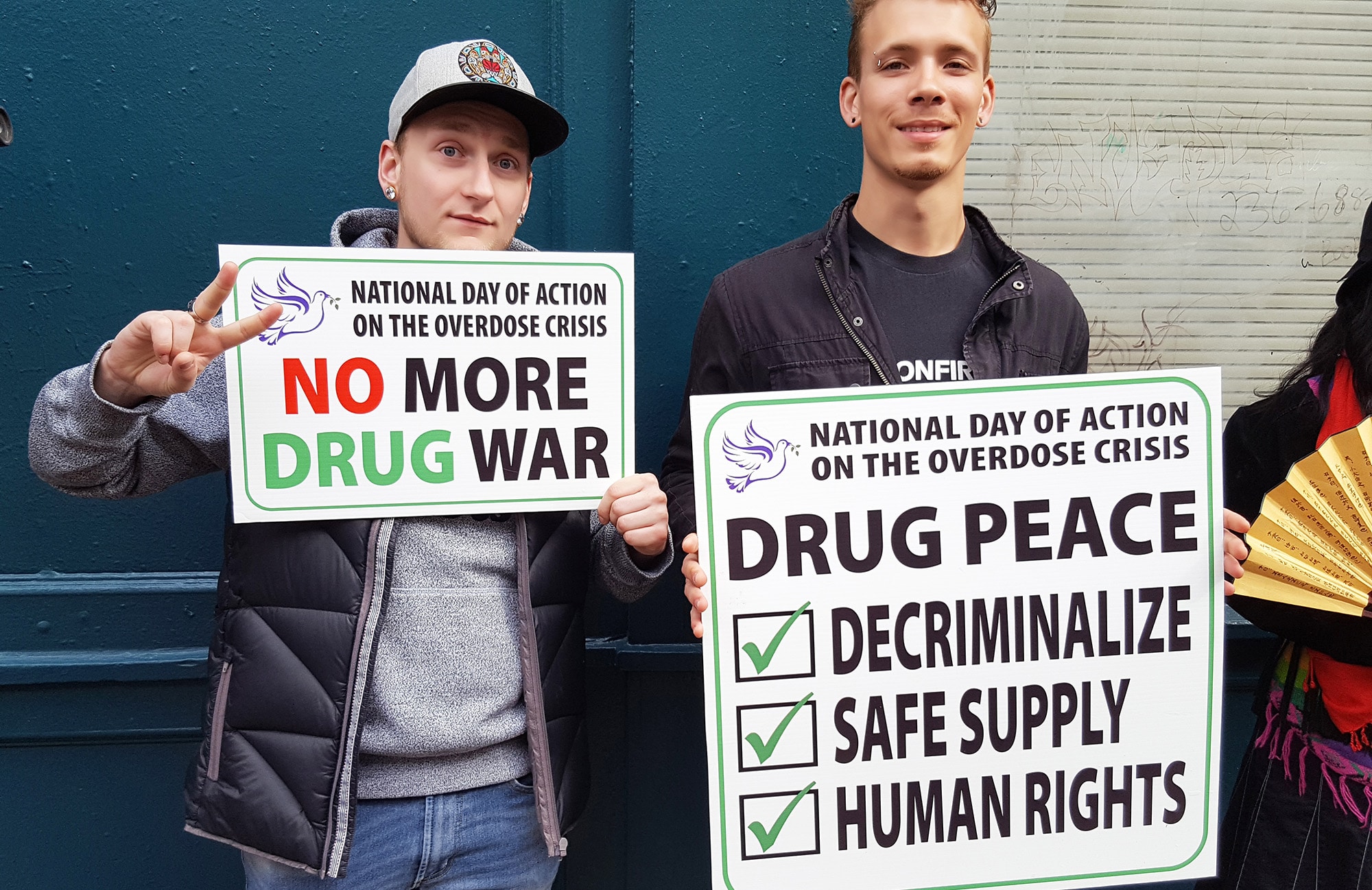
National Day of Action on the Overdose Crisis 2019

Three years after a public health emergency was called in British Columbia, the need and urgency to end the drug war is more pressing than it has ever been. The Public Health Agency of Canada recently released a grim statistic: more than ten thousand people in Canada have died from fatal overdose in under three years.

Members of Moms Stop the Harm are all too familiar with the pain of loss. They came to the National Day of Action on the Overdose Crisis to remember their loved ones and fight for policy reform. At the heart of this crisis is a simple answer that remains painfully out of reach: a safe supply of drugs.

Hundreds of people gathered at 10:30 a.m. outside of Insite, North America’s first sanctioned supervised injection site, for the National Day of Action. A band welcomed the crowd as people brought floats and carried signs.

The tragedy touches all corners of society and attracted people from across the province. Similar events were happening in other provinces as well.
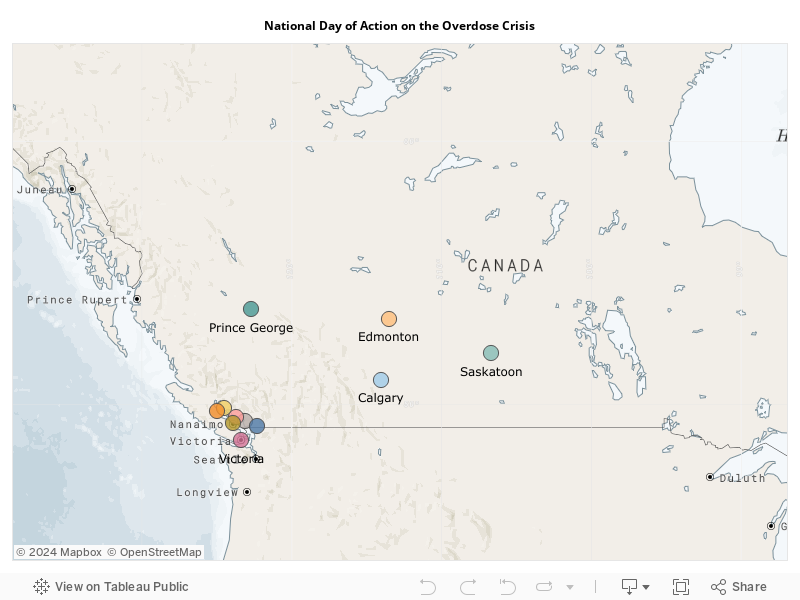
(Interactive Map)

The day was a national call for action. In 2017 alone, 4034 people died from fatal overdose across Canada.
Three people die every single day in Canada from unintentional opioid overdoses.
We need a #SafeSupply. #NoMoreDrugWar#TheyTalkWeDie #DrugPolicyCrysis #NationalDayofAction #OpioidCrisis pic.twitter.com/02TlxqF5mI
— ReedSiemieniuk. (@RSiemieniuk) April 16, 2019

The drug war has been a catastrophic failure. Prohibition and criminalization have handed the global supply of drugs into the hands of highly organized, transnational criminal organizations where an insatiable drive for profit blinds them from the human toll. Drugs, now laced with fentanyl and its analogues, are ravaging communities with little regard for the safety of consumers.

Canadian Drug Policy Coalition executive director Donald MacPherson addressed the media, echoing concerns around Canada’s fatal drug policies, which have created the current crisis, underscoring the need for a safe drug supply. The logic supporting this is so simple and strong, yet stigma born out of years of criminalization has shut down progress on this potentially powerful means to saving lives.


After initial speeches outside of Insite by organizers and an opening performance by Culture Saves Lives, the massive crowd marched up Hastings Street, flanked by police and followed by media.

They ended up at the steps of the Vancouver Art Gallery where members of the community and their supporters spoke about the devastating toll of overdose deaths and unrelenting courage of people affected by the structural violence of prohibition.

“We’re out there saving lives every day. We got a lot of power as people in the Downtown Eastside.”
Malcolm (Western Aboriginal Harm Reduction Society)

Despite the pain and grief etched on so many faces, there were strands of hope that connected people during the rally. Frontline workers, peers, and people who use drugs who have shouldered this crisis and life-saving responses including overdose prevention sites, supervised consumption services, naloxone distribution, and simply being there for people when needed, renewed a commitment to fight for their right to safety, security, and dignity.
The fight continues; and so will we.
-

Canadian Drug Policy Coalition and Pivot Legal Society successfully defend supervised consumption at Federal Court of Canada
The precedent-setting decision protects public health and harm reduction efforts from unnecessary barriers and interference from third parties
Vancouver, BC – This week, the Honourable Justice Mosley released his decision on a judicial review application brought forward by Edmonton’s Chinatown and Area Business Association (CABA). CABA challenged the approval of three desperately-needed supervised consumption sites in downtown Edmonton, asserting that it was not adequately consulted in Health Canada’s decision to approve the services.
In December 2018, the Canadian Drug Policy Coalition (CDPC), represented by Pivot Legal Society’s Caitlin Shane and Ethos Law Group’s Monique Pongracic-Speier (QC), intervened in the case, arguing that CABA and other third parties do not have a mandatory right to weigh in on the approval of consumption sites in Canada. Instead, public health and safety should be the principal concern of the government in considering applications, as this would best protect the Constitutional rights to safety and security for people who use drugs accessing life-saving services.
Justice Mosley agreed with our arguments and dismissed CABA’s application, citing directly from our submissions. In his decision, he writes:
“The process [to approve a supervised consumption site] is both discretionary and non-adjudicative. The principal and mandatory focus of the legislation is on the question of whether [approval] would provide public health benefits. Any consideration of negative impacts on the local community is secondary and discretionary.”
“This is a precedent-setting decision helping people to save lives amid a national health crisis,” said Donald MacPherson, Executive Director of the Canadian Drug Policy Coalition. “Justice Mosley’s decision means that frontline healthcare providers wishing to offer life-saving supervised consumption services can do so without unnecessary delays. It restores public health as the key concern for approving these sites.”
The Canadian Drug Policy Coalition and Pivot Legal Society argued that allowing community groups extraordinary consultation privileges would create new barriers to supervised consumption services. The Federal Court of Canada agreed, and the Constitutionally-protected right to health services for people who use drugs rightly took precedence. We are encouraged by the Court’s findings.
Contact
Peter Kim
Strategic Communications Manager
Canadian Drug Policy Coalition
[email protected]
604-787-4043Download PDF Version of Media Release
– 30 –
About the Canadian Drug Policy Coalition
The Canadian Drug Policy Coalition (CDPC) is a coalition of 60 organizations and 7,000 individuals working to support the development of progressive drug policy grounded in science, guided by public health principles, and respectful of human rights. The CDPC operates as a project within Simon Fraser University’s Faculty of Health Sciences. The CDPC seeks to include people who use drugs and those harmed by the war on drugs in moving toward a healthier Canadian society free of stigma and social exclusion.
-

STIMULUS 2018: DRUGS, POLICY AND PRACTICE IN CANADA
From October 3 – 5, 2018, advocates and those inspired to create new approaches to drugs will be together in Edmonton, AB. This has been a CDPC vision for a long time. We are extremely excited to be a key organizer along with our partners.
Register here
The conference will include a variety of activities including, workshops, plenaries, panels, oral presentations, photography, poster presentations, spoken word, art showings, book readings, community tours, plus a film festival.
The conference is filling up fast and our full program will be up on the website in a couple of days. There will be a wide variety of sessions including an abstract driven track – thanks to all who submitted incredibly interesting abstracts. There will be five plenary sessions, one looking at the state of drug policy in Canada today, a people with lived experience plenary, a plenary highlighting those who are pushing the boundaries of innovation, a discussion on the impact of cannabis regulation on the broader drug policy picture, and a ‘where to from here?’ session to close the conference.
We’ll have a film festival running throughout the conference, a public event staged by MomsStopTheHarm will bring the community of Edmonton into the conference to engage an amazing group of family leaders from across the country and a coalition of drug checking organizations will be putting on a workshop on the latest efforts in Canada to implement these services.
Stimulus 2018: Drugs, Policy and Practice in Canada
October 3-5, 2018Shaw Conference Centre
Edmonton, Alberta, CanadaJoin us as work to end the unprecedented overdose crisis and churning policy challenges in Canada. Register here
Twitter and Facebook: @stimulus2018
Conference organizing partners: Alberta’s harm reduction organizations, Alberta Advocates Who Educate and Advocate Responsibly (AAWEAR), Canadian Drug Policy Coalition, Canadian Association of People who Use Drugs (CAPUD), Canadian AIDS Society, Association Québécoise des Centres D’intervention en Dépendance (AQPSUD), Canadian HIV/AIDS Legal Network
If you are an individual or business interested in sponsoring this event, please visit the sponsorship page. If you have questions regarding the conference, please direct them here.
-

OPEN LETTER: City of Ottawa must support overdose prevention sites
“The toxic drug market has created a need to urgently re-orient our harm reduction efforts across the country. We hope that Ottawa develops a robust response to the overdose crisis in the coming months
and will applaud all efforts to do so.” -

World AIDS Day 2016 – Three Papers To Read
World AIDS Day 2016 is on December 1st.
View three important publications relating HIV/AIDS to harm reduction and drug policy. We will continue to work towards the equitable, safe and dignified treatment of people who use drugs – human rights is for everybody.
1. Drug Policy and Harm Reduction
Policy brief from the Canadian Drug Policy Coalition and the HIV/AIDS Legal Network
Drug Policy and Harm Reduction – English
Politiques sure les drogues er réduction des méfaits – Français
2. Word AIDS Day: Letter to Canada’s Members of Parliament and Senators
Read the HIV/AIDS Legal Network letter to Canada’s Members of Parliament and Senators on the role they can play in strengthening Canada’s response to HIV.
“In the past year, the federal government has taken some important steps in promoting the health and human rights of people living with and affected by HIV. […] But so much more is needed.”
3. “Nothing About Us Without Us” Greater, Meaningful Involvement of People Who Use Illegal Drugs: A Public Health, Ethical, and Human Rights Imperative
Published in 2008, this report remains relevant today. Brought to you by Open Society Institute Public Health Program, the HIV/AIDS Legal Network and International AIV/AIDS Alliance.
Download World AIDS Day 2016 Poster
