Category: All

  • A Roadmap for Canada’s Drug Policy Future: The Peter Wall International Research Roundtable

    A Roadmap for Canada’s Drug Policy Future: The Peter Wall International Research Roundtable

    The first steps for systemic change are usually the hardest. But thanks to an international community of experts, including and especially those with lived expertise on the frontlines of Canada’s drug policy crisis, we’ve surmounted that hurdle.

    Last month, over 40 researchers, frontline advocates, policymakers, and other experts convened in Vancouver for the Peter Wall Institute for Advanced Studies International Research Roundtable. The end vision of our collaboration is at once simple and dauntingly complex: to realize legal regulation of drugs in Canada to stem the tide of fatalities crippling communities across the country and end the ongoing harms of prohibition. A regulated legal supply of drugs would mean a safer supply of drugs to those who use them, elimination of the toxic drug market controlled by organized crime groups, and financial resources to invest in people who need access to health, housing, and social services.

    DONATE to Support Drug Policy Reform


    A group of people are seated at circular tables arranged throughout a room. Two people, a man and a woman, are speaking and addressing the crowd at the front of the room.
    Peter Wall International Research Roundtable (April 2019)

    We began this task by tapping into the collective expertise and wisdom of the people in the room, workshopping ideas, brainstorming solutions, and refining tactics that will bring us to our end goal. It was just a start, but critical if we are to realize the systemic change Canada needs, where principles of human rights and public health that are informed by evidence guide policy decisions—not public sentiment and the moralization of behaviour.

    We as a collective began several important initiatives during our four days together:

    • developing a strategic road map—with concrete steps—for Canada to shift away from the policies of prohibition towards those that promote public health, human rights, and social inclusion based on the legal regulation of currently illegal substances;
    • outlining areas of further research to inform this strategy and identify regulatory models for the Canadian context;
    • outlining a knowledge translation strategy aimed at building momentum for policy change; and
    • identifying opportunities for international collaborations that will support our goals.
    Six people are standing in front of a banner posing for a picture.
    From left to right: Steve Rolles, Garth Mullins, Zara Snapp, Scott Bernstein, Suzanne Fraser, Akwasi Owusu-Bempah

    Many important advocates and international experts generously offered their insight, and their involvement was critical in shaping the contours of important discussions over the four days:


    • Zoë Dodd, a passionate long-time human rights and harm reduction leader in Toronto who has for years stood on the frontlines of a grassroots lifesaving efforts
    • Steve Rolles, an expert in substances regulation from the UK who advised the Canadian government on its cannabis regulatory framework
    • Dr. Debra Meness, a skilled physician trained in both Western and traditional Ojibwe medicine from the Kitigan Zibi Anishinaabeg First Nation
    • Paul Salembier, a legal mind skilled at crafting laws and precise legal language that could save lives

    There were many, many more, and we thank them all.

    A large crowd is sitting in a theatre listening to a man on stage.
    Audience members during Peter Wall International Research Roundtable public event (April 2019)

    The Research Roundtable culminated in a public forum at SFU Woodward’s, Systems Change: Envisioning a Canada Beyond Prohibition, where activist and award-winning broadcaster Garth Mullins guided our imaginations toward a world where prohibition was a thing of the past. What would that world look like? What would it take to get us there?

    A panel of men and women sit on stage in front of a large screen displaying a promo slide of the event. To the left, a man is standing, talking to the crowd.
    Peter Wall International Research Roundtable public event (April 2019)

    The event was recorded as an episode of the Crackdown podcast and featured Akwasi Owusu-Bempah (University of Toronto); Steve Rolles (Transform Drug Policy Foundation, UK); Zara Snapp (Instituto RIA, Mexico); and Suzanne Fraser (Curtin University, Australia).

    There are mountains of evidence that the ill-conceived “war on drugs” (prohibition) has had significant negative impacts on individuals, families and communities around the world. Far from making citizens safer, prohibition and a criminal justice approach has spawned an illegal market flush with toxic drugs that kills indiscriminately (over 10,000 in Canada in the less than three years).

    Prohibition has also needlessly criminalized and ruined the lives of vulnerable people who should have never seen the inside of a jail cell. It forces individuals to turn to more dangerous methods of consumption and dissuades those who want help from accessing it. In short: it has been an abysmal failure.

    DONATE to Fund the Next Phase of our Legal Regulation Model

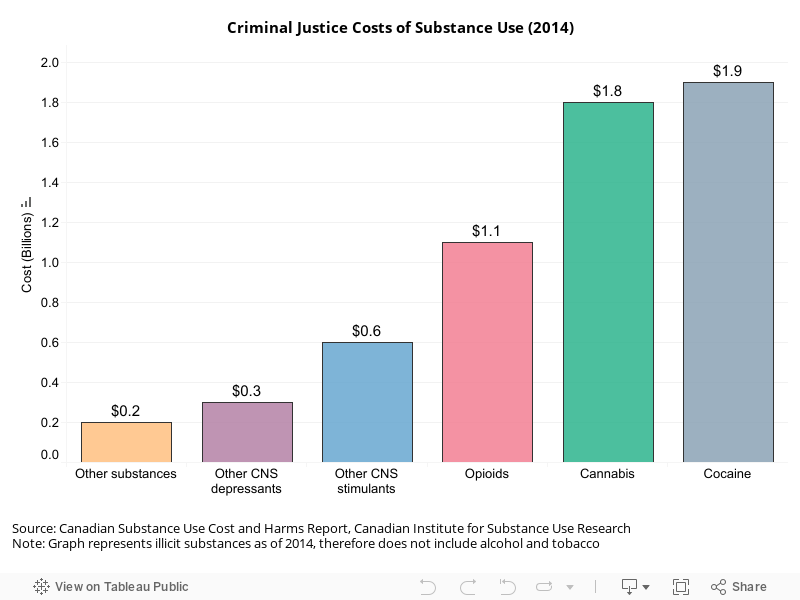
    (Interactive Graph)

    But one area of hope was a more clearly-defined path toward the future: creating regulatory models for opioids, stimulants, sedatives and psychedelics. Tapping into the collective knowledge in the room, we workshopped models of how four drugs might be available to consumers in a post-prohibition world, considering questions such as:

    • who might have access to drugs;
    • how would they access them;
    • how much can they get, and
    • where can they consume them.

    This focus group was only the first of what we anticipate will be up to 20 focus groups across Canada to gather feedback about what Canadians would imagine a legal system would look like. With the online platform we are developing, we hope to engage an additional 40,000 Canadians in these decisions over the next two years!

    Scott Bernstein, Canadian Drug Policy Coalition Director of Policy (April 2019)

    Politicians with the power to enact life-saving changes to drug policy have long argued that the lack of viable models for legal regulation were a barrier to action. This project will describe a way forward to legal regulation of all drugs and no longer will they have an excuse for inaction.

    Peter Wall International Research Roundtable breakout session (April 2019)

    Over the four days, we explored three themes in service of our mission to advance the legal regulation of all drugs in Canada: the regulation of opioids as a response to the overdose crisis; the impact of criminal justice policies on people who use drugs; and the intersections of drug policy and the social determinants of health, including poverty, housing, stigma, income, access to healthcare.

    It was from these vantage points the wealth of knowledge in the room surfaced solutions and strategies to make our shared vision a reality. The Roundtable engendered many important discussions over the four days.

    It is now time to turn words into action.

    The Peter Wall International Research Roundtable was supported by the Peter Wall Institute for Advanced Studies, Community Action Initiative, BCCDC Foundation for Public Health, and SFU Woodward’s.

  • National Day of Action on the Overdose Crisis 2019

    National Day of Action on the Overdose Crisis 2019

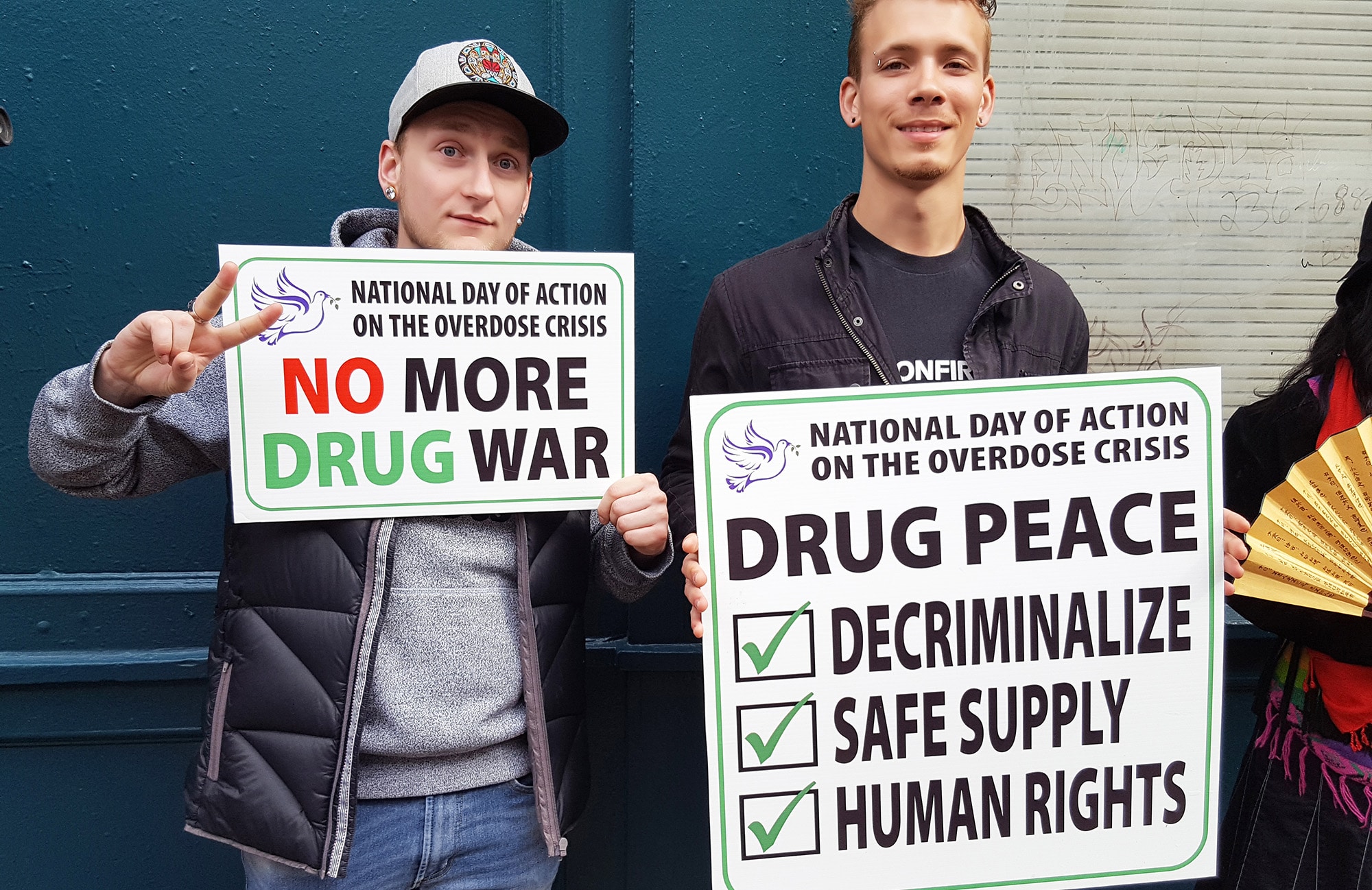
    Three years after a public health emergency was called in British Columbia, the need and urgency to end the drug war is more pressing than it has ever been. The Public Health Agency of Canada recently released a grim statistic: more than ten thousand people in Canada have died from fatal overdose in under three years.

    Members of Moms Stop the Harm are all too familiar with the pain of loss. They came to the National Day of Action on the Overdose Crisis to remember their loved ones and fight for policy reform. At the heart of this crisis is a simple answer that remains painfully out of reach: a safe supply of drugs.

    Hundreds of people gathered at 10:30 a.m. outside of Insite, North America’s first sanctioned supervised injection site, for the National Day of Action. A band welcomed the crowd as people brought floats and carried signs.

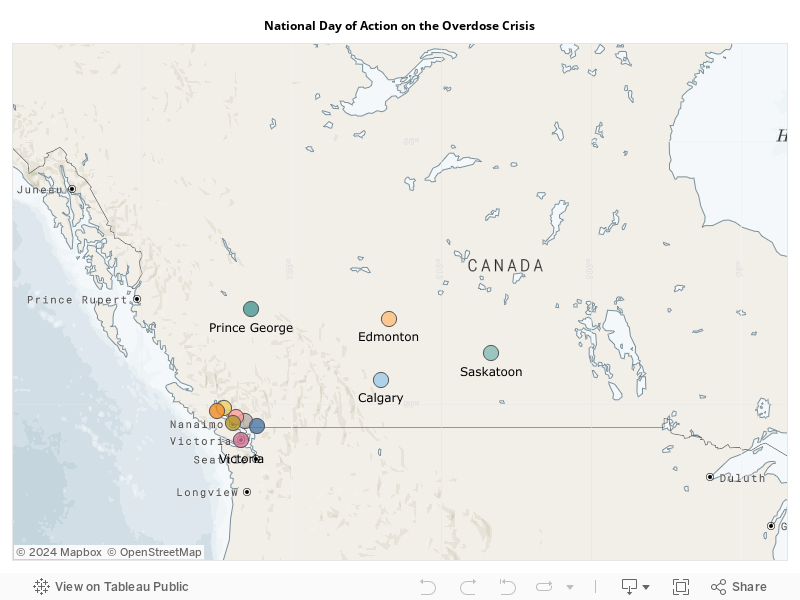
    The tragedy touches all corners of society and attracted people from across the province. Similar events were happening in other provinces as well.

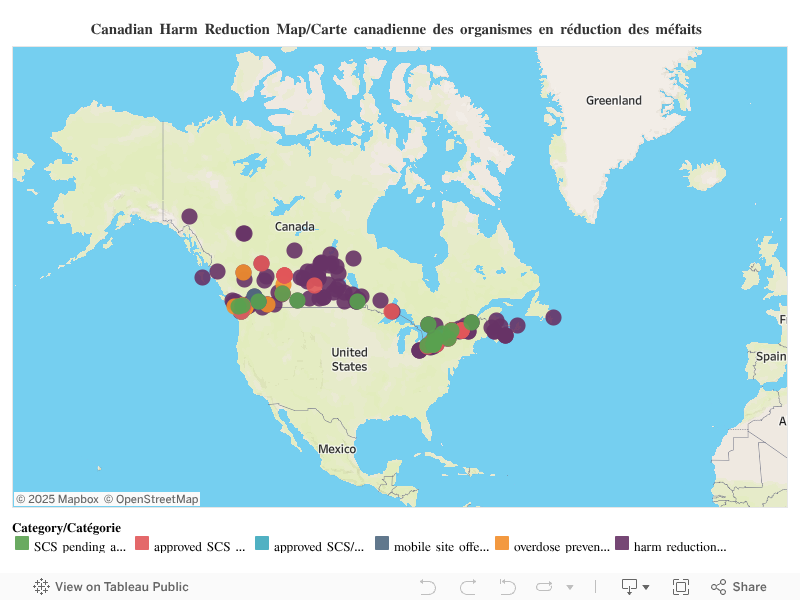
    (Interactive Map)

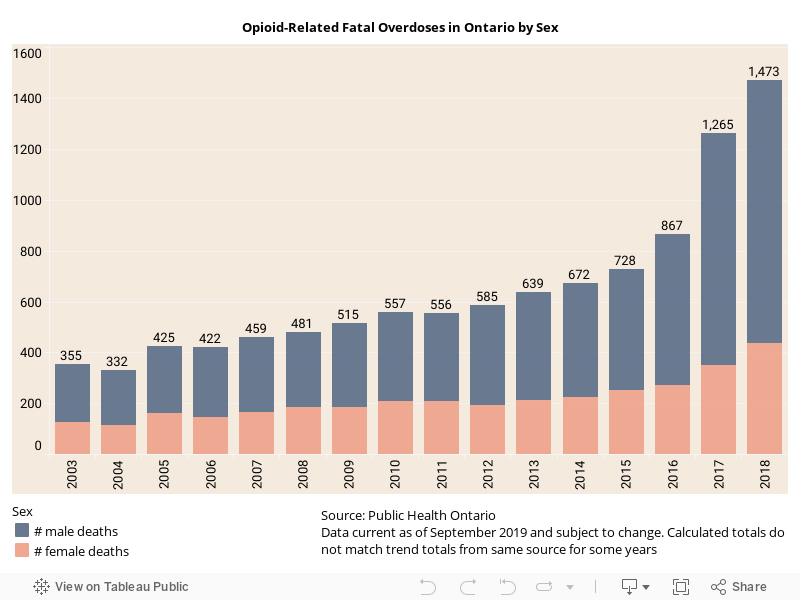
    The day was a national call for action. In 2017 alone, 4034 people died from fatal overdose across Canada.

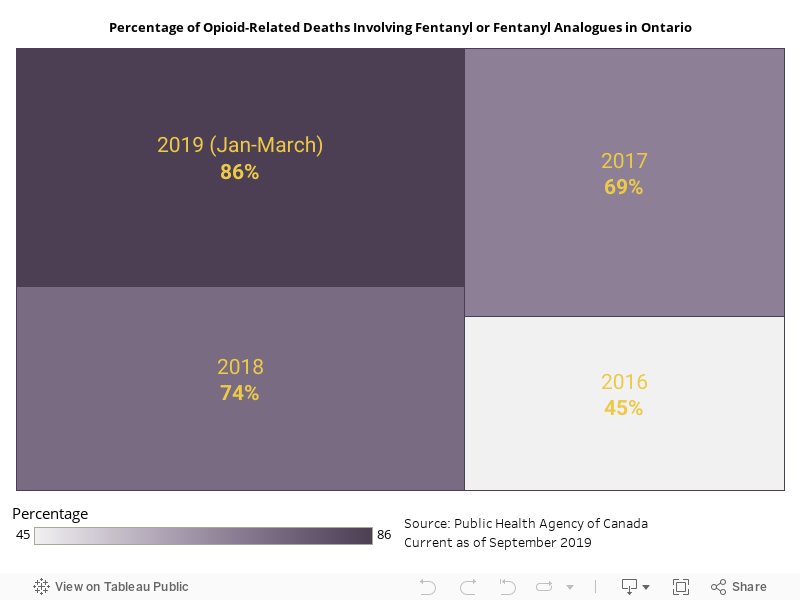
    The drug war has been a catastrophic failure. Prohibition and criminalization have handed the global supply of drugs into the hands of highly organized, transnational criminal organizations where an insatiable drive for profit blinds them from the human toll. Drugs, now laced with fentanyl and its analogues, are ravaging communities with little regard for the safety of consumers.

    Canadian Drug Policy Coalition executive director Donald MacPherson addressed the media, echoing concerns around Canada’s fatal drug policies, which have created the current crisis, underscoring the need for a safe drug supply. The logic supporting this is so simple and strong, yet stigma born out of years of criminalization has shut down progress on this potentially powerful means to saving lives.

    After initial speeches outside of Insite by organizers and an opening performance by Culture Saves Lives, the massive crowd marched up Hastings Street, flanked by police and followed by media.

    They ended up at the steps of the Vancouver Art Gallery where members of the community and their supporters spoke about the devastating toll of overdose deaths and unrelenting courage of people affected by the structural violence of prohibition.

    “We’re out there saving lives every day. We got a lot of power as people in the Downtown Eastside.”

    Malcolm (Western Aboriginal Harm Reduction Society)

    Despite the pain and grief etched on so many faces, there were strands of hope that connected people during the rally. Frontline workers, peers, and people who use drugs who have shouldered this crisis and life-saving responses including overdose prevention sites, supervised consumption services, naloxone distribution, and simply being there for people when needed, renewed a commitment to fight for their right to safety, security, and dignity.

    The fight continues; and so will we.

  • STIMULUS 2018: DRUGS, POLICY AND PRACTICE IN CANADA

    STIMULUS 2018: DRUGS, POLICY AND PRACTICE IN CANADA

    From October 3 – 5, 2018, advocates and those inspired to create new approaches to drugs will be together in Edmonton, AB. This has been a CDPC vision for a long time. We are extremely excited to be a key organizer along with our partners.

    Register here

    The conference will include a variety of activities including, workshops, plenaries, panels, oral presentations, photography, poster presentations, spoken word, art showings, book readings, community tours, plus a film festival.

    The conference is filling up fast and our full program will be up on the website in a couple of days. There will be a wide variety of sessions including an abstract driven track – thanks to all who submitted incredibly interesting abstracts. There will be five plenary sessions, one looking at the state of drug policy in Canada today, a people with lived experience plenary, a plenary highlighting those who are pushing the boundaries of innovation, a discussion on the impact of cannabis regulation on the broader drug policy picture, and a ‘where to from here?’ session to close the conference.

    We’ll have a film festival running throughout the conference, a public event staged by MomsStopTheHarm will bring the community of Edmonton into the conference to engage an amazing group of family leaders from across the country and a coalition of drug checking organizations will be putting on a workshop on the latest efforts in Canada to implement these services.

    Stimulus 2018: Drugs, Policy and Practice in Canada
    October 3-5, 2018

    Shaw Conference Centre
    Edmonton, Alberta, Canada

    Join us as work to end the unprecedented overdose crisis and churning policy challenges in Canada. Register here

    Twitter and Facebook: @stimulus2018

    Conference organizing partners: Alberta’s harm reduction organizations, Alberta Advocates Who Educate and Advocate Responsibly (AAWEAR), Canadian Drug Policy Coalition, Canadian Association of People who Use Drugs (CAPUD), Canadian AIDS Society, Association Québécoise des Centres D’intervention en Dépendance (AQPSUD), Canadian HIV/AIDS Legal Network

    If you are an individual or business interested in sponsoring this event, please visit the sponsorship page. If you have questions regarding the conference, please direct them here.

  • INTERNATIONAL INTEREST IN DRUG CHECKING

    INTERNATIONAL INTEREST IN DRUG CHECKING

    This is a guest blog provided by Nazlee Maghsoudi. The Canadian Drug Policy attended HR17 and we are pleased to share this account of the conference.


    INCREASING INTERNATIONAL INTEREST IN DRUG CHECKING: HIGHLIGHTS FROM HR17

    With growing international attention on the impacts and broad potential of drug checking services, a number of events at HR17 featured research findings and frontline experience with this harm reduction intervention.

    For the first time in its history, the 25th Harm Reduction International Conference (HR17) held in Montréal, Canada put drug checking – a harm reduction intervention that provides people who use drugs with information about purity, potency, and composition of their substances – front and centre on the agenda. Reflecting increasing international interest in implementing drug checking services, a pre-conference workshop, panel session, and press conference explored the impacts of drug checking on the health and wellbeing of people who use drugs in a variety of settings and across the spectrum of drug-using behaviour. As a harm reduction conference taking place against a backdrop of an opioid overdose crisis, drug checking in the form of fentanyl test strips were made available in the onsite medical room.

    On May 14, 2017 prior to the official opening of HR17, members of a Canadian National Working Group on Drug Checking organized a “Drug Checking Services and Analysis Workshop.” A free and public event, the workshop was well attended by local and international stakeholders from a variety of disciplines with existing expertise and interest in further learning about drug checking fundamentals along with different models of research evaluation and service provision that are currently being used around the world. Speakers included Helena Valente (Porto University, Portugal), Brun Gonzalez (Programa de Análisis de Sustancias, Mexico), and Dr. Mireia Ventura (Energy Control, Spain). Attendees were treated to speakers’ unique perspectives on the rationale behind drug checking, effective methods in the field, and how to build upon and sustain existing programs. Speakers agreed that drug checking offers much more than test results – including education and support around drug use – and importantly, attracts people who use drugs who otherwise would not interact with health services about their drug use. Noting that the majority of harm reduction efforts have traditionally focused on people who inject drugs, Mr. Gonzalez described drug checking as essential to “full spectrum harm reduction,” an approach that provides appropriate services for all people who use drugs despite where they fall on the spectrum of drug use. Burgeoning evidence suggests that most people intend to change their behaviours (e.g., not take a drug, reduce their dosage, not use alone, etc.) if their drug checking results reveal some unexpected or unknown contents in the drugs they were planning to take. Ms. Valente stressed that although empirical evidence indicates that drug checking is a useful intervention, moving beyond research on behavioural intention will be an important step in establishing the evidence base to support scaling up these services. Dr. Ventura emphasized the value of drug checking in monitoring drug markets and equipping policymakers and health authorities with data to respond to dangerous trends, and noted that Energy Control is responsible for detecting about 65% of new substances to the government. Attendees left the workshop feeling energized and having expanded their international networks and knowledge on drug checking.

    A concurrent panel session titled “Drug Checking: From Dance Clubs to the Dark Web” kept a focus on drug checking on May 15, 2017 and gave conference delegates a chance to learn about the evaluations of innovative drug checking programs. Dr. Mark Lysyshyn presented an important example from Vancouver – one of the cities across Canada experiencing a major opioid overdose crisis – where clients of a supervised injection facility (SIF), Insite, were offered test strips to check their drugs for fentanyl. Dr. Lysyshyn’s research found that offering fentanyl drug checking allowed clients to use the results to reduce harm through dose reduction and thereby decrease their risk of overdose, suggesting that drug checking could be a useful intervention to prevent overdose fatalities, including among people who use drugs accessing a SIF. The presenters also participated in a press conference earlier that day during which journalists were given the opportunity to ask targeted questions about their drug checking research. Julie-Soleil Meeson, a member of the Canadian National Working Group on Drug Checking, also made remarks at the press conference on the various efforts taking place across Canada to implement drug checking.

    Beyond disseminating information on drug checking research, HR17 was also a likely diffusion point for fentanyl test strips, with some conference delegates bringing these back to their agencies in Canada and abroad. Although no results were collected, word of mouth indicated a noticeable amount of results from test strips were positive for the presence of fentanyl.

    We hope the emphasis on drug checking at HR17 not only created a space to learn and share, but also inspired a continuation of efforts to create harm reduction strategies that meet the diverse needs of people who use drugs .

    Written by: Tara Marie Watson, Caleb Chepesiuk, and Nazlee Maghsoudi, Members of Canadian National Working Group on Drug Checking

  • insite vigil poem by the late Bud Osborn

    insite vigil poem by the late Bud Osborn


    Last week, for the National Day of Action for the Overdose Crisis, we marched with 922 feathers, one for every life lost in BC in 2016. Our Executive Director, Donald MacPherson, vividly recalls being in the same place 20 years before for the same reason at Oppenheimer park with 1,000 crosses and his friend Bud Osborn.

    Two weeks ago, we hosted an event, convening those from across Canada actively working on establishing supervised consumption services in their communities. The event was opened with a poem. When the poem was read, it stirred a committed sense of determination in the room, fuelled by the shared and extended duration of suffering from the loss of so many lives to accidental drug overdoses.

    The poem was written by the late Bud Osborn, who passed away in 2014.


    the fight for insite

    began in a political/rhetorical atmosphere

    of depraved indifference

    regarding overdose deaths and pandemic emergency

    horrifying ghosts of human beings

    calling radio talk shows and actually telling me:

    “why don’t they just string barbed-wire

    around the downtown eastside

    and let them infect each other to death?”

    or

    “the only good junkie is a dead junkie”

    comments like those heard in nazi germany

    I remember one welfare week

    eleven years ago

    sirens screamed lights flashed red and white

    all day all night

    one hot afternoon that same week

    I met a friend of mine

    on the corner of cordova and main

    she’s a first nations woman and activist

    who told me when i asked

    how she was

    that her family was gathering

    to make another crucial decision

    her cousin had fixed alone Wednesday evening

    in a sro room

    and when her husband returned

    found her dead on the floor

    he made a noose

    with a long piece of cloth   hanged himself

    and soon was dead

    and because the couple had an infant son

    the family was gathering

    to determine the best disposition

    for the suddenly orphaned child

    and this entire unjust and tragic situation

    might well never have happened

    if insite was open

    but as my friend and I were saying goodbye

    a flame burst inside me

    fuelled by grief and rage

    like a fierce spontaneous combustion

    flashing up through my nervous system

    and roared in my head like a psychic explosion

    because of another

    because of too many

    because of an unnecessary

    overdose death

    yelled

    two words repetitively in my head

    no more! no more! no more!

    of this heart-breaking family-shattering community-diminishing

    pain     of overdose deaths

    I immediately ran from that conversation

    to see mark and liz and kirsten at the old portland hotel

    and with dave diewert ann livingston

    and several others

    planned a day of action

    we pounded 1,000 crosses into oppenheimer park

    blocked main and hastings with a heavy chain

    and distributed statistics of misery

    to commuters unable to get to work

    1,000 crosses memorializing just three years of overdose deaths

    a cross is a symbol of political execution

    a cross is a symbol for social revolution

    and form that afternoon

    the battle to save lives was declared

    the battle to save the lives of those

    so many other wanted to die

    and from that afternoon

    to insite’s opening

    we’ve never ceased in our efforts

    to save lives and bring peace

    because everyone     suffers

    when compassion is undone

    insite vigil poem by the late Bud Osborn
    an excerpt from the book Raise Shit! Social Action Saving Lives
    co-authored by Donald MacPherson, Susan Boyd and Bud Osborn

    Bus Osborn Portrait
  • In Memory of Raffi Balian

    In Memory of Raffi Balian


    Raffi Balian passed away on February 16, 2017

    Raffi was one of the founding members of the Canadian Drug Policy Coalition (CDPC). He was very excited that the founding group was starting an organization that was national in scope and was prepared to advocate strongly for harm reduction, decriminalization of drugs and ultimately regulation.

    Raffi always brought such a depth of knowledge to our discussions gained from his own experience and his work over the years with people who used drugs. He clearly understood what it was like to live in the shadows, in a world where the substances that one was using were criminalized and stigmatized. He was always one of the first to identify what the unintended consequences and harms of drug policies would be on the people on the ground. He was a member of the CDPC policy committee and was so appreciative of a place where people came together to talk about drug policies and their impact on people who used drugs. Raffi brought his deep knowledge and commitment to many consultations over the years, often articulating perspectives that opened up new ideas for health authorities to consider when designing harm reduction programs.

    Raffi was a significant figure in the landscape of Canadian drug policy and he will be sorely missed by all of us.

    -Donald MacPherson

    The family has requested that any donations be made in Raffi’s memory to the Raffi Balian Fund, to further the work he began in Harm Reduction. The donation website via Canada Help’s can be accessed here or in-person/by mail c/o Rose Shang 955 Queen St E Toronto, ON M4M3P3.


    Raffi Balian Memorial February 2017

  • How to Help the Overdose Crisis

    How to Help the Overdose Crisis

    As 2016 comes to a close, we reflect on the tragedy that continues to unfold in Canada; the unprecedented numbers of deaths from drug overdoses this year. At CDPC, we are taking a moment with you, our supporters, to acknowledge the devastating impact that this is having on families and communities across the country. We are grieving with those of you who have lost loved ones. And we acknowledge that this tragedy will have a lasting effect on all of us. We want to remember those vital members of our communities who will not see 2017.

    As we move into 2017, we encourage you to get involved in your community to help turn this situation around. Because it is hard to know how to help, below are actions we encourage.

    Ways to help:

    • Reach out to your local governments and health authorities; demand to see how they are working together with the community on overdose prevention and response plans;
    • Donate time, dollars, materials, and other types of support to your local harm reduction organizations at the street level;
    • Advocate for the immediate access to regulated opioids for people who use drugs – the illegal market is toxic;
    • Advocate for the immediate and robust expansion of opioid assisted treatment programs such as heroin assisted treatment, access to hydromorphone, suboxone and methadone treatment;
    • Write your MP calling for the decriminalization of people who use drugs and the regulation of all illegal drugs to end the illegal market once and for all.

    There are many organizations across the country working day and night to end this nightmare. You can help by supporting their efforts. We have listed a few of them below.

    Edmonton – Streetworks 

    Victoria – Yes to Supervised Consumption Services

    Vancouver – Overdose Prevention Society 

    Vancouver – PHS Community Services Society

    If you wish to support the Canadian Drug Policy Coalition and our efforts to develop new policy options for drugs in Canada you can donate here.

    Please support your local harm reduction projects and first responders’ efforts to keep people safe, alive and looking forward to a chance to change in 2017.

    We realize that systemic changes need to be made to ensure this never happens again, that our drug policies need to protect us better, but at this moment in 2016, we want to honour those on the front lines fighting to save lives in our communities.

    For first responders – we take our hats off to you. Whether you’re a member of an organization of people who use drugs across the country who are on the front lines of harm reduction, a family member devastated by loss but vigorously advocating for changes to our health responses and drug policies, a volunteer in a local harm reduction program or pop-up safe consumption site in a back alley, an overworked para-medic, fire fighter, or police officer on the streets responding to the overwhelming volume of emergency calls, a nurse or doctor attempting to save a life in an emergency ward or one of thousands of people working in front line services across the country struggling to keep up, we thank you for your tireless efforts.

    For everyone working to improve Canada’s approach to drugs, we thank you for your work this year. The forward movement that we have seen in 2016 has been overshadowed by the disaster unfolding in many of our communities as people succumb to overdose in unheard of numbers. If we are not working together yet, we invite you to be in touch. We need to come together now more than ever.

  • World AIDS Day 2016 – Three Papers To Read

    World AIDS Day 2016 – Three Papers To Read

    World AIDS Day 2016 is on December 1st.

    View three important publications relating HIV/AIDS to harm reduction and drug policy. We will continue to work towards the equitable, safe and dignified treatment of people who use drugs – human rights is for everybody.

    1. Drug Policy and Harm Reduction

    Policy brief from the Canadian Drug Policy Coalition and the HIV/AIDS Legal Network

    Drug Policy and Harm Reduction – English

    Politiques sure les drogues er réduction des méfaits – Français


    2. Word AIDS Day: Letter to Canada’s Members of Parliament and Senators

    Read the HIV/AIDS Legal Network letter to Canada’s Members of Parliament and Senators  on the role they can play in strengthening Canada’s response to HIV.

    “In the past year, the federal government has taken some important steps in promoting the health and human rights of people living with and affected by HIV. […] But so much more is needed.”


    3. “Nothing About Us Without Us” Greater, Meaningful Involvement of People Who Use Illegal Drugs: A Public Health, Ethical, and Human Rights Imperative

    Published in 2008, this report remains relevant today. Brought to you by Open Society Institute Public Health Program, the HIV/AIDS Legal Network and International AIV/AIDS Alliance.

    Read the full report – PDF


    Download World AIDS Day 2016 Poster
    World AIDS Day 2016 Poster

  • We’ve Been Here Before – Overdose Deaths in BC, 1994

    We’ve Been Here Before – Overdose Deaths in BC, 1994

    Former BC Chief Coroner Vince Cain, in his report on British Colombia’s opioid overdose catastrophe in the nineties, conducted a thorough analysis of the problem we were facing then. Among other things he was very clear that the overdose problem needed public health and social responses, not criminal justice responses and that drug policies needed to be reviewed. He even called for a commission to do the work. Twenty-two years later we are still waiting for that review. Read his report and weep. Weep for the lives lost to the continuing failure to radically change our approach to drugs in this country. We must stop criminalizing people who use drugs and work towards regulating all psychoactive substances in the name of consumer protection. To do otherwise is clearly to repeat the disasters of the past.

    Here is his prescient report released in 1994 that called for decriminalization and clinical prescribing of heroin so help stem the overdose crisis.

    Excerpt:

    “By far the most controversial part of the report will be Chapter VIII, on Legalization and Decriminalization. Legalization is a huge issue which, while the drug problem is largely here, does not have a unique British Columbian solution. It is bigger than Canada, indeed bigger than North America. It is international in scope and in law. Canadian laws and United Nations conventions control this matter, but that ought not detract from the reality of the situation in British Columbia. We have the problem, and we must do what we can about it, now. Consequently, I am recommending the establishment of a commission to examine and challenge those legal aspects of the problem, amongst so many other things. The problem must be looked at with regard to not only the aspect of deaths form heroin and cocaine, but rather the entire smorgasbord of available illicit narcotics, both so-called “soft” and “hard” drugs.

    Simultaneously, I am recommending the decriminalization of simple possession of specific “soft and “hard” drugs, the specificity to be left to the experts on that commission. We have a serious problem and I submit that those directly affected ought to be dealt with through a medical model, not a criminal model, even to the point where I am suggesting the possibility of providing heroin to seriously addicted people, in a para-medical model. One material reason for this would be to reduce the demand from the street trafficker, replacing it through the clinic, not unlike the current situation with methadone.”
    Page VI – Report of the Task Force into Illicit and Narcotic Overdose Deaths in British Columbia – Office of the Chief of Coroner

    Download Cain’s Report, 1994

    (seulement en anglais)

    Cain, 1994 Report Submission