This past week laid bare the dark history of Canada’s colonial past: 215 bodies of Indigenous children were uncovered on the grounds of a former residential school in Kamloops, British Columbia, on the territory of the Tk’emlúps te Secwépemc peoples. The horrific realities seized even the attention of the international media and government flags have been lowered to mark the tragic discovery.
We take pause in our work on drug policy in Canada to once again remember that our current drug policies have colonial and racist roots and that our work ahead is to stand with and support Indigenous Peoples and work together to create policies that end the discrimination, oppression and other devastating consequences so many experience.
Ready to help?
Support drug policies rooted in social justice, compassion, and evidence. Sign up for our newsletter to get updates and learn how you can take action with us.
The discovery of these unmarked graves makes clear what Canadians must acknowledge: that Canada is founded on and continues to operate through colonial, systemically racist systems that continue to cause significant harm to Indigenous communities. Make no mistake, this was genocide. Grand Chief Stewart Phillip, of the Union of British Columbia Indian Chiefs, said to the media,
“This is the reality of the genocide that was, and is, inflicted upon us as Indigenous Peoples by the colonial state. Today we honour the lives of those children, and hold prayers that they, and their families may finally be at peace.”
The memory of this atrocity and commitment to reconciliation must not fade with the passage of time; and governments must step up and fully commit to justice for and self-determination of Indigenous communities. As a coalition committed to transforming Canada’s drug policies to those that support and empower Indigenous Peoples, we are committed to working with Indigenous organizations to dismantle a drug policy framework that has had such devastating impacts.
At this time, we encourage you to support Indigenous organizations working towards transformation and healing for the survivors of residential schools and ask you to consider donating to the Indian Residential School Survivor Society, an organization that has been providing support for survivors for over 20 years in British Columbia.
Memorial on the steps of the BC Legislature; Victoria; 2021
Along with voicing support and outrage on social media, we can write to our Members of Parliament and show our commitment by supporting Indigenous-led organizations who are best positioned to provide healing during this traumatic time.
Let this not be a flashpoint moment that dims with the next “big news story,” and let us become even more committed to having difficult conversations with our friends and families about what it means to truly seek reconciliation. Silence and apathy must end here as we move towards justice for and reconciliation with Indigenous communities across Canada.
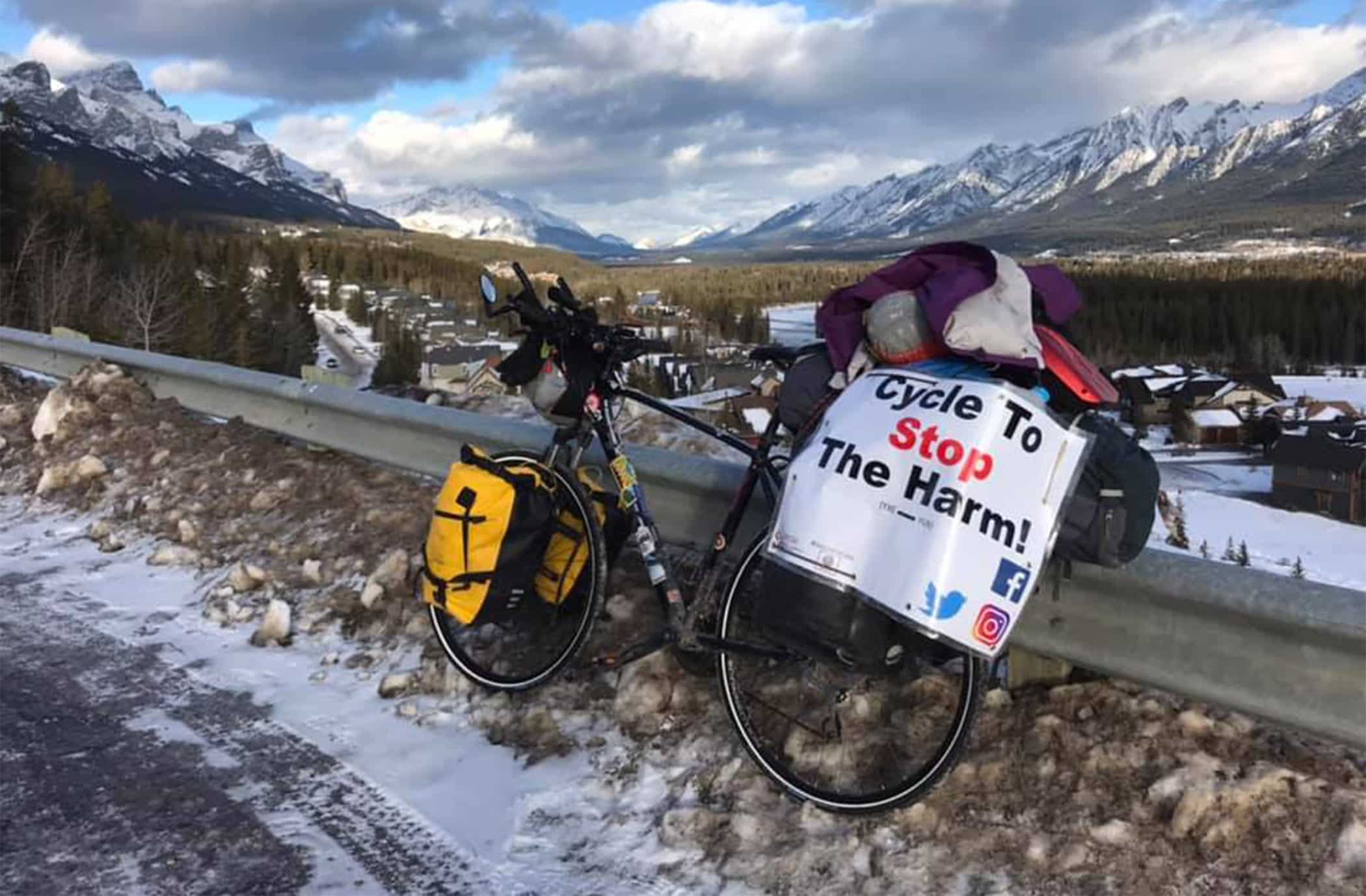
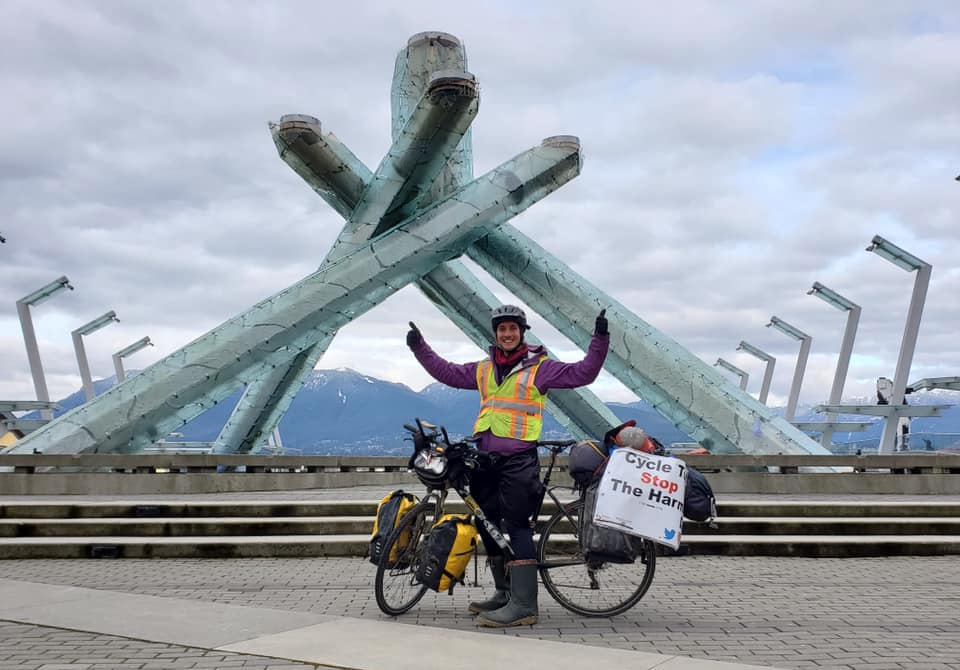
On January 1, 2021, I hopped on my bicycle and rode from Saskatoon to Vancouver on a project called Cycle to Stop the Harm, to raise awareness around the drug poisoning crisis, drug policy reform, and mental health. Along with awareness and outreach, I raised money for Moms Stop The Harm and the Canadian Drug Policy Coalition—two amazing groups among many working at the leading edge of drug policy reform, outreach, and education. Full of determination, I left with a fundraising goal of $20,000 and a bicycle packed with everything I needed to survive winter camping and cycling from the prairies, through the mountains, and to the west coast. After 29 days and roughly 1670 kilometres, I successfully arrived in Vancouver with all my toes and fingers on January 29, 2021 with a total of $25,450 raised. Above all, this meant a voice for tens of thousands of people who are otherwise unheard and a chance to raise awareness around the current drug poisoning epidemic.
Iliajah Pidskalny; 2021
During that month, I received many questions: Why bicycle? Why winter? Why during a pandemic? What did you eat? Why peanut butter? What motivated you when it was most challenging? What was your training like? What will you do afterwards? Is there a personal connection to this issue? And the most common and most important question: what harm are you referring to?
The simple response to the latter is the harm done by our current drug policies, which have been a failed model for decades. The “war on drugs” is a useful term as it emphasizes the aggression of our current approach which, like war, costs a lot of money and many lives. After decades of failure, this model contradicts evidence, logic and human rights. The drug poisoning crisis is a manifestation of the harm caused by the war on drugs and is a serious epidemic taking the lives of thousands of people.
Ready to help?
Support drug policies rooted in social justice, compassion, and evidence. Sign up for our newsletter to get updates and learn how you can take action with us.
Is there a personal connection?
No, I do not have a personal connection to overdose nor fentanyl poisoning. However, I am a human, and so I have a personal connection to other humans. I am embarrassed about this pitiful and devastating “war on drugs,” the policies of which are illogical and unjust. The policies have been justified by miseducation around drugs, drug use, and mental health, which has created a culture of stigma and accepted marginalization. Canada should take this issue more seriously before every Canadian has lost a loved one to fentanyl poisoning or overdose. There is no “us and them.” Taking a more empathetic and human rights approach to drug policies will not only expose systemic inequalities—whether socioeconomical, cultural, racial, or gender-based—it will also help us better understand mental health.
So when asked, “What harm are you referring to?”
I was ultimately referring to the harm caused by our own mind. Whether we’ve lost a loved one or are genetically prone to depression, our mind is at the root of so much suffering. Cycle to Stop the Harm was about mental health. Drug policy reform is the perfect place to increase research, understanding, and compassion regarding mental health and to decrease stigma (not to mention save tens of thousands of lives). Whether it’s depression, loneliness, anxiety, addiction, greed, hatred, or jealousy, we are all susceptible to mental and emotional ailments. That is the essence of why I began Cycle to Stop the Harm. That is why I was so motivated to bring awareness to this issue even if it meant the constant threat of hypothermia and frostbite for 29 days. I was riding for every boy and girl lost to fentanyl poisoning and for every mother and father who now suffers from their loss. I was riding for impoverished communities in Canada, Ghana, Mexico and every other country. I was riding for the rich and the poor, the religious and the atheist, the young and the old. Each day on that bicycle, I rode for every individual human.
Why bicycle?
I knew that I could bicycle and camp in the winter. I knew that a crazy journey like this could get some attention. I knew that I could give a voice to so many people who don’t have the opportunity/resources to speak up (or be heard).
Saskatchewan highway; 2021
Why winter?
I got the idea mid-December and I was not willing to wait. People say I’m impatient, but I call it enthusiastic. I also knew my journey would gain much more attention in winter than in summer. Furthermore, riding and camping in the winter highlights some (and only some) of the challenges experienced by Canadians who are homeless. After witnessing homelessness during another six-week winter bicycle journey in eastern Canada (October 23 – December 3, 2020), I wanted people to rethink the challenges of homelessness. I often wondered why people would call me adventurous or brave, yet rarely said anything like that (or anything at all) to people who live on the streets. Living outside in the winter sucks, even if you have good gear and do it by choice. I can’t imagine what it’s like involuntarily living without shelter and struggling with other barriers, including severe mental illness and stigma.
Why during a pandemic?
Although the world’s in the grips of a tragic pandemic, homelessness, addiction, depression, suicide, mental illnesses, and social inequalities don’t stop. In fact, overdose and suicide have only gone up in many communities during this time. For me personally, I wasn’t going to wait until the pandemic was “over” until I cared about these issues. I followed all pandemic protocols and was willing to take the extra challenges involved, which meant living/cycling for two weeks in a tent by myself until I could be hosted in a home. That totalled two warm homes in the month of January, and not nearly enough showering…
As for the journey itself, I’ll try to summarize some of the challenges.
Thanks to good gear, I was never cold during the night. However, every morning I had to crawl out of my warm sleeping bag and put on frozen socks, frozen boots, and frozen mitts. Overnight, my breath would precipitate as snow on the inside walls of my tent. This meant that any sudden movement, it would be snowing in my tent. I had spare dry socks, but my boots were wet (frozen), so I saved them for emergency (which was never, thankfully). Day after day, everything got more wet and more frozen.
Camping along Cycle to Stop the Harm route; 2021
After I put my frozen socks and mitts on, I would then pack up camp in the dark so that I could ride at dawn. Since I had limited daylight (especially in the beginning), I would cycle from dawn to dusk. It took a lot of time and energy to make and pack up a good winter camp everyday. I had to bicycle at least 80 km a day for it to be worthwhile. Riding 80 km was tough against prairie headwinds (consistently 50 km/hr and sometimes gusting up to 90 km/hr), but in the mountains I started averaging 120 km a day.
Once camp was packed up and the bike was ready to go, one of the hardest parts was next: shedding some layers before cycling. That always sucked. Singing and talking hysterically seemed to help. It was just a matter of cycling hard until my body would generate enough heat such that the involuntary and lifesaving shivers would stop. But, before that moment, the bitter cold seemed to desperately draw physical and mental energy out of me… day after day. Once I was fully warmed up, I cycled with only a long sleeve shirt, thin polyester leggings, and swimming trunks. Then to the next hardest part: stopping for a break. If I stopped, I would get extremely cold, shivering and teeth chattering within a few minutes (or sometimes seconds). Standing in middle-of-nowhere Canada with a shiver like that is a quick trip to severe hypothermia. My only source of heat was my body via exercise. So, I would rarely stop and only briefly. A quick sip of water (which had to be stored in a thermos) and a quick handful of as many calories as possible before cycling again. I noticed that bicycling with a mouthful of food, trying not to choke and wearing a face mask all at once was a quick way to warm up after a break.
What did I eat?
Each morning and evening I ate rice noodles with peanut butter. But to sustain me for the rest of the day, I would make energy bars from dates, chocolate, peanut butter and tortilla chips. After cycling all day, I would always get a nasty chill when I finally stopped riding in the evening. The only way to shake the chill was to set up camp as fast as I could (which worked surprisingly well every time). Then I would cook my rice noodles for dinner, often with vegetable juice or canned tomatoes and of course, peanut butter. I ate other things along the journey, especially candy in Saskatchewan and potato chips in Alberta. But, once I learned that the combination of dates, chocolate, peanut butter, and tortilla chips made me feel invincible, I never looked back. And so it was, for 29 days.
Eating a meal during Cycle to Stop the Harm; 2021
Why peanut butter?
For those who had followed the journey on social media, they noticed a consistent theme of peanut butter. It was in part a joke, but also the majority of my caloric intake. This is because it is cheap, but also because I have some serious gut health issues (IBS). My health issues have almost convinced me to stop travelling and doing adventures like this, but I’ve decided instead to adjust my lifestyle (diet) in a way that allows me to do the things that I love most. Of course, I’ve had to redefine what it is that I love most; but that, combined with peanut butter allows me to push on. (I share this to help remind people that I’m human, and to not over-romanticize my character qualities).
What motivated me when it was most challenging?
I met many people along the journey and everyone had a story—whether it was losing a friend to fentanyl poisoning or their own story about alcoholism, using heroin, or addictive shopping. Everyday, I would be reminded about who and what I was riding for: everyone and their mental health. When my toes were numb or the headwinds were gusting 90 km/hr, I just had to remind myself, “This isn’t about you, Iliajah. This is about everyone, including you.” I would look up at the mountains and think, “Be patient like the mountains, strong like the wind, and humble like the dust.”
During the month, I rarely thought about my final destination. Instead, I focused on one day at a time. Cycling and camping in the cold requires a lot of focus, and there was little time for me to celebrate or relax. Every minute was highly calculated, as I constantly danced with the threat of hypothermia and frostbite. However, when I left Manning Park at -20C one morning and arrived in Agassiz at +8C the same afternoon, I felt an overwhelming sense of relief. At that moment, I knew that I had successfully completed the journey and that I would safely arrive to Vancouver in only a few more days. By the time I arrived at my official final destination, Jack Poole Plaza (at the Olympic Flame) in Vancouver, I only felt an inexplicable exhaustion from my journey and an excitement for what lay next.
Jack Poole Plaza; Vancouver; 2021
What was my training like?
I spent the last six years without a vehicle, which meant many winters and many long distance bicycle rides. My first journey was from Saskatoon to Vancouver (in the summertime when I was 18 and with a buddy), and I fell in love with long distance cycling. Since then, I’ve done long hauls in Indonesia, Cambodia, Spain, and others in Canada. My legs were ready for Cycle to Stop the Harm. However, winter is a different beast and so this time my training was focused on my mind. I’ve been lucky enough to have the time, energy, and resources (books, wifi, people) to have stumbled upon and practiced meditation. This was the key to the empathy and compassion that motivated me to embark on a bicycle journey in the dead of winter for no one in particular, yet every particular person.
What did I do afterwards?
I went to Vancouver Island and continued to bicycle for Cycle to Stop the Harm. I had closed the fundraiser and decided to focus on conversation and reducing stigma. I thought it would be a more relaxed version of my month in January, but I was very wrong. It was another month full of numb hands and feet, with wet shivering and teeth chattering battles against hypothermia. It was far more challenging than the first month because there was no endpoint. Less people were paying attention, and so my life threatening efforts felt pointless. Alas, I rode another ~500 km from Nanaimo to Campbell River, then south to Victoria, and then finally back to Nanaimo. The project ‘Cycle to Stop the Harm’ has since been put to rest, while I take some time to heal and stop harming my aching body. But, as the days get warmer and the sun shines longer, I can smell ideas blooming in my mind. The next project awaits, and will blossom when the time is right.
canadian drug policy coalition 2021 canadian drug policy coalition 2021
There’s no denying that 2020 was a disaster. The human toll can be expressed in numbers, but the impact and actual loss is incalculable. Friends, family, lovers and co-workers died—many alone, and most from failed drug policy.
Though many of us understandably want to forget about this past year, we must not overlook the courage, ingenuity, and determination that helped move the dial on public health, harm reduction, and drug policy. COVID-19 helped the public see and understand the dire health inequities plaguing Canadian society. Supervised consumption, decriminalization of drugs, and safe supply entered public discourse and consciousness in a way they hadn’t in the past. This was due to the work of frontline advocates and communities affected by the harms of prohibition.
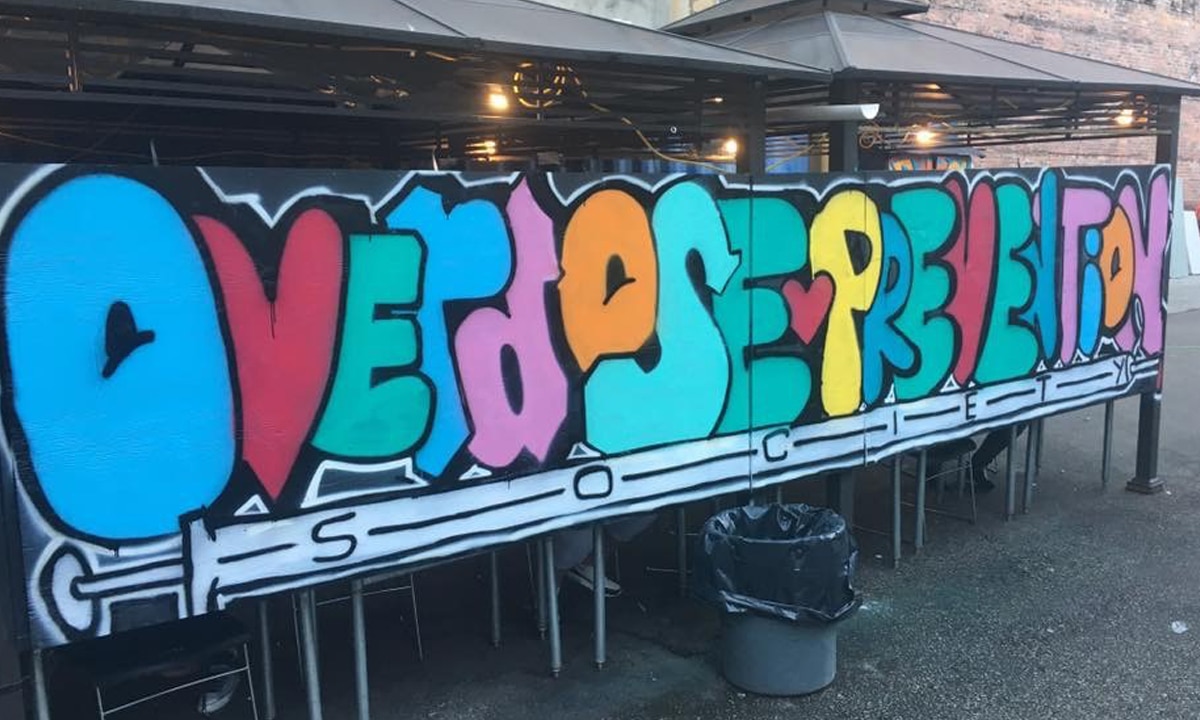
International Overdose Awareness Day; Vancouver; 2020
Not only did the overdose epidemic continue to rage in 2020, but the addition of the COVID-19 pandemic meant that Canadians were isolated from their regular supports. COVID-19 may have finally brought some folks shelter, but it also came with an increased risk of overdose because these individuals were now living alone.
Ready to help?
Support drug policies rooted in social justice, compassion, and evidence. Sign up for our newsletter to get updates and learn how you can take action with us.
Looking forward, there is an enormous amount of work to be done in 2021. The illegal drug market is still tainted with poisoned drugs. Stigma and discrimination still push people into the shadows. Municipal and provincial governments continue to deny the evidence of harm reduction and its positive impacts. We must keep the pressure on as we endeavor to change the minds of our elected leaders and convince them to support progressive drug policy.
In 2021, the Canadian Drug Policy Coalition will train its focus on decriminalization and the legal regulation of drugs to help end the harms of the toxic drug market. We will do this through a range of major projects, each with its own audience and goal to push Canada towards a future free from drug policy-related harm.
Rally in support of Lethbridge Overdose Prevention Site; Lethbridge, AB; 2020
At the frontend of our efforts is, Getting to Tomorrow: Ending the Overdose Crisis, a national public health dialogue project aimed at helping Canadians realize that we all share the same goals: a safe and secure society free from the harms of a toxic drug supply. The project will bring together community leaders across Canada to identify shared values, goals, and a collective vision for change so that Canadians can work together towards solutions. Getting to Tomorrow aims to bridge the divide within communities that so often stands in the way of life-saving progress and build a broad base of public support that will help animate our other major initiatives and efforts.
Broken Drug Policies is a similar project focused in British Columbia hoping to leverage the gains in drug policy, already introduced at a provincial level, to accelerate drug policy reform. Broken Drug Policies will help the public understand how interconnected systems (health care, criminal justice, social services, employment) drive substance use and the power they as citizens have in influencing those systems to create change.
The Regulation Project will do a deeper dive into what a system of legal regulation of drugs could look like. Ultimately, it is only through a safer and regulated supply of drugs that the scourge of overdose deaths can end, and envisioning this future free from harm is a vital first step. As part of the project, CDPC will be consulting key stakeholders—principle among them people who use drugs—on what factors would ensure that a system of legal regulation would succeed. How would people access safer drugs? Who would have access to them? When and where could they these substances be obtained? All these questions will be explored to lay the blueprint for life-saving change.
Vancouver Area Network of Drug Users Memorial March; Vancouver; 2020
Working alongside this effort is Imagine Safe Supply, which seeks to clearly articulate the concept of “safe supply” and what it means for those most directly impacted by the harms of our current drug policy: people who use drugs. Having a clear and accurate understanding of this concept is the necessary foundation for transformative policy.
With the rollout of COVID-19 vaccines we are happy to begin planning of Stimulus 2022: Drugs, Policy and Practice in Canada, the country’s largest harm reduction and drug policy conference that will bring together harm reductionists, people who use drugs, government, community leaders, advocates and academics to share knowledge and build community and capacity to better respond to the worst overdose crisis in Canadian history.
As we look to 2021, we look with hope. We need to come together now more than ever as we walk this tremendous path to change failed drug policies and save lives. We hope that you’ll walk alongside us.
ARCHES closes on international overdose awareness day, ARCHES closes on international overdose awareness day
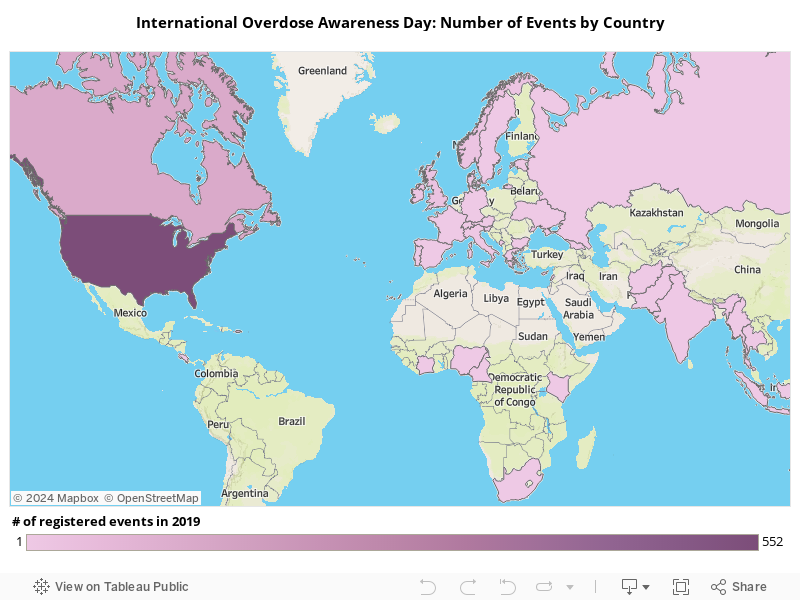
International Overdose Awareness Day began in Australia in 2001 as a bold and public call to combat stigma around drug use, honour the lives that have been lost to overdose, and educate society on the life-saving value of harm reduction. It has grown every year, with a record 874 global events and participation from 39 countries, including Canada, in 2019. These are all encouraging signs that society is waking up to (and communities are mobilizing around) the truth that drug prohibition has failed and a new human rights- and public health-based approach to drug policy is desperately needed.
(Interactive)
But it’s hard to sense this shift from the actions of the Alberta government, which recently cut funding to Canada’s busiest supervised consumption site, ARCHES, which forced its closure. The doors close today, International Overdose Awareness Day—a time when we should be moving towards progress through compassionate, evidence-based drug policy by embracing more harm reduction, not less. Instead, Alberta, in darkly ironic fashion, is sliding backwards—a regress that erodes the public health and safety of one of Canada’s hardest hit provinces when it comes to overdoses.
Since opening in March of 2018, ARCHES, located in Lethbridge, Alberta, saw an average 663 visits per day. “That’s more daily visits than the busiest sites in Toronto—a city of more than two million, and Vancouver—where Canada’s first supervised consumption site was founded in 2003,” according to the Star Edmonton. The number of lives saved and positive impact to the greater community is immeasurable, so it is both baffling and dangerous to shut the doors on such a vital health service. Research from chief coroners across Canada makes it clear that using drugs alone is extremely risky at a time when the drug market is so toxic. People will likely die without the supervised consumption services ARCHES provides and the supportive environment it affords.
Ready to help?
Support drug policies rooted in social justice, compassion, and evidence. Sign up for our newsletter to get updates and learn how you can take action with us.
In the first quarter of 2020, there were 127 fatal overdoses related to fentanyl in Alberta, an increase from the previous quarter where there were 105. 85% of the deaths this year occurred in larger urban centres like Edmonton, Calgary, Red Deer, and yes, Lethbridge1.
In such a climate of death and human suffering, governments should be expanding harm reduction, not scaling it back. Alberta’s provincial government decided to pull funding after a financial audit found suspected financial irregularities around spending and expenses. But this is no reason to punish the marginalized clients who use the facility daily—whose very lives depend on its services and the community of care that has formed around them.
The Government of Alberta announced a mobile site will replace the services lost with the closure of ARCHES. But advocates warn that this can in no way replace the scale of services and community building a site like ARCHES provided. They’ve done the math, and the numbers are a cause for deep concern.
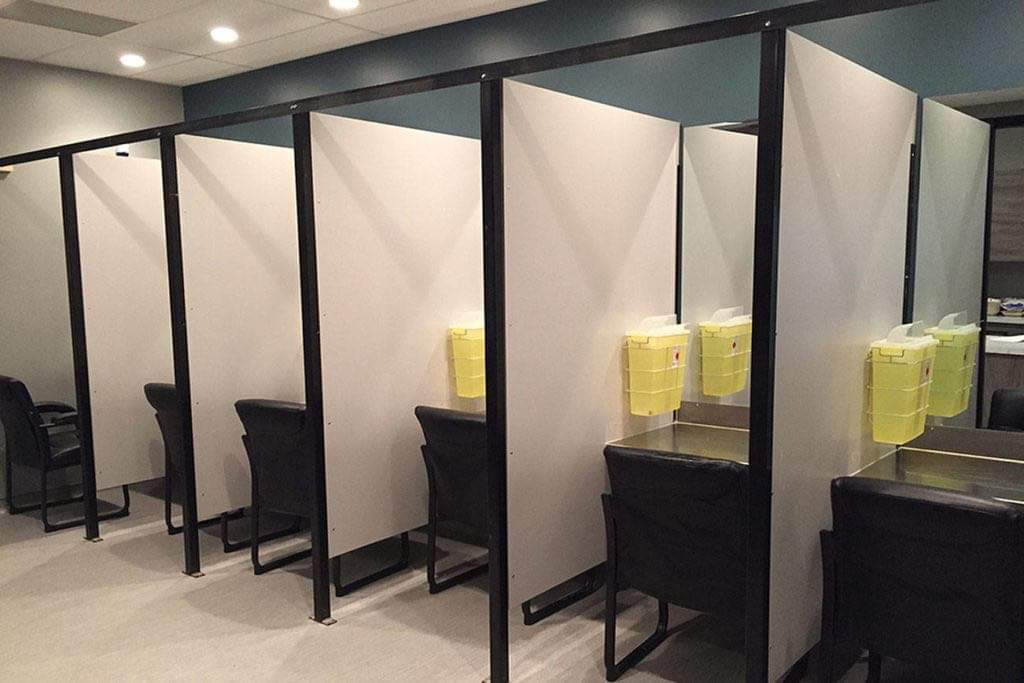
Let’s do some math! @archesleth SCS sees 800 people a day. They have 13 booths for injecting, snorting or consuming drugs from the unregulated market.
The 2 inhalation spaces (6-8 people total) have been closed because of #Covid19AB so lets put that aside for the moment. 1/4 pic.twitter.com/yufJ4eoNkW
(Vancouver Area Network of Drug Users memorial march; Vancouver; August 15, 2015)
And in British Columbia, two consecutive months of record-breaking overdose deaths have both shattered and enraged the spirits of affected communities. This May there were 171 fatal overdoses; in June, 177; and in July, 175. Across Canada, grief, fatigue, and rage surface in equal measure as frontline communities fighting two public health crises (COVID-19 and overdoses) also battle hostile local governments threatening their ability to save lives.
Now more than ever, International Overdose Awareness Day is needed to affirm the value of harm reduction and the policy changes needed to stem the tide of fatal overdoses: decriminalization and a safe supply of drugs. At a federal level, there is slow and incremental progress. It is not nearly good enough, but better than the backwards direction we’re seeing from a provincial government that seems driven by ideology and out of touch with the science and evidence supporting harm reduction.
Though drug policy is a federal matter, provincial governments have the power to alleviate some of the harm created by prohibition—which is fuelling overdose death—by, for example, deprioritizing police enforcement of certain drug laws (de facto decriminalization) and choosing where to spend money. Their funding decisions can also create serious harm for affected communities, as will likely be the case in Lethbridge.
With global protests igniting around the killing of George Floyd in Minneapolis, calls to defund police are growing louder. For some, this may seem like an extreme proposition, but as the history of drug policy in Canada and globally has shown, the criminalization of drugs—and millions poured into police budgets to enforce associated laws—have fueled some of the greatest harms to society.
This interview by Black Lives Matter Toronto co-founder, Sandy Hudson, articulates the clear logic around defunding police and what that means: reallocated funds more intelligently and eliminating from police control those roles they are now performing that cause serious community-level harm, and getting other more capable organizations to carry out those activities. Social development is key to creating healthier and safer communities. We believe it would make society safer by reallocating resources into vital social programs—like housing and employment services—that would do a better job in creating safety for everyone.
Ready to help?
Support drug policies rooted in social justice, compassion, and evidence. Sign up for our newsletter to get updates and learn how you can take action with us.
The significant resources pouring into enforcing inhumane drug laws that criminalize the possession of controlled substances for personal use is one of many areas in the purview of police that should be defunded. There is a mountain of evidence showing that criminalizing people who use drugs is extremely harmful. Currently amidst the COVID-19 pandemic, the criminalization of drugs forces people to consume substances in isolation and engage in survival strategies that increase their risk of fatal overdose.
The millions we spend on criminalizing drug use could instead be funnelled into harm reduction and drug treatment programs that have been proven to save lives and build community, rather than fuel harm. Police themselves have said that they “cannot arrest their way out of the overdose crisis.” The cost in taxpayer dollars, but more importantly human lives, could be reduced by moving away from policing in this area as has been done in other countries.
(Photo credit: Peter Kim | National Day of Action on the Overdose Crisis | 2018)
BC’s chief medical health officer, Dr. Bonnie Henry, recently lauded for her pandemic response by the New York Times, has called for the decriminalization of drugs. And this policy shift has been echoed by other leading health experts across Canada. This same shrinking of scope and defunding of budgets is possible in other areas of policing where public health and safety are being adversely impacted by police involvement, such as mental health calls.
The amazing efforts and courage of Black-led advocacy groups have pushed this issue to the forefront of our collective consciousness at a time when the world is on the cusp of transformative change. In addition to amplifying the messages and calls for change of the #BlackLivesMatter movement, we can play an important role by supporting its efforts on the ground to ensure this pivotal moment in history bends towards justice.
Please consider donating to Black Lives Matter Toronto or the Black Legal Action Centre to ensure the movement for change continues.
We’re now witnessing two public health crises collide: the
devastating COVID-19 pandemic and the unrelenting drug poisoning crisis that is
causing so many deaths. Caught in the crosshairs of this unprecedented
disaster are people who use drugs and the frontline harm reduction and
healthcare workers who support them. Unlike many of us, they do
not have the option to stay home and self-isolate, because many may not have a
home, and others are performing critical work saving lives each and every day.
During this time of crisis, let’s help the people saving lives in desperate need of support. We’ve selected five organizations across Canada you can assist through donations of supplies and money. Please give where you can.
AIDS Saskatoon
This life-saving organization provides education, advocacy, support and outreach services for people living with and affected by HIV, AIDS and Hepatitis C in central and northern Saskatchewan. Donate here.
Vancouver Overdose Prevention Society (Vancouver, BC)
You can donate to the Vancouver Overdose Prevention Society here. The Overdose Prevention Society is in need of thermometers, soap, baby wipes, vitamins, and healthy food.
Toronto Overdose Prevention Society (Toronto, ON)
The Toronto Overdose Prevention Society accepts donations through their gofundme link or by direct e-transfer to [email protected]. They are also in need of personal protective equipment (PPE) – gloves, face masks, and hand sanitizer.
Boyle Street Community Services (Edmonton, AB)
Since 1971, Boyle Street Community Services has been supporting
people experiencing homelessness and poverty in Edmonton. You can donate to
them online here.
Turning Point Society (Red Deer, AB)
For over 30 years, Turning Point Society has been responding to
the health needs of communities using a harm reduction approach. The
organization is in urgent need of masks and hand sanitizer. You can also give
online here.
The COVID-19 pandemic has brought into sharp relief the flaws in
our system of laws and policies around marginalized communities. At this time
of crisis, please keep the health and wellbeing of those on the frontlines and
individuals without shelter and resources in your hearts.
Stay safe, and please give generously where you can.
I’ve learned very quickly that the Land Down Under and the Great White North have a lot in common: we’re both parliamentary democracies; we’re both partial to smothering french fries in gravy (even if Aussies call them “chips” and don’t add cheese); and of course, we both have universal healthcare.
Both our countries are understandably proud of our healthcare systems. While witnessing the current heated debate in the United States over universal healthcare, Australians and Canadians alike can find themselves thinking: “oh how primitive, we did that ages ago.” Yet despite our fantastic systems, in both Canada and Australia, patients still struggle to access a vital, all-natural pain relief medicine that has demonstrated a range of other positive health benefits, including helping children with epilepsy reduce their risk of seizure (Thomas & Cunningham, 2019). I am of course talking about cannabis.
In Canada, medicinal cannabis isn’t a government subsidized medication. This means costs are prohibitively high. In 2019, across Canada the cost of medicinal cannabis per gram was on average 75 cents higher than non-medicinal cannabis. This might seem like a small amount, but when buying in larger quantities to fill a prescription, these costs add up. Medicinal cannabis isn’t subsidized in Australia either; a six- to eight-week course of medicinal cannabis can cost over $750 AUD ($662 CAD). This can cause healthcare costs to rapidly increase; in Australia the cost of treating an epileptic child with a standard dose of medicinal cannabis is $60,000 AUD ($52,573 CAD) a year. Since these costs are not subsidized, this translates into crippling medical bills for a lot of families.
Ready to help?
Support drug policies rooted in social justice, compassion, and evidence. Sign up for our newsletter to get updates and learn how you can take action with us.
In response to this, Canada has seen some changes. Organizations like CanniMed subsidize the cost of medicinal cannabis for people on disability or unemployment benefits, and Veterans Affairs Canada also covers registered members for use of medicinal cannabis. Unfortunately, these are the outliers. Large numbers of low-income Canadians in need of medicinal cannabis are still unable to surmount the prohibitive costs. In Australia, some state governments have sought to surmount financial burdens through compassionate access schemes, such as the framework set up in Victoria under the Access to Medicinal Cannabis Act 2016. This scheme subsidizes the cost of cannabis, but only for children with epilepsy and only if other treatments have failed. Whilst this is an important protection for vulnerable children, the scheme is currently capped at 90 participants, so it too is limited in scope.
Similarly, both Australia and Canada face issues of “postcode injustice” since there is a far greater degree of access to medicinal cannabis in cities than rural areas. In both countries there are troubling reports of people travelling hours from regional areas to fill prescriptions either due to a lack of clinics altogether or (as occurred in Manitoba in March 2018) clinics running out of stock.
Of course, the tide is turning in Canada. With cannabis legally regulated for recreational use, doctors are becoming less hesitant to prescribe it. As the normalization of cannabis use continues, insurance companies and government bodies are moving closer towards subsidizing medicinal cannabis. The legal cultivation of cannabis plants also helps bridge the gap for rural communities who might otherwise struggle to access medicinal cannabis.
Meanwhile, the illegality of cannabis in Australia creates additional barriers to health outcomes, which jeopardizes marginalized people in need of medicine. Whereas wealthy people can overcome the prohibitive costs of accessing pain relief, lower income families are forced to choose between agonizing pain, or the risk of arrest. This is another stark reminder that our outdated approach to drugs has real negative impacts that disproportionately affect disadvantaged groups.
Australia’s prohibitive regime at least (logically) makes sense: we’re still clutching our collective pearls at the thought of cannabis being used recreationally, so there is accompanying hesitation around its medical use. Despite slow moves to decriminalize recreational use of cannabis in some states and territories, there is still a long way to go before we see widescale legal regulation. But it’s a sad sight that in Canada you can purchase marijuana from a store as easily as you can buy alcohol, yet the medical benefits of this substance are not endorsed by health insurance providers or the government.
Australians and Canadians have a right to be proud of our healthcare systems. But we shouldn’t forget that when it comes to medicinal cannabis, we’ve got a long way to go. If both countries don’t take greater steps to improving access, our claims of superiority will be little more than blowing smoke.
Thomas, Rhys H & Cunningham, Mark O (2019). Cannabis and epilepsy. Practical Neurology, 10, 465-471.
Being an Australian in Vancouver, I’m used to confusing people a bit.
Sometimes folks can’t tell if I’m a Pom or a Kiwi. Sometimes my coffee order
leaves baristas with furrowed brows. And once I made the mistake of using the
slang phrase, “that’s fair dinkum” (meaning “that’s the truth”) in conversation
with a Canadian friend, who insisted that Australian must be its own language.
But in the Canadian drug policy world, one observation of mine leads to more confusion than any quirks of pronunciation. When I say, “Australia is way behind Canada on harm reduction” people’s jaws hit the floor. A common response is: “but you folks have had safe injection sites since the 1990s!” They’re half right.
Ready to help?
Support drug policies rooted in social justice, compassion, and evidence. Sign up for our newsletter to get updates and learn how you can take action with us.
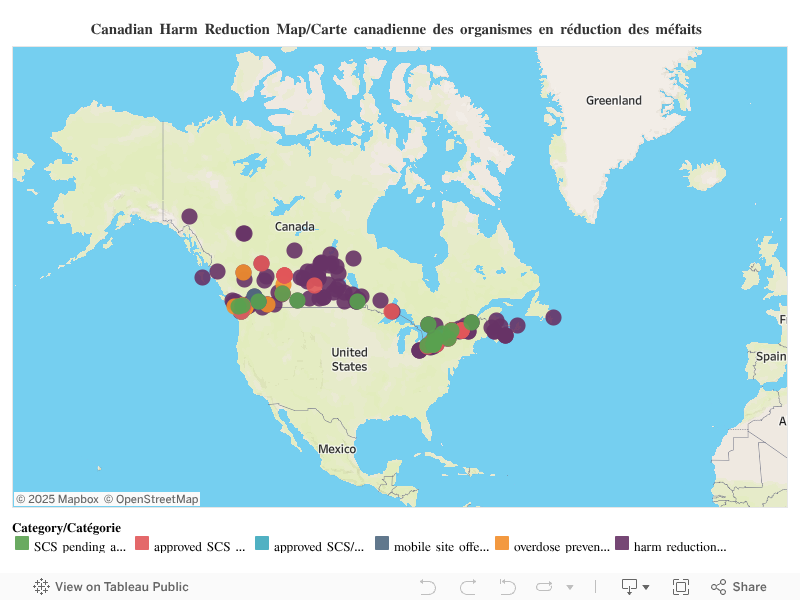
Australia currently has two supervised injection centres. One is run by the Uniting Church in Sydney and another is a government-run facility in my home city of Melbourne, which opened in 2018. So right off the bat, we’re lagging behind just on numbers: the city of Vancouver has more harm reduction facilities on one block than Australia has on a whole continent. But there’s more we could copy from Canada than numbers.
(Interactive Map)
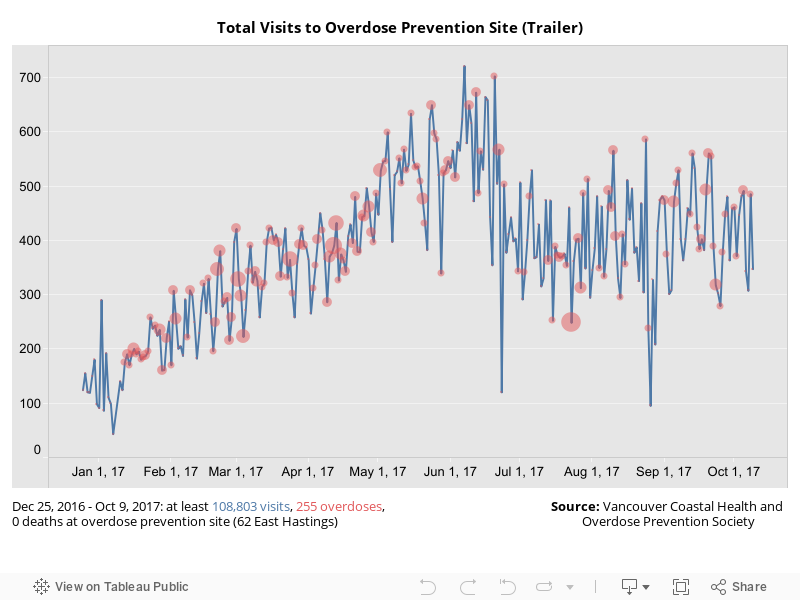
I’ve been interning at the Canadian Drug Policy Coalition (CDPC) since January and after getting here I took the opportunity to volunteer once a week at the Overdose Prevention Society (OPS), which operates a low-barrier overdose prevention site. I wanted to help a life-saving organization and understand a perspective on drug policy outside the confines of academia. I received a rapid reminder of how important overdose prevention sites are: on my first shift, there were three overdoses in three hours. Thanks to the intervention of staff, volunteers and paramedics, all three individuals survived—three lives saved. This work happens everyday, and the number of deaths prevented is much larger.
(Interactive Graph)
But there’s something else to OPS that sets it apart from the safe injection sites back home. OPS is a peer-led program; the staff and supervisors live in the Downtown Eastside and many of them have been or currently are people who consume substances or have experience with homelessness. Paying community members to work at the site gives them a “safe hustle” (a chance to make legal money) while also offering an empathetic ear to participants, rather than having privileged people talking down to them. As an outsider looking in, it’s so inspiring to see the respect that the supervisors and staff engender in participants.
(Photo credit: Rafal Gerszak, The Globe and Mail | Trey Helten, Manager of the Overdose Prevention Society)
You get a tangible sense of community by just looking around the space and observing the casual interactions between people. The notice board next to the sign-in desk is covered with artwork and poems made by community members. There are couches, which some people sleep on, and a big table in “the chill,” a space where people can hang out while they wait for a booth or just to chat with others. Even people’s handles (aliases that they use to sign in) are creative, personalized expressions—a mix of innuendo, puns or significant words or phrases from their lives. All of this combines to give a sense that this space belongs to the participants.
Being a volunteer at OPS has been a highlight of my time in Vancouver. It’s a really positive environment, which might sound odd since my first shift involved intervening in three overdoses, but I truly mean it. The staff are genuinely kind and warm, and it’s always great when I get the chance to chat to a participant as they sign in. Aside from getting to meet some inspiring people, OPS gives me a lot of hope, just as it does the countless community members who use its life-saving services. Working in drug policy, it is easy to become pessimistic when governments, police and uninformed people put hurdles in the path of progress. But OPS is a reminder that people are making a positive difference in the overdose crisis every day despite such obstacles.
(Photo credit: Rafal Gerszak, The Globe and Mail | Sarah Blyth, executive director at the Overdose Prevention Society)
This is what Australia is missing. Besides people being misinformed
about safe injection sites, we lack a community-led approach to harm reduction.
Australia should be focussing on creating spaces that aren’t just physically safe,
but that also allow people to congregate, build community, and find hope. In
short, Australia doesn’t just need more safe injection sites; it needs more
spaces like OPS. And that’s fair dinkum.
Daniel Gates is a research intern with the Canadian Drug Policy Coalition studying a double degree of Law and International Relations at Monash University in Australia. The Overdose Prevention Society welcomes donations of clothing, blankets, and food. You can drop items off at 58 East Hastings Street, Vancouver between the hours of 8:00 a.m. – 9:00 p.m., 7 days a week. You can also donate to them online here.
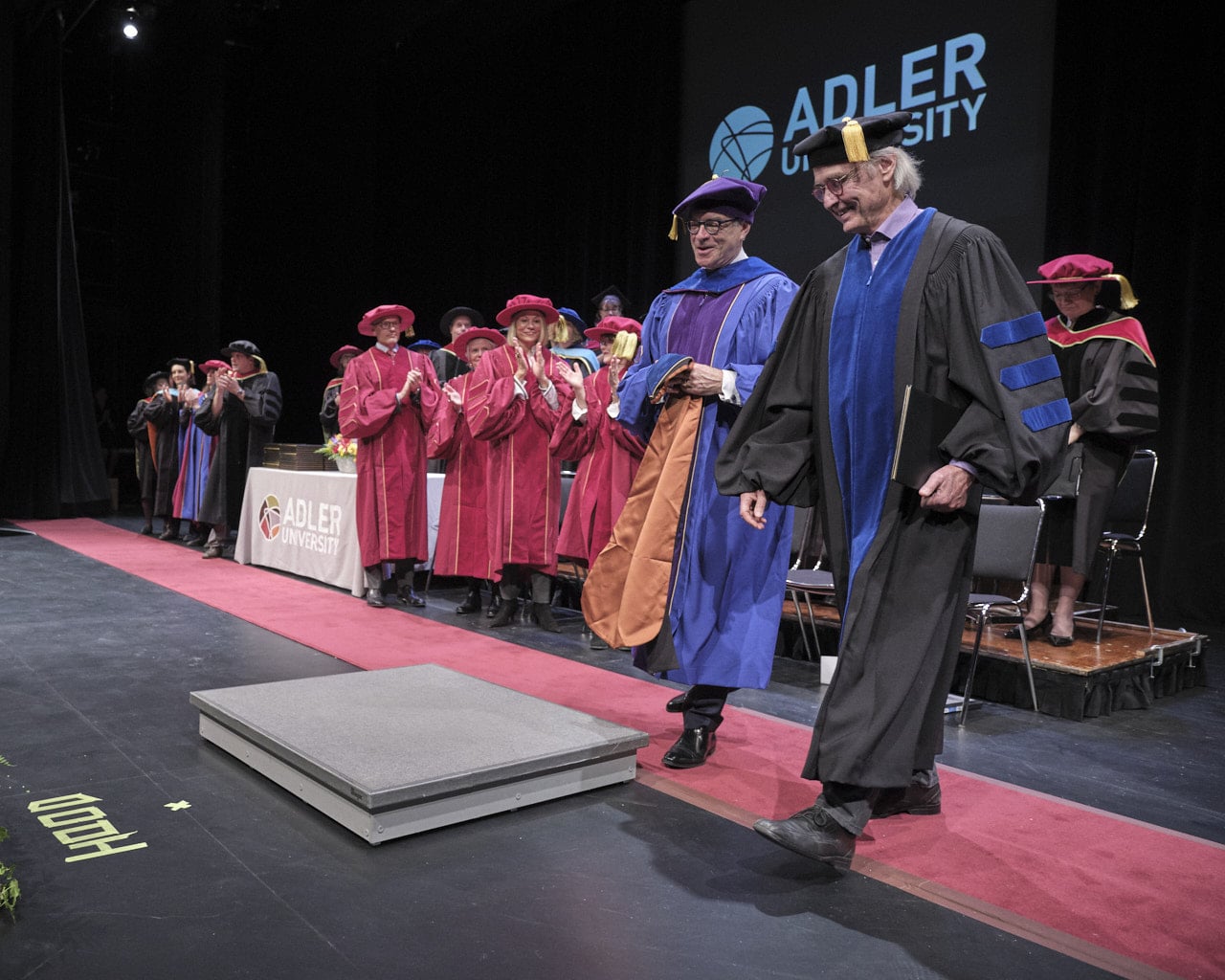
The following commencement address was delivered on October 27, 2019 to the graduating class of Adler University’s Vancouver Class of 2019 by Donald MacPherson, executive director of the Canadian Drug Policy Coalition (Simon Fraser University), as he received an Honorary Doctorate in honor of his work to improve Canada’s approach to illegal drugs.
Thank you so much for this incredible honor. I am delighted to receive this honorary doctorate from Adler University. It means a lot to me and I am quite moved by your decision.
I do have a confession though: I am a lapsed Masters candidate—lapsed, indeed expired, like a parking meter. Out of time. They gave up on me. Yes, I received that letter informing me of my new status as a Masters candidate from the Ontario Institute for Studies in Education many years ago. After two years full-time and two years part-time—ok I’m slow, I guess so slow that I lapsed—my status expired within the academic system. The finality of it all! Don’t get me wrong. It was the best thing I’ve ever done to go down that Masters rabbit hole. The people, the program, the opportunity to spend time going deep into how people learn, how change comes about, and to learn about social movements around the world was one of the best things that I have ever done!
Credit: Jerald Walliser | Donald MacPherson receiving an honourary doctorate from Adler University | October 2019
But not finishing what I had started took me to some very dark places. I was so terribly hard on myself and coming down from the mountain without reaching the peak was difficult and devastating for some time. But coming down from the mountain is often the best decision lest the mountain engulf you. So, take care of yourselves and each other as you pursue your next steps. The work I know you are engaged with can be overwhelming, confusing, and challenging.
I had good excuses though for lapsing out on my Masters. I remember my thesis advisor coming across me changing the diaper of our second child on my desk at the university—she is with us today just over there—and he admonished me: “Donald, no more babies till you get that thesis finished.” Shortly after that my wife and I packed up our two kids and headed to Vancouver—me always intending to complete the program from afar. In Vancouver, we had a third child and I began working at the Carnegie Community Centre, at the corner of Main and Hastings, in the middle of what was to become the largest open drug scene in Canada and the confluence of an HIV epidemic among injection drug users and Canada’s worst overdose death epidemic. I was carried away and soon to be on a mission. And remained lapsed!
I feel like I must only accept this honor on behalf of the many in the community and around the world who are working to change what are truly barbaric and simplistic historic approaches to the complex bio-psycho-social-cultural-developmental and often spiritual phenomenon: using psychoactive substances. So many have dedicated their lives to ending the devastating injustices of a global war on drugs, which really is a war on vulnerable, criminalized, and objectified people around the world. After all, those with privilege and power who use illegal drugs rarely meet the players in the criminal justice system.
The recognition by Adler that the work to change the way things are in this country, and indeed the world, in the area of drug policy means a lot to me and indeed tells me much about the depth of commitment to social change of this university. The issue of drug policy reform has NOT been taken up as a critical social justice issue by so many governments, institutions, and other organizations that claim to pride themselves on supporting social innovation and change. Our drug policies are deadly public policies, and so many institutions are complicit in maintaining them.
Credit: Jerald Walliser | Donald MacPherson giving commencement speech to Adler University’s Vancouver Class of 2019 | October 2019
The commitment to community engagement by this university is a critical part of understanding the catastrophic failure of our current approaches. My education on drug policy issues came directly from the community here in Vancouver; [namely], from working on the corner of Main and Hastings for ten years, talking to people who used drugs and community members about the absurdity of our approach to people who use criminalized substances, which has played out with the same ineffective and harmful results over and over again. That is where I learned so much.
But what advice do I have for you from my many years as a lapsed Masters candidate and drug policy reform advocate?
Ready to help?
Support drug policies rooted in social justice, compassion, and evidence. Sign up for our newsletter to get updates and learn how you can take action with us.
Don’t look for jobs. Make them up! Look around and see what needs to be done and write the job description you want to have and shop it around. Sometimes it even exists out in the world, but you just haven’t found it. But knowing what it is helps you to navigate towards it. At other times your proposed job description will compel people to think about what is needed. I didn’t know I had these powers but the last three jobs I have had came from a real effort on my part to be clear on the context of the work that I wanted, as in the Carnegie Centre work, or to create opportunities to fill in a missing role in the orchestra of people working towards change, as in the City of Vancouver Four Pillars drug policy work and as in my current role as director of the Canadian Drug Policy Coalition, an organization I co-founded with a number of other Canadians committed to working together to reform Canada’s badly outdated drug policies.
Know that thisis a critical time for social change. The structures and systems of the past have been found to be wanting in so many areas— economics, climate change, drug policy, housing to name a few—and there are real generational shifts and accelerations taking place that you will be a part of. Just ask dear Greta Thunberg who spoke so eloquently on Friday (October 25) about the need for climate action. Listen to her speech in Vancouver and learn from it.
Be bold. Think bold, take risks, but be strategic. It is past time for bold action on any number of issues we face every day here in Vancouver and Canada.
Credit: Jerald Walliser | Donald MacPherson giving commencement speech to Adler University’s Vancouver Class of 2019 | October 2019
Canada’s response to the devastating loss of almost 13,000 people to illicit drug toxicity deaths in the past three years and three months has been pathetic and bound by blinkered thinking; stubborn adherence to policies that have failed miserably; and risk averse bureaucracies and politicians who refuse to even learn enough about the reality of this disaster, its impacts on families, and communities to be able to converse intelligently in public about the potential interventions that might work to stop this epidemic. The inability to even say the words that represent new and bold ideas in this recent election campaign is astounding.
Some have even weaponized ideas that are in fact at the leading edge of public health and social justice thinking. One politician accused the leader of a party of planning to legalize hard drugs if elected—something she implied would be tantamount to chaos in our communities and death for our young people! We already have chaos and death and transnational organized criminal organizations selling drugs to our youth. That is the result of our current approach. She had no idea that the recommendations from two of Canada’s largest health authorities were just that: create a legal regulated market with currently illegal drugs. The Chief Medical Health Officers for Vancouver Coastal Health, Patricia Daly, and Toronto Public Health, Eileen de Villa, have both called for a legal regulated supply of opioids for people who use them so that they stop being poisoned to death in numbers that are at historic levels.
If our politicians have diverged so far from the evidence and advice of senior public health officials in the context of a national public health emergency, we have some major knowledge translation work to do!
Words matter. Find those new ideas and say them loud and often. Write about them. Put them on the record in your conversations with your bosses, your peers, and your community and institutions of government. Put them on the record in public hearings and processes. This will breathe life into them.
Learn how to say things to leaders and others with power that make them uncomfortable. It’s an art to do this, but start getting better at it. If something looks like an absurd way to proceed, it probably is—so say it!
And of course, always challenge yourself. Don’t get too comfortable in your work. Don’t become part of an “industry” servicing these complex societal problems within institutional systems that so often resist real change. This is a time of reconciliation with Indigenous peoples, and a time when maintaining the status quo is killing people, a time when it is imperative to plan for and support engaging people with lived experience in all aspects of research and program development and implementation. Work from within if you are within. Institutional change is an important part of the way forward. There are thousands of willing people and many resources that can be harnessed to support radical change within in many community institutions in my opinion.
And lastly, go find your peeps in other places. Go to international conferences that engage people working on the frontlines of responding to critical health, social, and economic crises globally. I often get asked how I continue to do this work after so many years of pushing for change that never seems to be coming fast enough. My answer is that there is an amazing global community of people in every country working hard to overturn draconian, harmful, and misguided drug policies that are causing immense harm to communities around the world. When we all get together it is powerful and accelerates our learning. We gain perspective, knowledge, and come to know that we are not alone in what is a global movement for change. And of course, the parties are spectacular!
Best to you all at Adler in the coming months and years. May the road rise up to meet the class of 2019. I am so thankful that you are here!