Category: Non classifié(e)

  • Three drug policy stories to watch in 2012

    Three drug policy stories to watch in 2012

    Insite opens the door

    North America’s only sanctioned safe injection facility was the big news story of 2011. The September 30, 2011 Canadian supreme court decision in favor of the safe injection facility is a crucial victory for evidence-based science and policy over ideology. It is a historic decision for harm reduction advocates that has seemingly opened the door to similar services throughout Canada and possibly into the United States. It took the tenacity of the PHS Community Services Society to make it happen along with the Vancouver Area Network of Drug Users.

    The court ruling is explained on the PIVOT Legal Society’s blog “The historic Insite decision in a nutshell.” On May 17, 2011 the Director of the Canadian Drug Policy Coalition, Donald MacPherson, moderated a packed evening of discussion with legal professionals, medical experts, community activists and supervised injection site users. The evening focused on demystifying the legal battle and making the case for evidence-based drug policy.

    Check out the video here. Quebec seems like the next province set to open similar facilities.

    A recent report from the Montreal public health department has recommended opening three supervised injection sites and a mobile one in city neighbourhoods where intravenous drug use is rampant.We recently spoke with Cactus Montreal representative  Jean-Francois Mary about the impact of the ruling and future of supervised injection facillities in Montreal. You can watch the interview here.

    The Omnibus Crime Bill

    The Safe Streets and Communities Act passed in parliament with a majority vote of 157 to 127. It now sits in the senate. The conservative government has promised to push it into law by March 16, 2012, the 100th sitting day of the 41st Parliament.

    This Crime Bill moves Canada in the wrong direction. If passed, the bill will introduce mandatory minimum sentences for low-level drug crimes, further criminalizing individuals who use drugs and creating an enormous additional financial burden on society. This kind of sentencing practice has been a complete failure in the last 20 years in the United States as part of their “war on drugs.” It has deeply marginalized vulnerable citizens and done nothing to deter organized drug-related crime.

    Bill C-10 flies in the face of all of the evidence. The CDPC is not against legislation that attempts to address crime in our communities, but it must be based on a body of evidence that proves it can achieve its goals. Bill C-10 fails this test. Quebec’s justice minister has called the crime bill an inappropriate tough on democracy measure. Newfoundland’s Justice Minister has spoken out as well, saying the new crime bill will be completely unaffordable and has not been properly researched. Grand Chief Derik Nepinak of Manitoba’s Assembly of Chiefs, called a national press conference to say that the bill’s mandatory sentences would continue the legacy of residential schools, and must be opposed. Join us in 2012 as we work together withcoalition members and LeadNow and Avaaz to write next chapter.

    Canadian Medical Cannabis Regulation

    In April 2011 the Ontario Superior Court Justice Donald Taliano struck down the Marihuana Medical Access Regulations, ruling that ailing people are often unable to access medical marijuana through appropriate means and must find alternative illegal sources, risking arrest and criminal charges. He concluded that unless the government addresses the legislative flaws within three months, the criminal law would be struck down.

    The Conservative government is appealing the ruling. In June 2011 the Government of Canada announced it is considering improvements to the Marihuana Medical Access Regulations program to reduce the risk of abuse and exploitation by criminal elements.

    The proposed changes include:

    • Eliminating personal production licenses, ending legal personal home marijuana cultivation altogether
    • Eliminating patient identification cards, putting patients at risk of police action
    • Building a system of private for-profit marijuana growers and sellers who would provide to all patients in Canada,  severely limiting the range of quality strains of medicine
    • Continuing the unconstitutional “doctors as gatekeepers” system
    • Failing to address the many compassion clubs and medical marijuana dispensaries currently open across Canada

    “The government proposes to remove Health Canada as the ultimate arbiter in approving or rejecting applications to possess marijuana for medical use, and instead leave it up to doctors to decide whether their patients should be licensed to do so. While this might appear to be a liberalization, it is widely being rejected by doctors, who rightly assert that a responsibility that should pertain to Health Canada is being off-loaded on them without appropriate research having been conducted on the medicinal properties of marijuana.”

    Many members of the CDPC are calling for alternative approaches to medical and broader cannabis related policies. The Canadian Association of Medical Cannabis Dispensaries is a coalition partner working towards a regulated community-based approach to medical cannabis access and supporting medical cannabis dispensaries to provide the highest quality of patient care. Check out their campaign.

    Stop the Violence BC  is a coalition of academics, past/present members of law enforcement, and the general public concerned about the links between cannabis prohibition in BC and the growth of organized crime and related violence in the province. Calling for a regulated approach Stop the Violence makes a strong case for policy reform in BC and provides a solid foundation of public support and evidence for implementing change.

    Also in 2012-Keep an eye out for the first CDPC policy paper out soon!

    Right now, get involved in spreading the Health Officers Council of BC (HOC) recently released discussion paper, Public Health Perspectives for Regulating Psychoactive Substances – What we can do about alcohol, tobacco and other drugs.
    Together with the HOC we hope to stimulate public and governmental discussions, development of policy proposals, and action on public health oriented regulation of psychoactive substances. Subsequent to receipt of letters of support and feedback over the next few months the HOC will be submitting this paper, with necessary addenda or changes, to governments for their response and action. Send us your message of support, sign up to the coalition, and write to the HOC directly.

    Dr. Paul Hasselback, Chair
    3rd Floor, 6475 Metral Drive
    Nanaimo, BC V9T 2L9
    Fax: 250-755-3372

  • Calling for community health and safety in BC.

    Calling for community health and safety in BC.

    This fall the Canadian Drug Policy Coalition joined the recently formed Stop the Violence Coalition BC (STVBC), a coalition of law enforcement officials, legal experts, public health officials and academic experts from the University of British Columbia, Simon Fraser University, University of Victoria, and the University of Northern BC.

    http://stoptheviolencebc.org/

    The STVBC coalition is working to engage British Columbians in discussion about how the current policy of cannabis prohibition is working to achieve the goals of reducing availability and use of cannabis in British Columbia and minimizing the involvement of organized crime in the illegal cannabis market. The STVBC Coalition is calling for a new model of regulating cannabis to be considered – regulating and taxing cannabis within a legal framework.

    The CDPC applauds the leadership taken by STVBC in bringing this discussion to light in British Columbia. CDPC is committed to evidence informed public discussion with a goal of developing more effective drug policies for Canada. For too long there has been a taboo on discussion and dialogue about viable alternatives to drug prohibition, a policy framework that has thwarted experimentation and innovation in policy development. Given the normalization of cannabis use in Canadian society as a common recreational substance, the enormous scale of the cannabis market within Canada and concerns over health and safety within the cannabis market this report is a significant contribution to the public discussion on how best to minimize harm within the cannabis market.

    Here is a copy of the second report issued by the Stop the Violence BC coalition. It focuses on the impact of drug law enforcement on cannabis availability and the expansion of organized crime in BC. The report recognizes that cannabis prohibition laws are ineffective when it comes to decreasing rates of availability and price, and suggests ways to better protect community health and safety. More details at www.stobptheviolencebc.org >>

    gfx_download_button1


  • Sir Richard Branson: ‘Time to end the war on drugs’

    Sir Richard Branson: ‘Time to end the war on drugs’

    Ten years ago the Portuguese Government responded to widespread public concern over drugs by rejecting a “war on drugs” approach and instead decriminalized drug possession and use. It further rebuffed convention by placing the responsibility for decreasing drug demand as well as managing dependency under the Ministry of Health rather than the Ministry of Justice. With this, the official response towards drug-dependent persons shifted from viewing them as criminals to treating them as patients.

    Now with a decade of experience Portugal provides a valuable case study of how decriminalization coupled with evidence-based strategies can reduce drug consumption, dependence, recidivism and HIV infection and create safer communities for all.

    I will set out clearly what I learned from my visit to Portugal and would urge other countries to study this:

    In 2001 Portugal became the first European country to officially abolish all criminal penalties for personal possession of drugs, including marijuana, cocaine, heroin and methamphetamines.

    Jail time was replaced with offer of therapy. (The argument was that the fear of prison drives addicts underground and that incarceration is much more expensive than treatment).

    Under Portugal’s new regime, people found guilty of possessing small amounts of drugs are sent to a panel consisting of a psychologist, social worker, and legal adviser for appropriate treatment (which may be refused without criminal punishment), instead of jail.

    Critics in the poor, socially conservative and largely Catholic nation said decriminalizing drug possession would open the country to “drug tourists” and exacerbate Portugal’s drug problem; the country has some of the highest levels of hard-drug use in Europe. The recently realised results of a report commissioned by the Cato Institute, suggest otherwise.

    The paper, published by Cato in April 2011, found that in the five years after personal possession was decriminalized, illegal drug use among teens in Portugal declined and rates of new HIV infections caused by sharing of dirty needles dropped, while the number of people seeking treatment for drug addiction more than doubled.

    It has enabled the Portuguese government to manage and control the problem far better than virtually every other Western country does.

    Compared to the European Union and the US, Portugal drug use numbers are impressive.

    Following decriminalization, Portugal has the lowest rate of lifetime marijuana use in people over 15 in the EU: 10%. The most comparable figure in America is in people over 12: 39.8%, Proportionally, more Americans have used cocaine than Portuguese have used marijuana.

    The Cato paper reports that between 2001 and 2006 in Portugal, rates of lifetime use of any illegal drug among seventh through ninth graders fell from 14.1% to 10.6%. Drug use in older teens also declined. Life time heroin use among 16-18 year olds fell from 2.5% to 1.8%.

    New HIV infections in drug users fell by 17% between 1999 and 2003.

    Death related to heroin and similar drugs were cut by more than half.

    The number of people on methadone and buprenorphine treatment for drug addiction rose to 14,877 from 6,040, after decriminalization, and the considerable money saved on enforcement allowed for increase funding of drug – free treatment as well.

    Property theft has dropped dramatically (50% – 80% of all property theft worldwide is caused by drug users).

    America has the highest rates of cocaine and marijuana use in the world, and while most of the EU (including Holland) has more liberal drug laws than the US, it also has less drug use.

    Current policy debate is that it’s based on “speculation and fear mongering”, rather than empirical evidence on the effect of more lenient drug policies. In Portugal, the effect was to neutralize what had become the country’s number one public health problem.

    Decriminalization does not result in increased drug use.

    Portugal’s 10 year experiment shows clearly that enough is enough. It is time to end the war on drugs worldwide. We must stop criminalising drug users. Health and treatment should be offered to drug users – not prison. Bad drugs policies affect literally hundreds of thousands of individuals and communities across the world. We need to provide medical help to those that have problematic use – not criminal retribution.

    READ THIS POST ON RICHARD”S BLOG >>

    For more info on Drug Policy in Portugal, take a look at the report issued by the Open Society Institute last August.
    Drug Policy in Portugal: The Benefits of Decriminalizing Drug Use >>

  • Count the Cost Report: The War on Drugs: Creating crime, enriching criminals

    Count the Cost Report: The War on Drugs: Creating crime, enriching criminals

    Far from eliminating drug use and the illicit trade, prohibition has inadvertently fuelled the development of the world’s largest illegal commodities market – a market worth hundreds of billions of dollars, controlled solely by criminal profiteers. Produced in collaboration with project supporters Law Enforcement Against ProhibitionTransform Drug Policy FoundationRelease, theInternational Centre for Science in Drug Policy and Harm Reduction International, the latest Count the Costs briefing outlines how this illicit, unregulated market generates:

    • Street crime
    • Mass incarceration
    • Violent crime
    • Crimes perpetrated by governments/states
    • Vast economic costs in terms of drug war-related enforcement

    The briefing will form a key part of our outreach to mainstream NGOs working in the criminal justice sector, building on the endorsements Count the Costs has already received from organisations such as the Howard League for Penal Reform and Make Justice Work.

    Evidence from across the world reveals that although law enforcement can show seemingly impressive results in terms of arrests and seizures, impacts on the drug market are inevitably marginal, localised and temporary. Indeed, as the United Nations Office on Drugs and Crime acknowledges, one of the unintended consequences of the war on drugs is the so-called “balloon effect”, whereby rather than eliminating criminal activity, enforcement just moves it somewhere else. When enforcement does take out criminals, it also creates a vacuum, and even more violence, as rival gangs fight for control.

    The Count the Costs initiative has the widely shared goal of a safer, healthier and more just world. It is time for all sectors affected by current approaches to drugs, particularly those agencies, organisations and individuals concerned with crime reduction, to call on governments and the UN to Count the Costs of the war on drugs and explore the alternatives.

    Read more at Count the Cost >>

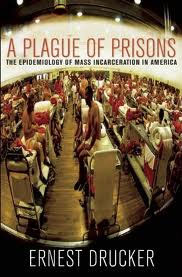
  • Book Review – A Plague of Prisons: The Epidemiology of Mass Incarceration in America

    Book Review – A Plague of Prisons: The Epidemiology of Mass Incarceration in America

    Druckerby Craig Jones Former Executive Director, The John Howard Society of Canada.

    A Plague of Prisons: The Epidemiology of Mass Incarceration in America
    By Ernest Drucker
    The New Press, 2011, pp. xiv, 211

    Every student of epidemiology learns the story of the Broad Street pump (London, Summer 1854), which marks the birth of epidemiology. In A Plague of Prisons, Ernest Drucker uses that story as a metaphor to explain the explosion of incarceration in the United States that followed the 1973 enactment of the Rockefeller drug laws and to illustrate how political decisions act as vectors – pumps – and how these vectors create a social epidemic of gargantuan proportions. Drucker is professor emeritus of family and social medicine at Montefiore Medical Center/Albert Einstein College of Medicine. He was present at the creation of the AIDS epidemic in the Bronx in the early 1980s and watched how politics, ignorance, homophobia and racism facilitated the transmission of disease from certain neighborhoods and populations to a much larger population via the Riker’s Island prison.Between 1880 and roughly 1975, American rates of incarceration were stable at roughly 75 per 100,000 population. Today that number hovers around 743 per 100,000. Drucker’s project is to explain the political path between those two numbers. Drucker employs epidemiology to explain the mechanism by which the United States came to incarcerate 1 out of every 4 incarcerated persons in the world. He can be read in three ways: as an undergraduate introduction to the explanatory power of social epidemiology; as a non-technical analysis of how the United States achieved its historically unprecedented rate of incarceration; and as a warning to Canadians on the propensity of criminalization of non-violent drug users to become a contagion with multi-generational consequences. The book’s timing is apt: Canadians are enacting the political mistakes that produced the plague of prisons in the United States.What were those mistakes? There were three elements embedded in the Rockefeller drug laws that transformed a public health issue into mass incarceration and transmitted that contagion to the entire country. In chronological sequence they are: the decision to criminalize drug use; the political reliance on punishment as the appropriate response; and, the attack on judicial discretion through mandatory minimum sentences. Of the three, the criminalization of drug use featuring large-scale arrests of low-level drug users primed the pump that fueled the contagion of self-sustaining criminality.There are important differences in the way criminal justice is done between the United States and Canada – some of those differences will insulate Canada from the worst effects of the plague of prisons. But there are a couple of lessons for Canadians too. The first is that criminal justice policy is too often made in a consequentialist vacuum – that is, without deliberation over downstream effects on families and particularly children of the incarcerated who will likely be the next generation of the incarcerated. The political imperatives that pushed US policy makers into adopting mandatory minimum sentences appealed to the short-term interests of private prison contractors, correctional officer unions, victims’ advocates, judges and prosecutors. Policies enacted for short-term political opportunity have long-term economic and social consequences, a long tail, but these are of little moment compared to the immediate electoral advantage. The children of the incarcerated – who are at higher risk of incarceration themselves – have no one to speak for them, at least no one with the clout of correctional officer unions or private prison contractors.

    The second lesson is that it is hard to reverse bad policy ideas once they take hold in the public imagination – even once the fiscal costs become unsustainable and the policy itself is clearly failing. As is now clear, the proliferation of mandatory sentencing regimes across the United States has pushed several jurisdictions – Texas, California, Ohio, Florida and New York – to the brink of insolvency, yet they have not achieved rates of crime reduction greater than those jurisdictions that did not embrace draconian sentencing practices. Worse, the sentencing regimes are hard to unwind because they have created a political constituency where prisons have become a source of high-income, non-polluting jobs. The third lesson Canadians should heed is that – in seeking to increase the burden of punishment – criminal justice systems engender a self-perpetuating underclass of non-violent but ever more marginalized persons who, because of onerous pardon requirements, may never be reintegrated. They simply cycle through the prison system and transmit the contagion of criminality to their children and family members.

    This is a cautionary tale. Canadians would be wise to be more attentive to Drucker’s warnings on the self-sustaining dynamic that emerges out of deliberately growing the rate of incarceration for electoral advantage.

    Craig Jones, PhD
    Former Executive Director
    The John Howard Society of Canada
    Kingston  ON

  • Omnibus passes – but don’t throw away the key!

    Omnibus passes – but don’t throw away the key!

    Bill C-10 , the Safe Streets and Communities Act passed  in parliament with a majority vote of 157 to 127. It now moves to the senate.

    The newly formed Canadian Drug Policy Coalition(CDPC) is deeply opposed to this legislative approach and its accompanying policies. More punitive laws will compound the failures of the criminal law that have become so evident over the past century.

    This push for increased penalties for drug offences occurs in a climate of declining crime generally.  Statistics Canada reported that the 2010 crime rate, which measures the volume of police-reported crime, reached its lowest level since the early 1970s. The report found that drug crimes were one of the few categories of crime that showed an increase. Drug offences increased by 10 per cent in 2010, largely due to the increase in police-reported cannabis offences. There were almost 109,000 police-reported drug crimes in Canada that year. About half were for possession of cannabis. The report noted that the overall increase in police-reported drug offences continues the upward trend that began in the early 1990s.[i] In short, drug offences appear to be a criminal justice “growth industry.”

    The CDPC is calling for dialogue to create sensible, pragmatic and humane reform of Canada’s drug laws and policies. We are currently working to develop a report that we hope will help guide a national consultation about reform of Canada’s laws and policies on currently illegal drugs. Government is welcome to participate, but it is the Canadian public that should shape the discussion.

    Stay Connected! Join the Coalition

    The CDPC is not against legislation that attempts to address crime in our communities, but it must be based on a body of evidence that proves it can achieve its goals. Bill C-10 fails this test.  Both LeadNow and Avaaz have campaigns that are building a massive base of support . Check them out and help write the next chapter.

    The good folks at www.itcouldgetworse.com will be releasing a statement with the names and contact info for the 10 Conservative Senators most likely to be swayed by reason and democratic principles later this week. Don’t give up. It is up to the senate now to have courage to introduce sensible amendments that will keep Canadians truly safe.

    Our partners at the Canadian HIV/AIDS legal network have a number of specific policy amendments. We urge you to join the coalition and together support our member’s actions.

    #Omnibuster #cdnpoli #drugpolicy

  • World AIDS Day

    World AIDS Day

    UNAIDS has a new five year strategy for Getting to Zero.

    Zero transmission and zero new HIV infections globally. This is an incredible challenge considering there are 34 million people living with HIV in the world. Yet, there are indicators of success and glimmers of hope that suggest that there is chance of getting to see the end of AIDS. This years UNAIDS world AIDS day report gives an overview of the challenges ahead.

    Screen-shot-2011-11-29-at-4.09.50-AM-300x236

    GETTING TO ZERO:FASTER. BETTER. STRONGER

     We are at a pivotal moment in addressing new HIV infections globally.

    Economic fallouts, unstable environments and shifting political agendas threaten the progress that has been made. World AIDS day provides a focal point for us to call upon our leaders to take on the hard issues and honor their commitments to end HIV and AIDS.

    “Drug users now account for a third of all HIV infections outside of sub-Saharan Africa; their devastation is compounded by perverse, punitive, destructive government policies.” Stephen Lewis

    Here in Canada it is disconcerting that the Canadian Federal government is moving towards increased criminalization as a mode of drug crime prevention. The evidence is clear , imposing punitive measures on people who do not hurt others in their drug use is unproductive and harmful. It’s difficult to understand why change has not come faster.The war on drugs has not succeeded and the race to end AIDS requires that we act wisely and prudently. Let us look to the evidence to guide us, honor human rights and promote healthy lifestyles. The Canadian Drug Policy Coalition partners have many campaigns for health, human rights and change.

    The week of November 24 to December 1 marks Canadian HIV/AIDS Awareness Week.

    Check out whats going on in your area.
    Coalition Partners in Change:

    The Canadian AIDS Society is commemorating it 25th anniversary this year and has chosen this years theme to be DO Something. They have a video contest with a winner to be announced shortly and a number of poster and list of resources and events happening throughout Canada.

    The Canadian Aboriginal AIDS Network

    Overall, the HIV infection rate for Aboriginal people (First Nations, Métis and Inuit) was about 3.6 times higher than among other Canadians. This year the Aboriginal Aids Awareness week will provide an opportunity to reach out to national Aboriginal organizations, government partners, health care providers, and community leaders to support change through their own action and by supporting the actions of others.

    Canadian HIV/AIDS Legal Network has been working on a number of fronts to challenge unproductive and punitive drug laws.They have recently developed a toolkit for dealing with HIV and criminalization. In another more recent report the Legal Network has called for pragmatic strategies to reducing harms such as HIV based on principals of humane and human rights-based addiction treatment.GFX_worldaidsday

  • B.C. physicians issue report on drug policy and law reform

    B.C. physicians issue report on drug policy and law reform

    Tuesday, November 29, 2011 by David Eby (Reposted with permission)

    It’s hard to imagine an area more difficult for politicians talk about than drug policy reform.

    Maybe raising taxes.

    BC-Health-Officers-ReportToday, B.C.’s Health Officers council gave the politicians some breathing room by issuing a report that calls for a provincial dialogue on reforming drug law in Canada and B.C. Not exactly a group of flaming radicals, the Health Officers Council is the professional association of public health physicians in B.C. They issue reports on the health impacts of, for example, driving while using your cell phone.

    Ten years ago, few people could have imagined a functioning facility where nurses would supervise addicts injecting heroin, morphine and cocaine to make sure they didn’t kill themselves in the process; that it would be supported by the health authority, municipal government and provincial government.

    Similarly, ten years ago, few people could have imagined a study that looks at the outcome of prescribing heroin and hydromorphone to people who have failed at drug treatment. There has been one already. The second study is underway. Both in British Columbia. Both in Vancouver.

    Today the majority of Canadians support Insite. British Columbians support drug policy reform that makes us safer and healthier, and have linked our endemic gang violence to the drug trade. But that hasn’t been enough so far to open the door to even a discussion of reform and decriminalizing drug addicts. If anything, our drug law is going the other way, with tougher penalties and more jail time for addicts, despite the American experience.

    There is now a little more space for those in positions of power to take up the Health Officers’ call for a public discussion about what’s working, and what’s not working, in our current drug policy. Just a discussion. Hopefully, in ten years, we’ll look back and shake our heads at the inability of our society to even discuss how we could improve our drug policy’s effectiveness to increase safety, reduce harm, and reduce costs. Talk about reefer madness.

  • Canadian Drug Policy Coalition/ Doalition canadienne des politiques sur les drogues

    Thrown Under the Omnibus

    The idea for the Toronto forum on Bill C10 (the Safe Streets & Communities Act) – “Thrown Under the Omnibus” – was hatched at the harm reduction conference in Ottawa this past summer, during a round-table session that wrapped up the final day. Representatives of five Toronto-based organisations were present – The Toronto Harm Reduction Task Force, The Social Justice committee of the Community Justice Coalition, The Canadian HIV/AIDS Legal Network, PASAN and The Canadian Harm Reduction Network, as well as Donald MacPherson from the Canadian Drug Policy Coalition. It was decided that we would jointly host a forum on Bill C10 in Toronto, as one of a number of community events across Canada supported by the Coalition.

    Back in Toronto, we struck a planning committee culled from the five organisations. The committee also included a current drug user, a person on methadone, a former prisoner, and a very valuable volunteer who because of her employment found it prudent to remain anonymous. Such is life now in the big smoke!

    The Forum itself was very well attended. With an audience of about 225 people almost every seat was filled. It was well moderated and stimulating, and audience questions were addressed with thoroughness and respect.

    There was an excellent networking social after the Forum. We picked up a large number of addresses for our growing mailing list. We had a positive article in the National Post. We also saw many new faces. We had made a particular effort to expand our reach to people outside our usual social services, prison activist and policy lists … particularly into the arts communities, for example … and a number of them turned up.

    What would I do differently the next time?

    Ensure that there is a next time. We need to build on interest and success. Put greater concentration on expanding the audience base. We need to “convert” even more than we need to speak to the converted. We need to form new relationships and coalitions as well as nurturing existing ones.

    Do more with social media. We did some … but none of us was particularly savvy.Really court the media. We did a lot … but obviously we need to do more. Hold a post mortem. We never did it. Perhaps we still will.

    Really celebrate our success.