Category: Press Release

  • Media Advisory: Organizations Head to Court to Defend Life-Saving Services in Ontario

    Media Advisory: Organizations Head to Court to Defend Life-Saving Services in Ontario

    Le français suit

    Online | March 14, 2025—On Thursday, March 20, media are invited to attend a short online briefing with a coalition of organizations who will intervene at the Superior Court of Justice in Ontario on March 24-25 in the Charter challenge of Ontario’s dangerous Community Care and Recovery Act. The court will be asked to consider whether the Act unduly violates the Charter rights of people who use drugs – as part of this, the court will be asked to consider whether closing and restricting the availability of supervised consumption services will actually further the Act’s stated purpose to “protect children, families and people struggling with addiction by restricting supervised consumption sites, in line with its belief that addictions treatment is the best way to achieve lasting recovery.”  

    Together with the Toronto Harm Reduction Alliance, Toronto Overdose Prevention Society and Waterloo Region Drug Action Team, the Canadian Drug Policy Coalition is intervening to offer policy expertise to the court.  

    In this informational briefing, we will share what is covered by the Charter challenge, the arguments the intervenor coalition will present, and how the ruling could impact our communities. 

    Speakers:  

    • DJ Larkin, lawyer, executive director, Canadian Drug Policy Coalition  
    • Colin Johnson, Co-Chair, Toronto Harm Reduction Alliance 
    • Zoë Dodd, Co-organizer, Toronto Overdose Prevention Society  
    • Michael Parkinson, Drugs Strategies Specialist, Waterloo Region Drug Action Team 

    WHAT: Joint online briefing with a coalition of organizations who will intervene in the Charter challenge of Ontario’s Community Care and Recovery Act on Mar.24-25. There will be time for media questions.   

    WHEN: Thursday, March 20, 2025 | 12:00-12:45 p.m. Eastern | 9:00-9:45 a.m. Pacific 

    WHERE: Online – Register Here 

    WHY: As a result of the Act, 10 supervised consumption sites in Ontario have received notice from the province to shut down operations as of April 1, 2025. Left unchallenged, the Act will severely curtail lifesaving service delivery in the province, increasing strain on first responders and emergency rooms, reducing community safety, and eliminating proven supports amid a public health crisis. 

    Backgrounders:

    Media Contact: Jessica Hannon: [email protected]
    Logos of the involved organizations.

    ___________________________________________________________

    AVIS AUX MÉDIAS: Des organismes s’adressent aux tribunaux pour défendre des services vitaux en Ontario

    En ligne | Le 14 mars 2025. – Nous invitons les médias à assister à une courte séance d’information tenue en ligne le jeudi 20 mars, avec une coalition d’organismes qui se présenteront devant la Cour supérieure de justice de l’Ontario les 24 et 25 mars pour contester la dangereuse Loi sur les soins et le rétablissement en milieu communautaire de l’Ontario. La Cour aura à déterminer si cette loi enfreint indûment les droits des personnes qui consomment des drogues. Dans le cadre de la contestation, il sera demandé à la Cour d’établir si la fermeture des services de consommation supervisée et les restrictions d’accès à ces services répondent réellement à l’objectif de la Loi, à savoir « protéger les enfants, les familles ainsi que les personnes qui luttent contre la toxicomanie en limitant les sites de consommation supervisée, conformément à [la] conviction que le traitement de la toxicomanie est le meilleur moyen de parvenir à un rétablissement durable ». 

    Accompagnée de la Toronto Harm Reduction Alliance, de la Toronto Overdose Prevention Society et de la Waterloo Region Drug Action Team, la Coalition canadienne des politiques sur les drogues interviendra devant les tribunaux pour offrir son expertise en matière de politiques. 

    Dans cette séance d’information, nous présenterons les thèmes couverts par la contestation fondée sur la Charte canadienne des droits et libertés, les arguments qui seront invoqués par la coalition d’intervenants ainsi que les conséquences possibles de la décision sur nos collectivités. 

    Présentation par : 

    • DJ Larkin, avocat·e, direction générale, Coalition canadienne des politiques sur les drogues 
    • Colin Johnson, coprésident, Toronto Harm Reduction Alliance 
    • Zoë Dodd, co-organisatrice, Toronto Overdose Prevention Society  
    • Michael Parkinson, spécialiste des stratégies sur les drogues, Waterloo Region Drug Action Team 

    ÉVÉNEMENT : Séance d’information conjointe, en ligne, avec une coalition d’organismes qui participeront à la contestation judiciaire de la Loi sur les soins et le rétablissement en milieu communautaire de l’Ontario les 24 et 25 mars. Une période est réservée aux questions des médias. 

    DATE ET HEURE : Le jeudi 20 mars 2025 | 12 h à 12 h 45 (HE) | 9 h à 9 h 45 (HP) 

    LIEU : En ligne – Inscription ici 

    RAISON D’ÊTRE : En vertu de la Loi, 10 sites de consommation supervisée ont reçu du gouvernement provincial un avis de fermeture qui prendra effet le 1er avril 2025. Si rien n’est fait, cette loi entravera gravement la fourniture de services qui sauvent des vies, ce qui aura pour effet d’accroître la pression sur les premiers répondants et sur les services d’urgence, de miner la sécurité de la population et d’éliminer une aide dont l’efficacité a été démontrée, en pleine crise de santé publique. 

    Documents d’information : 

    Personnes-ressources pour les médias : Jessica Hannon: [email protected]
    Logos of the involved organizations.
  • Media Advisory: Organizations seek to clarify Good Samaritan Law at the Supreme Court of Canada

    Media Advisory: Organizations seek to clarify Good Samaritan Law at the Supreme Court of Canada

    Le français suit

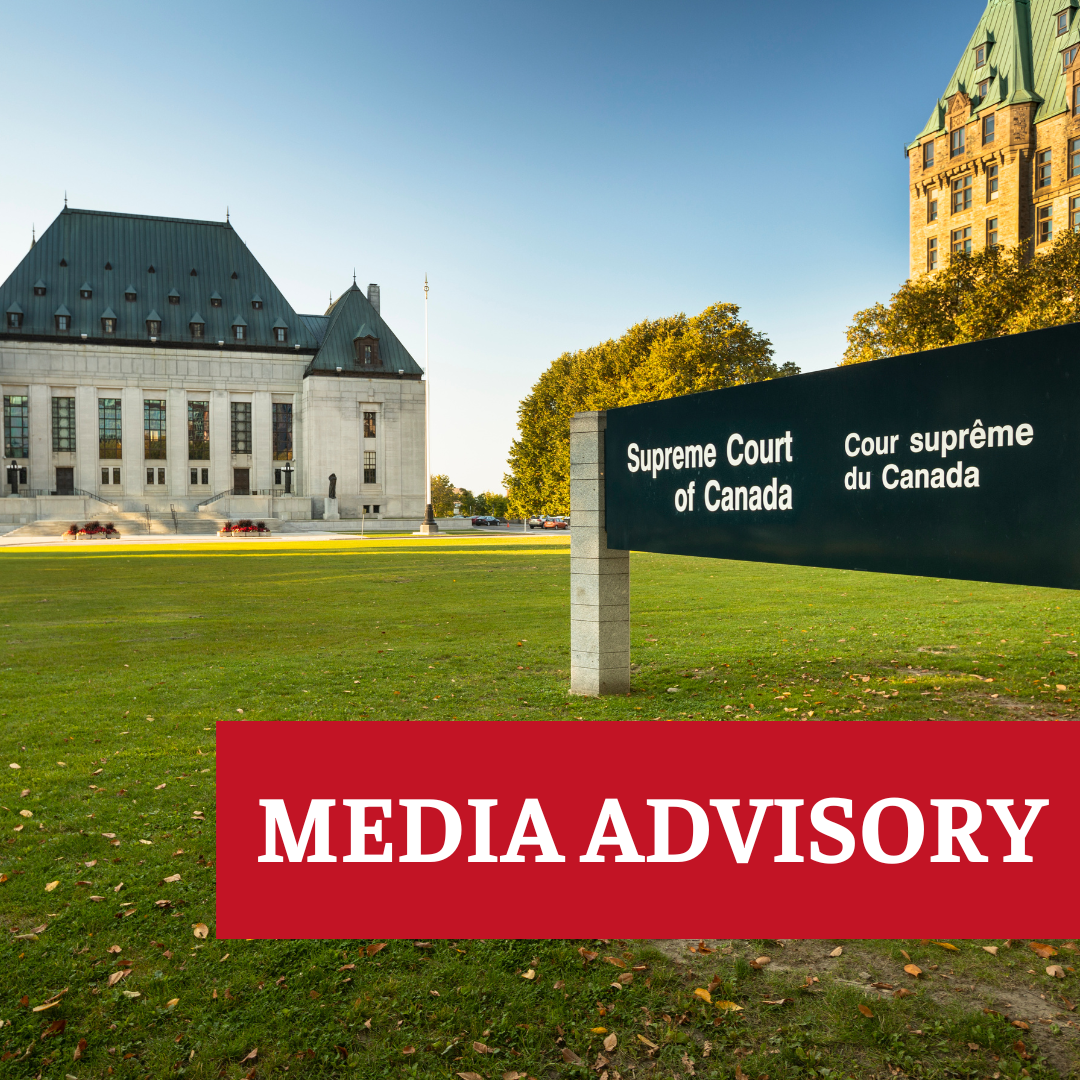
    MEDIA ADVISORY 

    Online | January 9, 2025—On Monday, Jan.13, media are invited to attend a short online briefing with a coalition of organizations who will intervene at the Supreme Court of Canada on Jan.14 in the case of R. v. Wilson. This case considers the application of what is commonly referred to as the “Good Samaritan” law, which provides immunity from prosecution for drug possession and some other offences for people at the scene of a drug-related medical emergency. 

    The Supreme Court of Canada will be asked to consider:

    Does the Criminal Code authorize the arrest of an individual at the scene of a “drug overdose” for the offence of simple drug possession even if the individual may ultimately be immune from being charged or convicted for that offence?

    Speakers: 

    • DJ Larkin, lawyer, executive director, Canadian Drug Policy Coalition
    • Corey Ranger, president, Harm Reduction Nurses Association
    • Louis Letellier de St-Just, lawyer, president, l’Association des Intervenants en Dépendance du Québec
    • Maxime Bédard, lawyer, Daniel Brown Law LLP

    WHAT: Joint online briefing with a coalition of organizations who will intervene in R. v. Wilson at the Supreme Court of Canada on Jan. 14. There will be time for media questions.

    WHEN: Monday, January 13, 2025 | 10:00-10:45 a.m. Pacific | 1:00-1:45 p.m. Eastern

    WHERE: Online – Register Here

    WHY: The Good Samaritan provision was enacted as part of Canada’s public health approach to substance use. It is intended to encourage people to stay at the scene of a drug-related medical emergency, provide first aid, and ultimately, save lives and prevent injuries. Interveners will ask the Supreme Court to ensure this law fulfills its purpose: to prevent the devastating and avoidable consequences of drug-related medical emergencies. To do so, it must prioritize harm reduction, promote clarity in the law’s application, and ensure that any examination of its purpose is devoid of latent bias.

    -30-

    Background:

    Media contact: Jessica Hannon: [email protected]
    ___________________________________________________________

    AVIS AUX MÉDIAS

    Des organisations cherchent à clarifier la législation sur les bons samaritains à la Cour suprême du Canada

    En ligne | Le 8 janvier 2025 – Le lundi 13 janvier, les médias sont invités à assister à une brève séance d’information en ligne présentée par une coalition d’organisations qui interviendra à la Cour suprême du Canada le 14 janvier concernant le jugement R. c. Wilson. Dans ce cas, on considère l’application de ce qu’il est convenu d’appeler la loi sur les « bons samaritains », laquelle accorde aux personnes qui se trouvent sur les lieux d’une urgence liée aux drogues une immunité en matière de poursuites judiciaires relatives à la possession de drogues ou à d’autres infractions. On demandera à la Cour suprême du Canada de répondre à la question suivante :

    Le Code criminel autorise-t-il l’arrestation d’une personne qui se trouve sur les lieux d’une « surdose » pour un délit de possession simple de drogues même si cette personne peut en définitive être à l’abri de toute inculpation ou condamnation liée à cette infraction?

    Les présentateur·trice·s :

    • Maxime Bédard, avocat, Daniel Brown Law LLP
    • DJ Larkin, avocat, directeur général, Coalition canadienne des politiques sur les drogues
    • Corey Ranger, président, Association des infirmiers et infirmières en réduction des méfaits
    • Louis Letellier de St-Just, avocat, president, Association des intervenants en dépendance du Québec

    QUOI : une présentation conjointe en ligne d’une coalition d’organisations qui interviendra à la Cour suprême du Canada le 14 janvier concernant le jugement R. c Wilson. Une période de questions pour les médias est prévue. La présentation sera en anglais et français avec traduction simultanée.

    QUAND : le lundi 13 janvier 2025 | de 10 h à 10 h 45 HNP | de 13 h à 13 h 45 HNE

    OÙ : en ligne – cliquez ici pour vous inscrire 

    POURQUOI : La disposition sur les bons samaritains a été adoptée dans le cadre de la démarche de santé publique du Canada à l’égard de l’usage de substances. Elle a pour but d’encourager les personnes à demeurer sur les lieux d’une urgence médicale liée aux drogues, à fournir les premiers soins et, ultimement, à sauver des vies et à prévenir des blessures. Les personnes intervenantes demanderont à la Cour suprême de veiller à ce que cette loi remplisse son objectif, soit de prévenir les conséquences dévastatrices et évitables des urgences médicales liées aux drogues. Pour ce faire, la Cour doit accorder la priorité à la réduction des méfaits, promouvoir la clarté en ce qui a trait à l’application de la loi, et s’assurer que tout examen de l’objectif de la loi est exempt de biais latents. 

    -30-

    Document d’information :

    • Explication du jugement R. c. Wilson
    • Sommaire des arguments de la coalition d’intervenants

    Contact média : Jessica Hannon : [email protected]

  • FOR IMMEDIATE RELEASE: Province repeals public use law previously blocked by B.C. Supreme Court for irreparable harm  

    FOR IMMEDIATE RELEASE: Province repeals public use law previously blocked by B.C. Supreme Court for irreparable harm  

    Joint Statement from the Harm Reduction Nurses Association, the Canadian Drug Policy Coalition and Pivot Legal Society 

    ​​xʷməθkʷəy̓əm, sḵwx̱wú7mesh & səlilwətaɬ lands Vancouver, BC |​ December 20, 2024 – Yesterday the B.C. provincial government repealed Bill 34: the Restricting Public Consumption of Illegal Substances Act. This represents a small but hard-fought victory against politically-driven laws and policies that inflict harm upon those made most vulnerable by oppressive systems. 

    The Act was initially passed last November, but a temporary B.C. Supreme Court injunction filed by the Harm Reduction Nurses Association and supported by the Canadian Drug Policy Coalition and Pivot Legal Society prevented it from coming into force until the court could assess whether it violated Charter rights. Rather than proceed through this process, the province has repealed the legislation.  

    It is important to recognize the harms the Act would have codified into law, and the harm prevented by its repeal. In repealing this legislation, the province has tacitly admitted that the Act would not have withstood the court’s scrutiny of its harmful consequences. We can count this as a victory. But ultimately, until evidence and ethics guide public policy in B.C., we fear we will be forced to continue these fights.       

    In its injunction ruling, the court agreed that in severely restricting public drug consumption, the Act would cause irreparable harm to people at risk of injury and death amid a public health crisis. Chief Justice Hinkson said, “Given the evidence before me, I find that there is a high degree of probability that at least some of the harm set out by the plaintiff will in fact occur. Centrally, but not exclusively, the Act will promote more lone drug use, which carries incumbent risks to [people who use drugs] and also the plaintiff’s members.”  

    This piece of legislation, which was not time-limited to the duration of B.C.’s decriminalization pilot, would also have enabled an increase in policing scope to specifically target unhoused people. The law would have had outsized impacts on Indigenous and racialized people, recreating and intensifying the existing harms of colonization and systemic racism. There was widespread opposition to the Act, including from the Union of British Columbia Indian Chiefs, the Surrey Union of Drug Users, the BC Association of Social Workers and CMHA BC. 

    Though the BC government has repealed Bill 34 in light of the court injunction and significant community backlash, some of the Act’s insidious elements exist within the province’s Apr. 2024 amendment to the decriminalization pilot. This politically-driven amendment circumvented the injunction against the Act and codified some of its most harmful facets through other means. We stand by our colleagues who have filed a judicial review of this egregious sidestepping of justice.  

    While the end of this harmful legislation represents a win for human rights, we continue to exist within a prolonged public health emergency. Criminalizing drug use is a far downstream intervention that lacks evidentiary support. More than a century of criminalization has demonstrated that enforcement has not decreased drug availability or use, is an ineffective use of public funds, and is clearly linked to an increased risk of overdose and cycles of homelessness. Criminalization drives further toxicity and unpredictability in the unregulated drug supply and signals to a significant portion of B.C.’s population that their deaths are acceptable. Once again, Chief Justice Hinkson reminds us, “I have already set out that British Columbia is in a Public Health Emergency. As part of these circumstances, the plaintiff argued, and I accept, that the unregulated nature of the illegal drug supply is the predominant cause of increasing death rates in British Columbia.” 

    We know the drivers of more than five preventable deaths per day in B.C.: stigma, isolation, and a poisoned drug supply. All three are made worse by criminalization. We implore the B.C. provincial government to stop playing politics in a public health emergency; we want to work together to end this crisis, with a shared understanding that every single death by the unregulated drug supply is preventable. 

    -30- 

    Links and Resources:  

    • Bill 34 – Restricting Public Consumption of Illegal Substances Act 
    • December 29, 2023 B.C. Supreme Court Ruling on Injunction Application  
    • April 26, 2024 HRNA Press Release in response to B.C.’s decriminalization pilot amendment request 

    To arrange interviews, please contact Jessica Hannon, Canadian Drug Policy Coalition [email protected]

  • Canadian Drug Policy Coalition/ Doalition canadienne des politiques sur les drogues

    Government of Ontario Attempting to Force Through Deadly Drug Policy Bill

    This statement can be attributed to the Canadian Drug Policy Coalition, the Drug Strategy Network of Ontario, and the HIV Legal Network.

    November 27, 2024 — Toronto, ON | We are watching with grave concern as the Government of Ontario attempts to force through radical legislation that will eliminate life-saving supervised consumption services (SCS) and prevent access to other evidence-based responses to an unregulated drug crisis that is killing 10 people in Ontario every single day. 

    We appeal to the government to withdraw their time allocation motion. Experts in the care for people with substance use disorder and other people who use drugs are anxious for the opportunity to speak to Committee about this bill and the devastating effects it will have on Ontarians. The opportunity for such expertise to inform the contents of this Bill is an opportunity afforded by our parliamentary democracy for good reason. It ensures that our laws are informed by evidence and lived experience.

    “The government’s attempt on Tuesday to force this devastating bill through the legislature — without debate or committee study — sent a very clear messages to all people in this province: democratic process doesn’t matter, evidence doesn’t matter, and the workload of health, medical, social service and first response workers doesn’t matter,” says Michael Parkinson of the Drug Strategy Network of Ontario. “Most frighteningly, the government is saying that people’s lives in Ontario do not matter.”

    The Premier and Health Minister are well aware of the appalling consequences that will follow if these vital health services are prohibited. “The government has been warned by their own internal counsel of the devastation expected to occur in communities across Ontario, particularly among Black, Indigenous, and low-income people,” says Beeta Senedjani of the Canadian Drug Policy Coalition. “This bill would legislate an increase in deaths of our loved ones, public drug use in our neighbourhoods, and healthcare costs that will affect all taxpayers.” In bypassing debate and committee review, the Ontario government would silence elected representatives, community members, and public health and scientific experts who would have provided the evidence that SCS are, unequivocally, in the public interest.

    According to both internal government advice and independent evaluations, it is widely expected that this proposed law will:

    • Kill, injure, or otherwise harm people in Ontario by removing their access to life-saving harm reduction services in the event of an overdose emergency; 
    • Increase drug use in public places such as parks and school yards; 
    • Increase the chances of people, including children, witnessing overdose emergencies; 
    • Increase the amount of discarded drug use equipment in public spaces; 
    • Increase the workload for already overburdened first responders, hospital emergency rooms, and other frontline staff; 
    • Reduce ambulance availability for all members of the public; and 
    • Increase costs to taxpayers.

    There is near-unanimous consensus about the negative impacts these impending closures will have, of which the Government of Ontario is aware and is willfully choosing to ignore. Ample studies, including internal government reports and independent evaluations, consistently demonstrate the public health and safety benefits of SCS. Ontario’s supervised consumption services have recorded 1.12 million visits from 178,000 unique clients since March 2020, according to a recent report, and have successfully reversed 22,000 overdoses and facilitated more than 530,000 service referrals to housing, case management, substance use treatment, and more. Additionally, data from Toronto demonstrate that neighbourhoods with supervised consumption services subsequently experienced 67 per cent reductions in overdose mortality, while other neighbourhoods showed no significant decreases. These services are desperately needed. 

    SCS also reduce public drug use and discarded drug use equipment. Contrary to the Ontario government’s claims that crime has increased in neighbourhoods with SCS relative to other neighbourhoods, a recent study found decreases in rates of homicide, assault, and robbery in the vicinity of an SCS after opening.

    If passed as drafted, Ontario would soon see the dire impact of government officials determining health policy based on opinions, ideology, and political calculations instead of public interest. “Our loved ones will die. Our communities will suffer. The Government of Ontario knows this, and is proceeding with reckless abandon,” says Sandra Ka Hon Chu of HIV Legal Network. “Our organizations — and many others across the province, country, and globally — will continue to advocate for SCS to remain open.” 

    -30-

    Media Contacts: 

    For more information about SCS and the current state of the law in Canada, see this recent report from the HIV Legal Network: https://www.hivlegalnetwork.ca/site/scaling-up-supervised-consumption-services-what-has-changed-in-canada/?lang=en

  • Canadian Drug Policy Coalition/ Doalition canadienne des politiques sur les drogues

    FOR IMMEDIATE RELEASE: Province of Ontario Preventing Efforts to Reduce Deaths and Harms for People Who Use Drugs

    Ontario stonewalls health and human rights groups seeking support for evidence-based supervised consumption services

    Ontario, Canada | Aug 7, 2024  

    A coalition of more than fifty organizations continue to await a response from the provincial government about Ontario’s alarming unregulated drug poisoning fatalities and the forced closure of three supervised consumption sites. In their most recent letter, released today, the coalition is once again calling on the Government of Ontario to immediately support communities desperate for these life-saving services; written communications to Ontario have thus far been met with silence despite the fact that one person in Ontario dies every 2.5 hours due to toxic unregulated drugs. 

    More than 21,000 people in Ontario have died from unregulated drug poisoning since the current government was elected in 2018, many of whom did not have a diagnosis for substance use disorder. Applications to the province for funding for community-based supervised consumption services have languished for years in an opaque process that has left site operators and local municipalities frustrated and dangerously under-resourced. The province has frozen all new funding for supervised consumption services across Ontario since 2023, placing the blame on a critical incident that occurred near a Toronto site more than one year ago.  

    Today, the coalition again requested emergency funding to re-open sites in Sudbury and Timmins, two areas hard-hit by the drug poisoning crisis. Until March and June of this year, these sites offered witnessed consumption of pre-obtained drugs so that trained staff could respond to overdose emergencies and connect people to health and social supports, including treatment. These closures highlight a significant inequity in care in the North, with a gap in supervised consumption service access spanning over 1,400 kilometers between Thunder Bay and Toronto. The group is also calling for funds to re-open the site in Windsor, which was forced to shut down services in December. 

    “The provincial government has stonewalled us,” says Amber Fritz, Manager of Outreach and Education at Réseau Access Network in Sudbury. “We heard months ago from the Opposition that funds were available in the provincial budget to run our supervised consumption site, so this silence is a deliberate, deadly choice. Bureaucracy and stigma have no place in a public health crisis.” 

    “It’s evident that our community is in dire need of additional resources to support people who use substances. During the almost two years of having the Safe Health Site Timmins, our community saw a reduction in EMS calls for opioid-related injuries and a significant reduction in opioid-related mortality rates,” says Dr. Julie Samson, physician at Timmins and District Hospital. “We are trained to save lives. If we want to keep people alive during the ongoing and worsening drug poisoning crisis, supervised consumption sites are an essential part of the equation.” 

    The Drug Strategy Network of Ontario and numerous other organizations have been calling for on-demand evidence-based addiction treatment for many years, alongside other harm reduction solutions that benefit both people managing addiction and those who consume unregulated drugs episodically. 

    Supervised consumption sites offer a space where people who use drugs are treated with acceptance, empathy and respect, which is even more important in an increasingly hostile public and political environment that targets people who use drugs and those who care for them.  

    “It is heartbreaking that the Ministry of Health is dragging its feet when so many lives are at stake,” says Christine Nayler, advocate of Ryan’s Hope and Moms Stop the Harm in Barrie, where a supervised consumption site application was withdrawn due to a lack of response and clear timelines from the Government of Ontario. “Harm reduction is healthcare. It is about respect, dignity, and saving lives. Our beloved son Ryan may still be alive today if he had been able to access a supervised consumption site. How can our political leaders ignore our suffering?”  

    The coalition’s joint letter urges officials to introduce transparency and expedited timelines in the application process, and immediately scale up and re-open supervised consumption services across the province.  

    “This crisis requires a full range of supports to save lives, including harm reduction, withdrawal management and evidence-based, voluntary treatment,” says Nicholas Boyce, policy director with the Canadian Drug Policy Coalition. “We have seen emergency services become overwhelmed due to overdoses and poisonings from the unregulated drug supply. We have seen communities declare states of emergency. We desperately need to get in front of this, and supervised consumption services are a key part of a humane and fiscally responsible response.” 

    -30- 

    Documents and links available: 

    • [Recording] March 5 2024 Online Briefing on Open Letter RE: Ontario Supervised Consumption Services with speakers from the Canadian Drug Policy Coalition, Pozitive Pathways in Windsor, Reseau ACCESS in Sudbury, Safe Health Site in Timmins and the Drug Strategy Network of Ontario. 
    • Reseau Access the Spot – Key Messaging (includes visit data) 

    Media Contacts: 

    Ryan Do

    Social Media Specialist, Canadian Drug Policy Coalition

    [email protected]

    About the Canadian Drug Policy Coalition:  

    Founded in 2010, the Canadian Drug Policy Coalition works in partnership with more than 60 organizations and 7,000 individuals working to support the development of a drug policy for Canada that is based in science, guided by public health principles, respectful of the human rights of all, and seeks to include people who use drugs and those harmed by the war on drugs in moving towards a healthier society. Learn more at www.drugpolicy.ca  

    About Moms Stop the Harm    

    Moms Stop the Harm challenges laws and policies that cause harm, including those laws that continue to drive the unregulated drug poisoning emergency in Canada. We call for an end to the failed war on drugs through evidence-based prevention, treatment and policy change.  Learn more at www.momsstoptheharm.com  

  • Canadian Drug Policy Coalition/ Doalition canadienne des politiques sur les drogues

    FOR IMMEDIATE RELEASE: Grieving mother urges honesty and action at federal toxic drug crisis committee  

    Ottawa, ON | April 29, 2024 – On the eve of the tenth anniversary of her son Danny’s death from unregulated drugs, Petra Schulz, co-founder of Moms Stop the Harm (MSTH), will testify before the federal Standing Committee on Health (HESA) today on the “Opioid Epidemic and Toxic Drug Crisis.” 

    Since MSTH’s founding in 2016, drug toxicity deaths have skyrocketed and show no signs of abating. In a tragic reflection of the human toll of the crisis, MSTH has grown to almost 4,000 members in that time, emerging as a national leader advocating for evidence-based drug policy intervention. Danny Schulz’s story is one of too many painful losses, and an important point of reflection today.  

    Moms Stop the Harm urges the federal government to implement a full and equitable spectrum of harm reduction and recovery supports to save lives and give hope to families across the country. The HESA Committee has caught attention and news headlines in previous weeks as elected officials have heard from policy experts, healthcare workers, law enforcement, service providers, and more. MSTH, alongside the Canadian Drug Policy Coalition (CDPC) and the HIV Legal Network, has criticized the Committee’s exclusion of organizations representing people who use drugs, a decision seen as hindering a holistic understanding of the crisis. It is only through the experience and expertise of those with lived experience that we can truly end this lethal crisis.   

    “It is so upsetting and infuriating to see the deaths of our loved ones politicized with misinformation and outright lies,” says Schulz, “I urge members of Parliament to stop the angry, harmful and polarizing rhetoric and social media posts, and to listen to people who use drugs when developing drug policy. Like my son, people who use drugs are valuable and loved. I miss Danny every day, and I do this work to prevent families across Canada from feeling this same devastation.”   

    MSTH asserts that Canada’s criminal-legal approach to drugs and the significant gaps in available supports and services have created a flawed and dangerous system, driving the mounting death toll. “Tens of thousands of Canadian families are bereft, with empty seats at their tables,” says Schulz. “We are in this terrible situation because of policy choices. I am asking our elected officials to make different choices, choices that will save lives.”   

    “We tried everything in our power but, ultimately, the system failed my son,” says Traci Letts, also of Moms Stop the Harm, whose son died in February of this year. “Our loved ones need autonomy and choice in their lives and in their healthcare decisions. We need harm reduction, regulated alternatives to the toxic drug supply, and evidence-based, voluntary, and accountable treatment, as well as significant investment into healthcare, education, food security, and other social determinants of health.”   

    “All levels of government need to work together. The HESA study is an opportunity for Members of Parliament to better understand these issues and implement fundamental changes that are desperately needed,” says Nick Boyce of the Canadian Drug Policy Coalition.   

    “While some governments are moving backwards in their support of progressive drug policy, we need leadership grounded in science, evidence, and compassion to end these needless deaths,” says Sandra Ka Hon Chu of the HIV Legal Network.  

    Schulz will testify before the HESA Committee this afternoon. While this Committee is meeting, an estimated 22 people in Canada will die today from the toxic, unregulated drug supply in this country, underscoring the urgent need for sound policy decisions and political courage.  

    -30-  

    Links and Resources:   

    About Moms Stop the Harm   

    Moms Stop the Harm challenges laws and policies that cause harm, including those laws that continue to drive the unregulated drug poisoning emergency in Canada. We call for an end to the failed war on drugs through evidence-based prevention, treatment and policy change.  

    About the Canadian Drug Policy Coalition  

    About the HIV Legal Network  


    Media Contact:  

    Jessica Hannon   

    [email protected]  

  • FOR IMMEDIATE RELEASE: Province moves to circumvent B.C. Supreme Court, harm reduction nurses slam “recipe for preventable death”

    FOR IMMEDIATE RELEASE: Province moves to circumvent B.C. Supreme Court, harm reduction nurses slam “recipe for preventable death”

    Victoria, B.C. | April 26, 2024 — The Harm Reduction Nurses Association is profoundly frustrated and disappointed to hear the British Columbia provincial government’s announcement that they have sought permission from the Federal government to recriminalize all people who are at risk of dying from the unregulated drug crisis who lack access to housing or 24/7 safer use spaces in their communities.

    “The B.C. government’s actions today will put people who use drugs and people who rely on public space at further risk of harm and death,” says Corey Ranger of the Harm Reduction Nurses Association. “We all want and deserve communities where all people, whether they use drugs or not, can access safety and well-being. By imposing these restrictions on the decriminalization pilot without offering real solutions like expanding overdose prevention services and access to housing, the province has declared some lives unworthy of saving.” 

    The BC Supreme Court injunction to prevent Bill 34, the Restricting Public Consumption of Illegal Substances Act, from coming into force found that the province’s proposed restrictions on decriminalization would lead to irreparable harm. The Harm Reduction Nurses Association has previously reached out to the Province with an offer to collaborate to address concerns without causing further harm, through a range of legal and policy changes that would better protect the lives of people currently at risk of overdose and increase public safety. 

    “Rather than focus on solutions appropriate to the eight-year emergency we are in and thousands of lives lost, the Province has chosen to do an end-run around that court decision,” says DJ Larkin, co-counsel for HRNA and executive director of the Canadian Drug Policy Coalition. 

    “This pushes people who use drugs out of sight, to covert and isolated use. Combined with a toxic and unpredictable drug supply, that is a recipe for preventable drug poisoning death. We don’t want people to die hidden in alleyways,” says Ranger. “We don’t want any more families to have to grieve their loved ones. We want effective solutions. And we know that criminalization is no solution. This is a step back.” 

    HRNA members say B.C.’s actions directing healthcare workers in hospitals to follow policies that “prohibit drug possession, use and purchasing of illicit drugs,” will further impede nurses’ ability to ethically provide compassionate and life-saving care to people who use drugs. 

    “Principles of equity, autonomy and justice are embedded within nursing regulatory professional practice requirements,” says Michelle Danda of HRNA. “These policy directives will further marginalize and stigmatize people who use drugs and create division between nurses and patients as opposed to a community to support care. We need nurses to unite around compassionate, evidence-informed care.” 

    “To keep everyone safer – including nurses and all healthcare workers – we need widespread access to safer use spaces, including inhalation services,” says Ranger. “We can achieve safety without resorting to punitive measures.”

    HRNA has outlined a number of actions the Province could take that would help, not harm, including: 

    • Rapid scaling-up of supervised consumption sites wherever they are needed 
    • Exploring options to responsibly regulate the drug supply for safety 
    • Scaling up access to regulated, evidence-based voluntary non-profit treatment 
    • Investing heavily in affordable housing and poverty reduction 

    More than a century of prohibition has demonstrated that enforcement has not decreased drug availability or use, is extremely expensive, and is clearly linked to an increased risk of overdose and cycles of homelessness. 

    “The decriminalization pilot has its drawbacks, and ultimately does not address the unregulated toxic drug supply that continues to drive this crisis,” says Larkin. “Even so, it is an important part of a broader shift. To be effective in reducing harm and supporting healthy communities, it must be accompanied by additional actions. Blaming the decriminalization pilot for systemic issues of rising homelessness and visible poverty scapegoats those already suffering. When we see public drug use, it is because people do not have housing, services or safe places to go – and because people want to stay alive, not die alone and out of sight.”

    Today’s announcement is a direct circumvention of the Bill 34 injunction and poses the very same risk for irreparable harm. 

    -30- 

    Links and Resources: 

    • B.C. Supreme Court Ruling on Injunction Application 
    • Bill 34 – Restricting Public Consumption of Illegal Substances Act
    • April 16, 2024 HRNA Press Release
    • December 30, 2023 HRNA Press Release 

    Media Contact:

    [email protected]

  • FOR IMMEDIATE RELEASE: Silence from Ontario Ministry of Health as Time Runs Out to Save Supervised Consumption Sites 

    FOR IMMEDIATE RELEASE: Silence from Ontario Ministry of Health as Time Runs Out to Save Supervised Consumption Sites 

    Ontario, Canada | March 18, 2024 

    Two weeks have passed since 51 groups from across Ontario sent an open letter calling on the provincial government to immediately fund and support supervised consumption sites. But despite the coalition’s request for an emergency meeting by March 13, Minister of Health Sylvia Jones and Associate Minister of Mental Health and Addictions Michael Tibollo have not responded.

    The groups are speaking out to secure emergency funding and prevent impending closures of sites in Sudbury and Timmins. More than 500 people have died from drug poisoning in Ontario so far this year. 

    “I am horrified. This is a life-and-death emergency, and we are being ignored,” says Rev. George Bozanich of the Windsor CTS Advocacy Coalition. “Without these services, Ontarians die.  These are our children, parents, siblings and neighbours. I cannot imagine the Ministers and the Premier ignoring a similar lifesaving request on any other issue.”   

    Since the current provincial government came to power in 2018, unregulated drug deaths have surged. “Toxic drugs killed nine people every day in the first two months of this year,” says Beeta Senedjani of the Canadian Drug Policy Coalition. “The dead would fill every seat on at least eleven school buses. This is an emergency. The province needs to start acting like it.”   

    Supervised consumption sites are a proven health intervention where trained staff respond to overdose emergencies and offer supports and connections to health and social services. Evidence consistently shows the sites save lives and significantly reduce emergency calls and hospital visits.  

    “The province’s actions have put municipal governments, local health boards and even the public in the impossible position of having to either foot the bill for a provincial responsibility or watch their communities suffer,” says Matthew Shoemaker, Mayor of Sault Ste. Marie. “This crisis is a foremost challenge for municipalities, who don’t have the resources or the mandate to fund health care. We badly need stable support and action from the Government of Ontario and we need it now.”  

    “The entire years-long process has been an irresponsible use of public funds,” says Michael Brennan of Pozitive Pathways in Windsor, whose site was forced to close in December. “Supervised consumption sites are a proven lifesaving intervention that reduce costs and burdens across our public systems, on police, paramedics and emergency departments. We have complied with every requirement.  We cannot wait any longer.” 

    Last fall, the Province of Ontario put all supervised consumption site applications on indefinite hold pending a critical incident review for one site in Toronto. The decision came after a bystander was tragically killed in the vicinity of a Toronto site last summer.  

    “A lengthy review of a tragic, isolated incident is preventing desperate communities across the province from implementing lifesaving services amidst a public health emergency,” says Michael Parkinson of the Drug Strategy Network of Ontario. “Critical incidents occur frequently in other settings, such as hospitals. But they never result in freezing funding or site approvals.”  

    Several communities have waited for approval since long before the review. Barrie and Sudbury applied over two years ago. Citing the province’s pause, a Hamilton application was withdrawn after two years. In Sault Ste Marie, a site application is instead being directed to the federal government. Windsor’s only site shut its doors at the end of December after waiting over a year. Without immediate provincial funding, sites in Sudbury and Timmins will close in two weeks. 

    “When I think about losing Safe Health Site Timmins, I am afraid for our community,” says Jason Sereda of DIY Community Health in Timmins. “We are running out of time.” Premier Doug Ford has said the review results will be released this month, too late for those who have already died of drug poisoning. 

    The open letter calls for the elimination of unnecessary barriers and immediate sustained provincial funding for supervised consumption sites, including inhalation services, to meet the urgent needs of communities. The coalition emphasizes that these demands require immediate provincial action to prevent further loss of life and harm to communities across Ontario. 

    “Minister Jones, please listen to us. This is an emergency,” says Amber Fritz of Réseau ACCESS Network in Sudbury. “We need your leadership. You have a choice: you have the opportunity to save lives and costs to the system, or you can continue to do nothing. If our loved ones die, that will be your legacy.”   

    -30- 

    Documents and links available: 

    • Open Letter 
    • [Recording] March 5 2024 Online Briefing on Open Letter RE: Ontario Supervised Consumption Services with speakers from the Canadian Drug Policy Coalition, Pozitive Pathways in Windsor, Reseau ACCESS in Sudbury, Safe Health Site in Timmins and the Drug Strategy Network of Ontario.  

    Media Contact: 

    Jessica Hannon for the Canadian Drug Policy Coalition [contact to arrange interviews]

  • Canadian Drug Policy Coalition/ Doalition canadienne des politiques sur les drogues

    FOR IMMEDIATE RELEASE Ontario Braces for Loss of Vital Services as 51 Organizations Demand Province Act on Supervised Consumption Sites  

    Ontario, Canada | March 5, 2024 — Fifty-one community groups from across Ontario are calling on the provincial government to immediately fund and support supervised consumption services amidst the worsening toxic drug crisis. In an open letter released this morning, the coalition called for eight urgent actions, including direct emergency funding, with a deadline of March 29. Citing recent and imminent closures of sites in Windsor, Sudbury, and Timmins, the group demanded swift intervention to prevent further deaths. 

    In Ontario, seven to 10 people are killed every day by toxic unregulated drugs. An estimated 3,644 people lost their lives in 2023 alone. Supervised consumption services are a proven health intervention where trained staff can respond to overdoses, offering supports and connections to health and social services. Evidence consistently shows the sites save lives and significantly reduce emergency calls and hospital visits. 

    Last fall, the Province of Ontario put all supervised consumption services funding applications on indefinite hold pending a lengthy review period, adding to the already years-long wait for some jurisdictions. The decision came after a bystander was tragically killed by an incident of gun violence in the vicinity of a Toronto site last summer. Results of the review are expected this month, but come too late for those who have died of drug poisonings in the interim. 

    Citing the province’s pause, an application in Hamilton was withdrawn in October 2023. In Sault Ste Marie, a site application is instead being directed to the federal government. Windsor’s only site shut its doors at the end of December. Without provincial funding, sites in Sudbury and Timmins will close at the end of this month. 

    The open letter highlights how these funding delays have impacted communities already reeling from the effects of the toxic drug crisis.  

    “We want to ensure that people who use substances continue to have self-determination over their health outcomes,” says Michael Brennan of Pozitive Pathways in Windsor. “And that, just like anyone else, they have the tools, resources and support available without barriers.” 

    The first supervised consumption sites in Ontario opened in 2017. Within months, 20 sites were operating throughout the province. In June 2018, the current provincial government was elected. Since then, the unregulated drug supply has become increasingly volatile and dangerous. “Instead of scaling up sites, the current government added layers of bureaucracy, put an arbitrary cap of 21 sites across the entire province, and has delayed and impeded approval and funding of new sites,” says Nick Boyce of the Canadian Drug Policy Coalition. “Some applications have sat waiting for over two years, while people are dying.” 

    There are currently only 17 provincially-funded supervised consumption sites in Ontario. There is just one site in northern Ontario, which has among the highest drug-related death rates in the country. Data indicates Timmins and Sudbury have an opioid toxicity mortality rate nearly three times the provincial average. 

    Some sites, including Windsor, Timmins and Sudbury, have had to temporarily rely on municipal funding and public donations to operate. “This is a health issue. These sites should be funded by the Ministry of Health,” says Dr. Julie Samson of Timmins and District Hospital. “Why are municipalities, local health boards, and even the caring public having to step in to do the province’s job?”  

    “With overdose alerts across Ontario, state of emergency declarations from several municipalities and hundreds of needless prevented deaths and injuries each month, we encourage elected officials to prioritize the safety of residents by expediting outstanding requests and eliminating the political red-tape blocking consumption services,” says Michael Parkinson of the Drug Strategy Network of Ontario. 

    Local organizations worry the decision will lead to more deaths and set back efforts to connect people to supports.   

    “In the 16 months that The Spot has been open, we have seen the incredible impact it has had on those who access the service,” says Amber Fritz, Manager of Supervised Consumption Services at Réseau ACCESS Network in Sudbury. “It is a place of safety, self-determination, community and support. The drug poisoning crisis has shown no sign of abating; drugs have become more toxic, volatile and deadly. Members of our communities deserve better. Using drugs should not be a death sentence.” 

    “The Safe Health Site Timmins is saving lives, reducing demand on emergency services and actively connecting people with withdrawal management and treatment services,” says Samson. “The risks associated with closing of this site are significant and have the potential to negatively impact our entire community.” 

    Safe Health Site Timmins has directly contributed to the dramatic reduction of opioid-related fatalities in our community,” says Timmins Mayor Michelle Boileau. “Quite simply, it saves lives. Northern Ontario suffers from higher rates of hospitalization, overdose and death from opioid use compared to communities in the south. These sites give us a fighting chance to mitigate the negative effects caused by drug use. We need immediate and sustainable funding for Safe Health Site Timmins. It is imperative to the continued safety and well-being of our community.” 

     The letter calls for the elimination of unnecessary barriers and the immediate provision of sustained provincial funding for supervised consumption sites, including inhalation services, to meet the urgent needs of communities. The coalition emphasizes that these demands require immediate action from the provincial government to prevent further loss of life and harm to communities across Ontario. 

    “Our community has been fighting for a supervised consumption site since 2019,” says Reverend Christine Nayler of Ryan’s Hope in Barrie. “In the five years since our fight for this life-saving site began my son Ryan and my nephew Josh both lost their lives to toxic drugs, along with over 215 other community members. If those in power, whose desk these applications sit on, were the ones who had to deliver the heartbreaking news to the families left behind or if they had to attend each funeral, I don’t think they would still be stalling. These are not numbers; these were our children, our siblings, our nieces and nephews, neighbours and friends.” 

    -30- 

    Documents and links available: 

    Media Contacts: 

    At time of publication on March 6, 2024, the following organizations have sent the open letter: 

    DJ Larkin, Executive Director, Canadian Drug Policy Coalition 

    Heidi Eisenhauer, Executive Director, Réseau ACCESS Network 

    Janet Butler-McPhee & Sandra Ka Hon Chu, Co-Executive Directors, HIV Legal Network 
    Dr. Julie Samson, MD, CCFP (EM), Co-lead Addiction Medicine Consult Team, Timmins and District Hospital  
    Michael Brennan, Executive Director, Pozitive Pathways Community Service 

    Michael Parkinson, Coordinator, Drug Strategy Network of Ontario 

    And the following organizations have endorsed the open letter: 

    Adrian R. Betts, Executive Director, AIDS Committee of Durham Region (ACDR) 

    Alyssa Wright, Co-Lead, Supervised Consumption Saves Lives – Barrie 

    Andrea Sereda, Dr., London Intercommunity Health Centre 

    Avery, PFAC Member, WEOHT 

    Brooke Rorseth, Crisis Worker (MSW, RSW), Hotel Dieu Grace Healthcare 

    Dane Record, Executive Director, PARN 

    Denise Baldwin, Administrator, Indigenous Harm Reduction Network 

    Dr. Dan Werb, Executive Director, Centre on Drug Policy Evaluation 

    Dr. Doris Grinspun, RN, BScN, MSN, PhD, LLD(hon), Dr(hc), DHC, DHC, FAAN, FCAN, O.ONT., Chief Executive Officer, Registered Nurses Association of Ontario (RNAO) 

    Eric Cashmore, Executive Director, The Seeking Help Project 

    Farihah Ali, Manager and Scientific Lead, Ontario CRISM Node 

    Heather Johnson-Dobransky, Director of Operations, Hiatus House 

    Holly Gauvin, Executive Director, Elevate NWO 

    Jackie Barrett-Greene, Director, Positive Living Niagara 

    Jason Sereda, President, Board of Directors, DIY Community Health Timmins 

    John Maxwell, Executive Director, ACT 

    Julie Nobert-DeMarchi, Executive Director, Timmins & Area Women in Crisis 

    Karla Ghartey, Member; Assistant Professor, Sudbury Temporary Overdose Prevention Society; Nipissing University 

    Kate Fairbairn, Patient, Family & Caregiver- Partnership Council, Windsor Essex Ontario Health Care team 

    Khaled Salam, Executive Director, AIDS Committee of Ottawa 

    Lindsay Jennings, Reintegration Specialist, Incarcerated Voters of Ontario 

    Lisa Toner, Team Lead, Ontario Aboriginal HIV/AIDS Strategy 

    Liv Delair, Co-Chair, Canadian Students for Sensible Drug Policy 

    Luciano Carlone, Interim CEO, Canadian Mental Heath Association, Windsor Essex County Branch 

    Marie Morton, Executive Director, CAYR Community Connections 

    Meghan Young, Executive Director, Ontario Aboriginal HIV/AIDS Strategy (OAhas) 

    Mike Murphy, Addiction Medicine Physician, NOSM U 

    Mika Wee, Steering Committee Member, Shelter & Housing Justice Network 

    Mona Loutfy, Maple Leaf Medical Clinic 

    Michelle Boileau, Mayor, City of Timmins 

    Nadine Sookermany, Executive Director, Fife House 

    Olivia Mancini, Registered Social Worker / Co-Founder, Student Overdose Prevention and Education Network 

    Patty MacDonald, Chief Executive Officer, Canadian Mental Health Association – Sudbury/Manitoulin 

    Rebecca Robinson, Violence Against Women’s Services Coordinator, Sudbury and Area Victim Services 

    Reverend Christine Nayler, Co-founder/ Director, Ryan’s Hope 

    Rita Taillefer, Executive Director, Windsor Essex Community Health Centre 

    Ruth Cameron, Executive Director, ACCKWA 

    Ruth Fox, Regional Director, Ontario, Moms Stop the Harm 

    Seamus Murphy, Deputy Chief of Standards and Community Services, Cochrane District Paramedic Service 

    Shelley Muldoon, Director, Mental Health and Addictions, Woodstock Hospital 

    Suzanne Paddock, Executive Director, Toronto People With AIDS Foundation 

    Thierry Croussette, Board President, Seizure and Brain Injury Centre 

    Tiffany Pyoli York, Co-Chair, Greater Sudbury Anti Human Trafficking Coalition 

    Toronto Overdose Prevention Society 

    Victoria Scott, Director, Engage Barrie Organization