Overdose prevention and response during COVID-19, Overdose prevention and response during COVID-19
Click HERE for more resources

Overdose prevention and response during COVID-19, Overdose prevention and response during COVID-19
Click HERE for more resources

Syringe services program changes during COVID-19, Syringe services program changes during COVID-19,
Click HERE for more resources
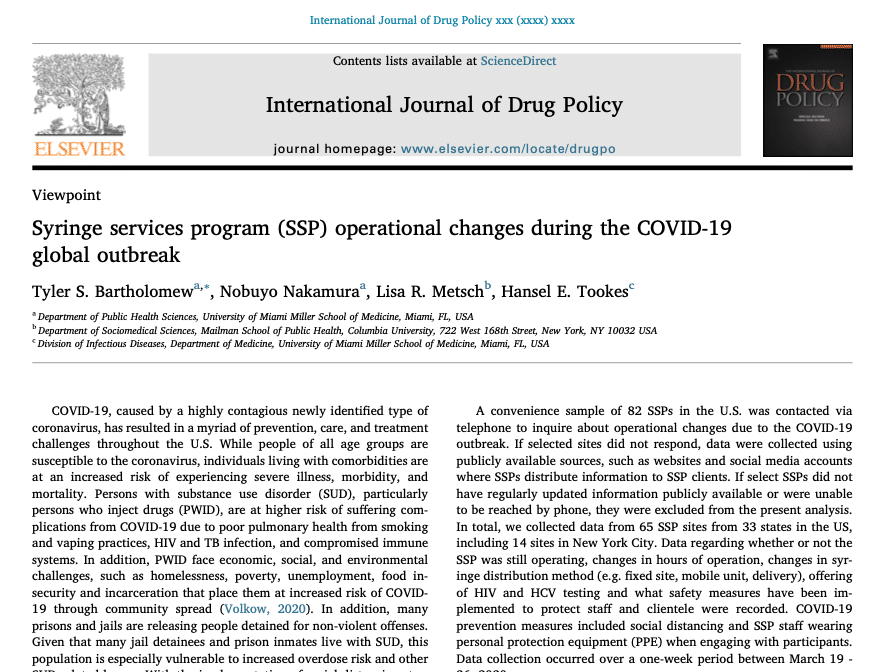
“Syringe services program (SSP) operational changes during the COVID-19 global outbreak. Syringe services programs (SSPs) are community-based programs that offer tailored social and medical services to PWID, including access to sterile and clean injection equipment, onsite and referrals to sub- stance use treatment, HIV and Hepatitis C (HCV) testing, and overdose prevention through naloxone distribution. Currently, there are over 400 SSP locations across the United States (US) providing life-saving care to PWID. However, with the unprecedented developments regarding COVID-19, service delivery may be severely disrupted, and operational changes may be imperative to protect SSP staff and to ensure continuity of services. We provide preliminary data regarding SSP operational and service delivery changes during the US’ response to the COVID-19 global pandemic and provide key policy and service provision im- plications for SSPs.”

chiefs of police call for decriminalization, chiefs of police call for decriminalization
Yesterday, the Canadian Association of Chiefs of Police (CACP) released a report calling for an end to the criminalization of simple drug possession (i.e. possession for personal use). Police chiefs across the country “agree the evidence suggests, and numerous Canadian health leaders support, decriminalization for simple possession as an effective way to reduce the public health and public safety harms associated with substance use.” The report affirms that a “compelling case” has been made for “transformative change” to Canada’s current approach to drug possession. We welcome this important acknowledgement by law enforcement and urge the federal government to decriminalize now.
Support for change is growing. Public health experts and civil society organizations across the country have long called for drug decriminalization. Now the CACP has publicly added its voice to the call to end the criminalization of simple possession. The way forward is clear: We need full decriminalization that leaves behind any and all criminal sanctions and other penalties for the offence of possession.
Our current system of criminalization causes myriad harms to public health and to racialized communities, including the over policing and prosecution of Black and Indigenous communities. Criminalization is rooted in, and also drives, stigma and racism. This is wrong and must end.
In Canada, there is a simple and immediate remedy to the harms of punitive drug policy. Federal Minister of Health Patty Hajdu can effectively decriminalize simple drug possession by granting a nation-wide exemption from this offence under section 56 of the Controlled Drugs and Substances Act. There is no need, nor any excuse, for delay, particularly amid unprecedented overdose deaths. We call for greater investment in health services, including culturally sensitive harm reduction and treatment options, and for action to ensure a safer supply of drugs than the toxic illegal market. But these measures must happen in addition to — not instead of — immediate decriminalization. We can and must remove all penalties, whether criminal, administrative, or other, for simple drug possession now.

physical distancing for people who use drugs, physical distancing for people who use drugs
Click HERE for more resources
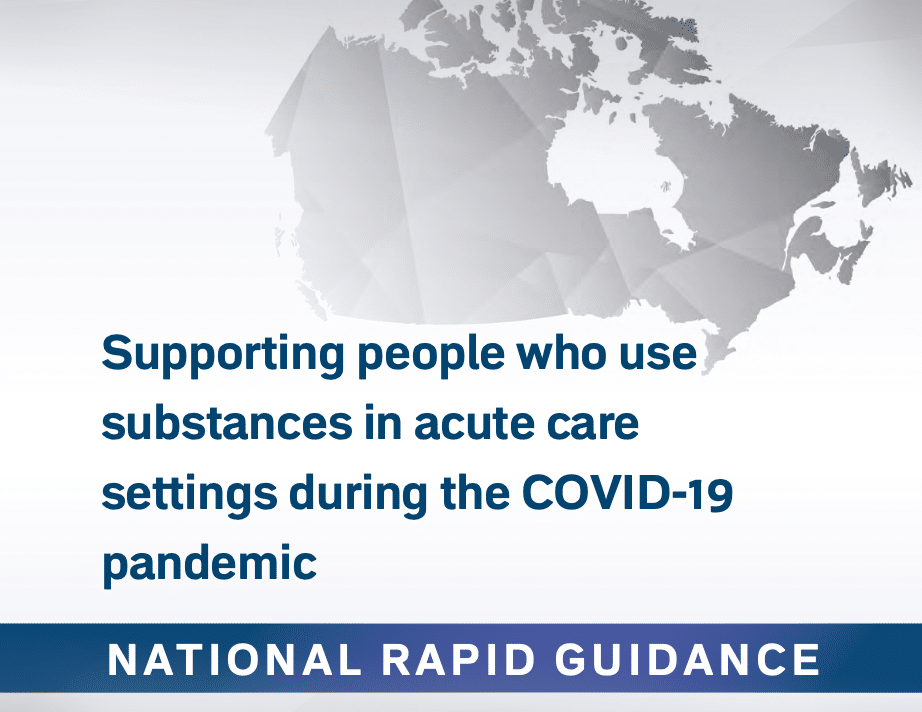
“This document is one in a series of six national guidance documents, developed rapidly by the CRISM network at the request of the Government of Canada. Collectively, the six documents address urgent needs of people who use substances, service providers, and decision makers in relation to the COVID-19 pandemic. The urgent nature of this work required rapid development and dissemination of this guidance. This, and the continuing evolution of the knowledge base regarding COVID-19, precluded CRISM from conducting a comprehensive review of the relevant literature. However, a significant number of works were consulted in drafting this guidance; a list of works consulted is provided in Appendix 1: Works Consulted on page 31.
The guidance provided in this document is subject to change as new information becomes available. Readers should note that the intent of this document is to provide general guidance rather than detailed procedural and logistical advice. Readers are advised to consult local public health and medical authorities for specific input on navigating their own unique regulatory and policy environments, as necessary.”
Source: CRISM

supporting people who use drugs in acute care, supporting people who use drugs in acute care
Click HERE for more resources
“This document is one of a series of six national guidance documents, rapidly developed by the CRISM network at the request of the Government of Canada. Collectively, the six documents address urgent needs of people who use drugs, service providers, and decision makers in relation to the COVID-19 pandemic. The urgent nature of this work required rapid development and dissemination of this guidance. This, and the continuing evolution of the knowledge base regarding COVID-19, precluded CRISM from conducting a comprehensive review of the relevant literature. However, when available, scientific evidence is cited in support of the expert advice offered herein.
The guidance provided in this document is subject to change as new information becomes available. Readers should note that the intent of this document is to provide general guidance rather than detailed procedural and logistical advice. Readers are advised to consult local Public Health and medical authorities for specific input on navigating their own unique regulatory and policy environments, as necessary.”
Source: CRISM

Bill 22 letter, bill 22 letter
We write with urgency regarding Bill 22 – 2020: Mental Health Amendment Act, introduced in the Legislative Assembly of BC last week and scheduled for second reading on July 6, 2020. As BC-based organizations whose mandates include furthering evidence-based drug policy and ending the harms of drug prohibition, Pivot Legal Society and the Canadian Drug Policy Coalition (CDPC) urge you to do everything in your power to stop the passage of Bill 22 into law.
Bill 22 directly undermines the public health, safety, and rights of youth who use drugs. It rolls back BC’s progress in responding to the ongoing opioid crisis, particularly during increased public health risks due to COVID-19 that have exacerbated the impact of a poisoned drug supply. As BC’s Chief Coroner already brought to your attention, “there is the potential for serious unintended consequences as a result of [Bill 22’s] legislative amendments, including the potential for an increase in fatalities.” Pivot and CDPC echo this caution and offer additional context for the health harms that Bill 22 would present, if enacted…” [Read More]

reducing COVID-19 transmission in recovery and treatment programs, reducing COVID-19 transmission in recovery and treatment programs
Click HERE for more resources
“This document is one in a series of six national guidance documents, developed rapidly by the CRISM network at the request of the Government of Canada. Collectively, the six documents address urgent needs of people who use substances, service providers, and decision makers in relation to the COVID-19 pandemic. The urgent nature of this work required rapid development and dissemination of this guidance. This, and the continuing evolution of the knowledge base regarding COVID-19, precluded CRISM from conducting a comprehensive review of the relevant literature.
The guidance provided in this document is subject to change as new information becomes available. Readers should note that the intent of this document is to provide general guidance rather than detailed procedural and logistical advice. Readers are advised to consult local public health and medical authorities for specific input on navigating their own unique regulatory and policy environments, as necessary.”
Source: CRISM

telemedicine support for addiction services, telemedicine support for addiction services
Click HERE for more resources
“This document is one of a series of six national guidance documents, rapidly developed by the CRISM network at the request of the Government of Canada. Collectively, the six documents address urgent needs of people who use substances, service providers, and decision makers in relation to the COVID-19 pandemic. The urgent nature of this work required rapid development and dissemination of this guidance. This, and the continuing evolution of the knowledge base regarding COVID-19, precluded CRISM from conducting a comprehensive review of the relevant literature. However, when available, scientific evidence is cited in support of the expert advice offered herein.
The guidance provided in this document is subject to change as new information becomes available. Readers should note that the intent of this document is to provide general guidance rather than detailed procedural and logistical advice. Readers are advised to consult local public health and medical authorities for specific input on navigating their own unique regulatory and policy environments, as necessary.”
Source: CRISM

CCSA case study, CCSA case study
Click HERE for more resources
“Canada is facing an urgent challenge to reduce the harms associated
with the problematic use of opioids. More than 14,700 lives were lost to deaths apparently related to opioids between January 2016 and September 2019. During that same period, there were 19,490 hospitalizations for poisoning related opioid to opioids (Special Advisory Committee on the Epidemic of Opioid Overdoses, 2019). The COVID-19 pandemic compounds this ongoing public health crisis. There is a heightened need to reduce avoidable pressures on healthcare systems and support people who use opioids who may be at increased risk or unable to self-isolate during the pandemic.”
Source: Canadian Centre on Substance Use