Author: Donald MacPherson

  • Taking Control: Pathways to Drug Policies that Work

    Taking Control: Pathways to Drug Policies that Work

    Today, the Global Commission on Drug Policy releases Taking Control: Pathways to Drug Policies that Work. The report calls on governments to rethink global drug policy, to take some immediate measures to address drug problems, and not to shy away from the transformative potential of responsible regulation as a longer term solution.

    The recommendations come at a time when more and more governments are recognizing the conventional “war on drugs” approach is a failure, and that new approaches are necessary. As part of this recognition, the UN General Assembly has called for a Special Session (UNGASS) in 2016 to discuss solutions to the global drug problem. At UNGASS and other diplomatic gatherings, this report encourages UN delegates to recall the mandate of the United Nations, not least to ensure security, human rights and development.

    Members of the Commission include, former Brazilian President Fernando Henrique Cardoso, former Mexican President Ernesto Zedillo, former Colombian President César Gaviria, former Swiss President Ruth Dreifuss, Richard Branson and others. As part of the release, the Commissioners are meeting with UN Secretary General Ban Ki-Moon and UN Deputy Secretary General Jan Eliasson to present the recommendations in the report.

    Their recommendations are as follows:

    • Putting health and community safety first requires a fundamental reorientation of policy priorities and resources, from failed punitive enforcement to proven health and social interventions.
    • Ensure equitable access to essential medicines, in particular opiate- based medications for pain.
    • Stop criminalizing people for drug use and possession – and stop imposing “compulsory treatment” on people whose only offense is drug use or possession.
    • Rely on alternatives to incarceration for non-violent, low-level participants in illicit drug markets such as farmers, couriers and others involved in the production, transport and sale of illicit drugs.
    • Focus on reducing the power of criminal organizations as well as the violence and insecurity that result from their competition with both one another and the state.
    • Allow and encourage diverse experiments in legally regulating markets in currently illicit drugs, beginning with but not limited to cannabis, coca leaf and certain novel psychoactive substances.
    • Take advantage of the opportunity presented by the upcoming UNGASS in 2016 to reform the global drug policy regime.

    You can view the entire report here.

  • Preventing music-festival drug deaths must go beyond saying ‘just say no’

    Preventing music-festival drug deaths must go beyond saying ‘just say no’

    This article first appeared as an op-ed in the National Post, August 20, 2014

    It’s summertime, so we can count on this unfortunate fact: Young Canadians will die or become seriously ill because of drug use at music festivals. Earlier this month, three deaths and dozens of cases of illness were attributed to drugs at the VELD festival in Ontario and Boonstock in BC. And the resurgence of large-scale, camp-out music events — especially EDM (electronic dance music) festivals — means these incidents will only become more common.

    The conventional response to these tragedies is predictable and ineffective. We tend to blame the individuals for making bad choices and trumpet the “just say no to drugs” mantra.

    But there’s a better way. For starters, we need to acknowledge that drug use is not going away. Which isn’t to say we should condone it or encourage it. However, it’s naïve to think that we can eliminate drug use at music festivals, or anywhere, for that matter.

    So let’s make it safer. The world is full of instructive solutions to the problems we face: Canadian youth are not unique in supplementing their partying with psychoactive substances. In the Netherlands, Switzerland, Portugal, Colombia, Spain and Austria, authorities have developed “safer parties” strategies to help concert-goers determine if the pills they are about to ingest are as advertised.

    In Austria, for example, ChEckiT project workers attend large music events and offer professional drug testing for purity and accurate labelling, which provides results within 30 minutes. It’s part of an integrated drug-checking service that includes information, individual counselling, crisis intervention, group discussions, telephone hotlines, and educational videos on drug-related themes. Colombian NGO Accion Tecnica Social has initiated a similar program in that country.

    Other countries provide continuously available street-level testing facilities. One example is the Dutch Ministry of Health’s Drug Information Monitoring System (DIMS), which began in 1988 with testing ecstasy at raves. Today, people can drop off their substances for analysis at a DIMS office, and then check on the internet a couple of days later for results. This system also gives authorities a real-time assessment of drug market trends, enabling general warnings to the community at large when warranted. Here in Canada, only police seizures and hospital visits give us that data, at which point it’s usually too late.

    None of these programs serve to endorse drug use. But they do send clear messages to young people that society actually cares about their wellbeing. Their fate doesn’t need to be conceded to the vagaries of an unregulated, potentially unsafe black market.

    Unfortunately, we don’t send these messages in Canada. Beyond broad platitudes about education and awareness, the concrete measures taken are primarily reactive rather than preventative. Public officials and police will wring their hands, warn people not to take drugs and perhaps step up attempts to go after the dealers. Event promoters will increase screening at the gate, bring in more emergency responders, and establish “chill-out tents” for those who need a break.

    All of which is perfectly worthwhile and laudable, but in the meantime, young people will die because no one in authority is willing to consider product safety as a potential solution to music festival deaths.

    Product testing isn’t complicated. It wouldn’t require any major legislation overhaul, and public-health workers could partner with existing grassroots organizations active in the space to carry it out. For example, the Toronto Raver Information Project (TRIP) already provides info and supplies around safer drug use for the perpetual cohort of partyers for whom simply “saying no” is not a realistic goal. ANKORS does similar work — including some rudimentary product testing — at B.C.’s Shambhala festival. Outside of the events themselves, police could more regularly disclose Health Canada results of the contents of substances seized at raves. Currently, they only do so in exceptional circumstances when it suits their purposes.

    Whatever the test results, however, we know from constant warnings of police and others that no drug is made safer when left in the hands of organized criminals and unregulated dealers. So as part of a product-safety regimen, we should also open a discussion about alternatives to across-the-board prohibition, like experimenting with a legal regulated market for party drugs — as New Zealand has done.

    Product testing and drug policy experimentation isn’t the same as creating a free-for-all where all drugs are available in any corner store for whoever wants them. Nor would it minimize the importance of health information and drug education and awareness programs — similar to how we approach tobacco and our favourite party drug, alcohol.

    It is simply the recognition that we have the power and knowledge to prevent unnecessary deaths at music festivals and anywhere else drugs are taken. What is holding us back?

  • Cannabis, Cannabis Everywhere

    Cannabis, Cannabis Everywhere

    It’s a busy time for all things cannabis. Easily the most high profile developments are the legalization of recreational use in Colorado and Washington in the US. That paved the way for a widely heralded New York Times editorial that proclaimed unequivocally: “The federal government should repeal the ban on marijuana.” This coming November, legalization will be on the ballot in Alaska, Oregon, and Washington D.C.

    All of which has Mexican president Enrique Pena Nieto musing about liberalizing cannabis laws so that his country keeps pace with developments in the US. This comes after he and the presidents of Colombia, Costa Rica, and Guatemala persuaded the UN General Assembly to convene a special session (UNGASS) to explore alternatives to the failed war on drugs — in Mexico alone, an estimated 100,000 have died or disappeared in drug-related violence. Further south, delays in Uruguay’s roll-out of a legal, regulated cannabis market are putting that plan into question.

    Here in Canada, April 1 brought new medical cannabis laws that are confusing and now stalled by a court injunction. Nevertheless, the federal government projects that this industry will be worth $1.3 billion in 10 years. So it’s no surprise that entrepreneurs across the country are jockeying to get in on the action; applying for licences, building greenhouses, and repurposing vacant industrial space — like an old chocolate factory outside Ottawa.

    The government is also looking at changes to the Controlled Drugs and Substances Act that would make it possible for police to issues tickets for possession of small amounts of cannabis, instead of laying charges. It could be a positive step, but the risk is that if it’s easier for police to process minor cannabis offences, individual officers might stop using case-by-case discretion and instead formally record all minor offenses.

    Regardless, it’s a pretty timid move compared to what’s happening elsewhere in the Americas — particularly given how many Canadians don’t think possession should warrant any police attention whatsoever. Even the government’s own polling shows that over 70 percent of Canadians think cannabis should be legalized or decriminalized. No matter… Conservatives seem to have set their sights on the remaining 30 percent, denouncing Liberal leader Justin Trudeau’s pro-legalization stance and going so far as to claim he wants schoolchildren buying pot in convenience stores.

    To top it all off, anti-legalization Americans who don’t like what they’re seeing in their own country have inserted themselves into the Canadian conversation, helping launch a Canadian branch of Smart Approaches to Marijuana. It remains to be seen whether Canadians will buy their version of prohibition-lite — i.e. allowing for some degree of decriminalization, but maintaining that cannabis is a public health menace.

    So what’s next? Will Trudeau stand by his support for legalization come election time? How will the national debate be impacted by the return to Canada of Marc Emery — arguably Canada’s most famous pot crusader? What initiatives can we expect to see from Sensible BC, NORML Canada and other cannabis interest groups?

    Clearly there’s an emerging conversation in Canada, and a big year coming up.

    For our part, we intend to be at the forefront of that conversation. So here’s what we have planned:

    Medical Cannabis forum in Mexico City – Sept. 22-23. 2014

    As part of our International Program, CDPC is supporting efforts in Mexico to introduce medical cannabis in that country. In September we’re partnering with several Mexican organizations to co-sponsor a Medical Cannabis forum in Mexico City. Experts from the US and Canada will convene in two meetings, one sponsored by the Senate of Mexico — which is deliberating a bill to legalize medical cannabis — and a second meeting at the National Autonomous University of Mexico (UNAM) to discuss the state of medical cannabis research in the three countries.

    Cannabis Policy Brief – Fall 2014

    We’re currently working on a policy brief that will outline what it could look like to regulate cannabis through a public health framework. It will cover the history of cannabis prohibition, the potential health harms, and the key social and health harms relating to cannabis policy, followed by an examination of the regulatory mechanisms that could balance the health impacts of cannabis with the rights of consumers and the pursuit of profit by commercial interests.

    UNGASS – Ongoing

    All off this is leading up to the UNGASS session in 2016. UNGASS is a special meeting of UN member states to discuss major global issues like health, gender, the status of children, etc. The focus of 2016 will be the world’s drug control priorities, and we expect it to precipitate a new approach to drug policy – either through the development of a more progressive global consensus, or, more likely, because it will shatter the distorted idea that a global consensus is possible.

    In the build-up to UNGASS, we’ll be asking “what’s Canada’s role in the world?” Will we line up with the old guard? People like the former president of the UN’s International Narcotics Control Board, who accused Uruguay of demonstrating “pirate attitudes” for proposing cannabis legalization? Or will we side with forward looking reformers who feel countries should be free to craft drug policy — regarding cannabis and otherwise — that reflects national attitudes and interests? Our job will be to make sure it’s the latter.

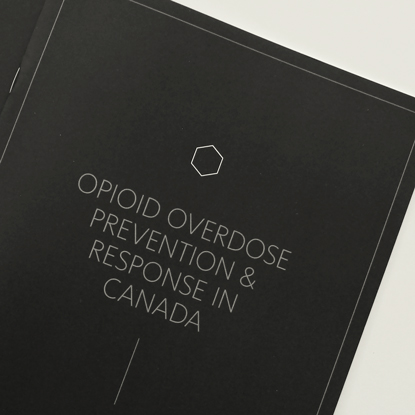
  • It’s easy and it saves lives: Opioid overdose prevention & response in Canada

    It’s easy and it saves lives: Opioid overdose prevention & response in Canada

    In 2013, 308 people lost their lives due to illicit drug overdoses in BC alone. The worst part? Drug-related deaths from opiate overdose are entirely preventable.

    And not in the sense that “well if people didn’t use drugs… there wouldn’t be overdoses.” Because while that’s essentially true, we know that people will use drugs. One hundred years of prohibiting drugs and arresting and incarcerating people who sell and use drugs hasn’t stopped that.

    We need to be realistic and practical. Drug use does happen and it will happen. So let’s get on with preventing deaths and injuries from drug overdose. Here at the Canadian Drug Policy Coalition, we’ve worked with experts across the country to come up with set of policy changes that can save lives and make Canada safer for all.

    Click here to download: Opioid overdose prevention & response in Canada

    While putting together this brief, we met many dedicated, compassionate people who work in frontline overdose prevention programs across Canada. One of the most pragmatic and effective interventions to prevent overdose injury and death is the “take-away naloxone program.” Based on 180 similar initiatives in the US, the program involves distributing overdose response kits – dubbed take-home-naloxone kits – to people who have been trained to prevent, recognize and respond to an overdose. Naloxone is a 40-year old medication that when administered during an opiate overdose reverses the effects of the drug. It has no narcotic effect and people cannot become dependent on this drug.

    Streetworks in Edmonton pioneered this initiative in Canada and similar programs have spread throughout Canada. The country’s most robust overdose program – “take-home naloxone” (THN) – can be found at British Columbia’s Centre for Disease Control’s (BCCDC) harm reduction resource Toward the Heart.

    Through a series of participating organizations throughout BC, the naloxone program operates in 35 sites, from large urban hubs such as Vancouver and Surrey, to smaller rural centres such as Cranbrook, Campbell River and Fort St. John. Nearly 1000 people have been trained including staff and volunteers at health and social service agencies, as well as friends and family members of people who use drugs. Over 600 kits have been dispensed to clients who use opioids and various resource materials are being developed to assist community partners to increase the reach of the program. Since its origins in 2012, 55 overdoses have been reversed.

    While these simple yet effective initiatives are demonstrably preventing overdoses, significant challenges prevent these programs from being scaled up. Naloxone remains a prescription-only medication, and it’s costly and not covered by provincial drug plans. An even more significant challenge is the lack of a national Good Samaritan law, one that prevents people from being arrested and charged with drug possession if they call for help during an emergency. Eleven US states have passed Good Samaritan laws, often with bipartisan support from legislators.

    Our hope is that this policy brief will help support efforts to clear away the barriers blocking overdose programs. That’s the most realistic way to prevent drug-related deaths from opiate overdose.

    For more information, read the full policy brief, here.

  • A gift to the drug kingpins: and the need for a North American Drug Policy Agreement

    A gift to the drug kingpins: and the need for a North American Drug Policy Agreement

    This article first appeared as an op-ed in the National Post, April 21, 2014

    We know the stories. Hockey bags that go south full of B.C. bud and return full of Latin American cocaine. Elaborate underground tunnels at both the U.S.-Mexico and U.S.-Canada borders. Canadian mobsters being gunned down in Mexican resort towns. Unlikely Mennonite drug mules crossing North America’s borders with illicit packages concealed in gas tanks and old farm equipment.

    It’s easy to think it’s always been this way, but the reality is we can thank the North American Free Trade Agreement (NAFTA) for much of this activity. So this year, while business leaders and politicians fete the 20th anniversary of NAFTA, drug runners and cartels will be doing the same.

    It shouldn’t come as a surprise. Free traders wax poetically about the interconnected, globalized economy, and the whole point of NAFTA was to strengthen the economic integration of Canada, the U.S. and Mexico by reducing trade barriers.

    How’s this for economic integration, then? Access to legal, regulated medical marijuana in Canada and the U.S. has reduced black market demand across the continent. This phenomenon will become more pronounced with the recent legalization of recreational marijuana in Colorado and Washington, and more states to come. It’s worth noting too that concerns over drug gangs generally, but Canadian gangs in particular, were a key reason Washington voters supported legalization in that state. Regardless, marijuana farmers in Mexico have responded to decreased black market demand by shifting to poppy cultivation. This has resulted in a surge of cheap heroin availability at a time when heroin use is increasing in both the U.S. and Canada.

    Yet despite the predictability of this kind of domino effect in a continental economy, then-U.S. president Bill Clinton forbade U.S. negotiators from discussing the illegal drug trade in NAFTA talks. Years later, U.S. Drug Enforcement Administration official Phil Jordan revealed: “We were prohibited from discussing the effects of NAFTA as it related to narcotics trafficking, yes.” As a result, “For the godfathers of the drug trade in Colombia and Mexico, this was a deal made in narco heaven.”

    Indeed. NAFTA brought a proliferation of maquiladoras — companies operating in duty-free free-trade zones— to the north of Mexico and a massive increase in cross-border commercial traffic. In other words, freer movement of goods in a continent that represents “the world’s largest illicit drug market” according to the UN Office on Drugs and Crime. NAFTA also brought an influx of cheap, subsidized U.S. crops — including corn, soybeans, wheat, cotton and rice — resulting in the collapse of northern Mexico’s agricultural sector. Some farmers shifted to marijuana, which is 1,000 times more lucrative than corn, pound for pound. The rest were in need of work.

    Basically, NAFTA helped create ideal conditions for the rise of a lucrative cross-border drug and gun trade.

    Governments responded by escalating the war on drugs, with devastating impacts on citizens and their communities throughout North America. An estimated 100,000 Mexicans have died or disappeared in drug-related violence, and the U.S. has the highest prison population in the world with over 2 million citizens behind bars. Of these, roughly 500,000 Americans are incarcerated on any given night for a drug law violation. At the same time, death from overdose and HIV/AIDS among injection drug users has taken thousands of lives in the U.S. and Canada. Add to all of that the pain of the families of those directly affected and the communities that have suffered these losses.

    Twenty years after NAFTA’s signing, it’s time to finally acknowledge the drug market is a part of our integrated economy. In turn, we need to negotiate a modern, 21st century drug policy that addresses the health and safety issues across the region and undermines the illegal profiteers.

    The good news is, there’s cause for optimism. The Organization of American States in particular is providing refreshing leadership through member states like Mexico, Colombia and Guatemala calling for a discussion about alternative approaches to the enforcement-heavy war on drugs. And some jurisdictions are implementing bold new paradigms on their own. Similar to the moves in Colorado and Washington, Uruguay became the first country in the world to authorize a legal, regulated market for adult cannabis use.

    The current overemphasis on criminal justice approaches to drug control in North America has sidelined a variety of programs that can minimize the harms related to the drug trade and substance use, including public health promotion and prevention programs. It has also curbed economic and social advancement for drug-producing countries.

    A North American Drug Policy Agreement could serve as a powerful statement of shared responsibility in addressing the trans-national drug problem. Such an agreement should include provisions for the consuming countries (U.S. and Canada) to reduce demand through social development and improved access to health responses. But it should also map out a legal, regulatory control framework for drugs that are currently illicit. This would reduce the violence within the drug trade, and all of the other prohibition-related harms that are far more destructive to communities and countries than substance use itself.

    Yes, it would mark a departure from 40 years of restrictive, prohibitionist policies, but as Stephen Harper himself has noted, “the current approach is not working.” It’s time to try something else.
  • Harm Reduction Comes of Age in Canada, or Does It?

    Harm Reduction Comes of Age in Canada, or Does It?

    This post first appeared in the Centre for Addictions Research of BC’s blog Matters of Substance.

    The Supreme Court of Canada’s September 2011 decision allowing Vancouver’s supervised injection site, Insite, to keep operating was a critical milestone for harm reduction in Canada.

    One only has to look at the list of interveners in the case in support of this innovative service to see that it has become a valued and mainstream service in Canada. Canadian health organizations including the Canadian Medical Association, Canadian Nurses Association, Canadian Public Health Association and 11 others saw fit to come before the court to support Insite. But even with this high level of support, scaling up harm-reduction services in Canada remains a challenge.

    Harm reduction gained traction as a result of the HIV/AIDS crisis in the early 1980s and played a critical role as a strategy to engage injection-drug users in HIV prevention. Harm reduction’s more recent challenges have elevated the critique of policy-related harms – harm caused by policies that criminalize people who use illegal drugs.

    Harm reduction acknowledges that there are significant risks associated with illegal drugs and also attempts to work towards mitigating harms within the criminalized environment where drug use occurs. This often puts the public-health goals of engaging people who use drugs in conflict with traditional public-safety strategies that rely on disruption of illegal drug markets, and in turn disruption of the lives of people who use illegal substances.  Harm-reduction approaches balance these realities and focus on creating safer environments as much as possible within a context of criminalization. Some examples include promoting supervision of consumption or discouraging using drugs while alone, promoting rapid response strategies in the form of peer-delivered naloxone programs and strategies that work towards achieving a kind of détente between health efforts and enforcement practices. Given the context of criminalization, a key goal of harm reduction is to maximize the benefits of public-health interventions and minimize the harm of drug use and the enforcement of drug policy.

    So what should Canada be doing to facilitate the development of a more robust harm reduction approach as a part of a comprehensive response to drug use? We urge governments to begin with a review of current drug policies to determine the benefits and harms to individuals and communities that accrue from the criminalization of drugs and the people who use them.

    Other countries have done such an analysis and have decided to eliminate criminalization as a response to possession of drugs for personal use in an effort to maximize the benefit of a public-health approach to drug problems. Portugal (2001) and the Czech Republic (2009), are two examples of jurisdictions that have taken this step. Both have decriminalized all drugs that are deemed to be for personal use. Portugal decriminalized drugs as part of a response to an HIV epidemic and high rates of drug overdose. The Czech Republic did the same as a result of an extensive evaluation of the previous policy of criminalization. Evaluation of the experience in Portugal has shown that results have been positive overall – HIV incidence and overdose deaths have been reduced, police are supportive of the new law as it has given them more meaningful and helpful involvement in steering individuals towards health services, more people are accessing treatment and other health services which were improved as a part of the decriminalization policy. Additionally no negative trends have been seen in terms of increased harms attributed to this policy change.

    Achieving a policy shift as significant as decriminalization will take some time. In the meantime, the Canadian Drug Policy Report, Getting to Tomorrow, outlines some possibilities for improving the development of harm reduction in Canada in the short term:

    • Acknowledge that harm reduction is much more than supply distribution and is an essential component of a comprehensive public health response to problematic substance use that offers client-centred strategies with health engagement at their core.
    • Acknowledge that harm reduction values the human rights of people who use drugs and affirms that they are the primary agents of change for reducing the harms of their drug use.
    • Provincial governments can commit to articulating harm reduction strategies across mental health, addictions and infectious disease policy frameworks.
    • Where harm reduction language is present within policy frameworks ensure implementation at the community level.
    • Support innovation at all levels. An ethic of experimentation will help create an environment where new ideas and novel approaches can be developed and explored.
    • Provide leadership to bring health and policing agencies together to get “on the same page” with regard to harm reduction. Opposition by some in the policing community is unfortunate and an unnecessary barrier to scaling up harm reduction programs.

    Developing a robust and equitable harm-reduction approach for Canadians will necessitate new thinking about old strategies — thinking that exposes the harms that flow directly from our current policy frameworks and will open the door to new ideas and approaches that are emerging around the world.

  • The Road to 2016 – Drug Policy Consensus Shattered

    The Road to 2016 – Drug Policy Consensus Shattered

    There’s a Crack in Everything – That’s How the Light Gets In (with thanks to Leonard Cohen)

    I couldn’t help it. Sometimes my mind would wander while attending the Commission on Narcotic Drugs (CND) meeting in Vienna – the annual drug policy palooza where UN member states gather to shore up the failed prohibitionist policies of the past. Even an unanticipated Russell Brand appearance could do only so much to enliven the sessions.

    In those mind-wandering moments, I found myself humming Leonard Cohen’s famous song “Anthem,” especially the beautiful line: “There’s a crack in everything, that’s how the light gets in.”

    I suppose my mind wasn’t so much wandering, as it was synthesizing the stark disconnect between the evidence presented at the outset of the meeting – in fact, the science at the heart of the enterprise – and the actual decisions arrived at by CND delegates.

    There is unquestionably a crack in the consensus in these global discussions, a crack that may well end up being a chasm as wide as the Grand Canyon by the time the UN Special Session on Drugs (UNGASS) takes place in 2016 in New York.

    Decriminalization

    As for the light, that came in part from the two stellar UN-appointed scientific panels that reported out at the beginning of the meeting. Michel Kazatchkine, UN Envoy to Eastern Europe and Asia on HIV, and Nora Volkow, Director of the US National Institute on Drug Abuse, chaired panels that delivered strong statements on the need for problematic drug use to be dealt with as a public health issue not a criminal issue. Kazatchkine’s group noted: “Criminalization of drug use, restrictive drug policies and aggressive law enforcement practices are key drivers of HIV and Hepatitis C epidemics.” Volkow’s group added: “We consider that criminal sanctions are not beneficial in addressing substance use disorders and discourage their use.”

    The divide between the above statements and the content of the negotiations at the CND was vast – the overwhelming majority of delegates clung to the status quo and refused to even consider language on decriminalization. Clearly we’ve made very little progress since Portugal (2001) and the Czech Republic (2009) decriminalized all drugs for personal use, on their own without fanfare or bringing it up at the CND.

    Harm Reduction

    In a somewhat Orwellian turn of language control, a number of countries including Canada demanded the words ‘harm’ and ‘reduction’ not appear side by side, but they could endorse “measures aimed at minimizing the negative public health and social impacts of drug abuse that are outlined in the WHO, UNODC, UNAIDS Technical Guide.”

    Harm reduction, in other words.

    These programs are the most cost effective way to engage people who use drugs and often the only bridge to more mainstream public health services. The scientific panel offered clear statements on the benefits and cost-effectiveness: “Harm reduction interventions are good value for money, with average costs per HIV infection averted ranging from $100 to $1,000.”

    Apparently scientists can use the words, but not the members of the CND.

    Death Penalty

    Switzerland, with support from others, pushed hard at the meeting for the Joint Ministerial Statement to clearly state the death penalty was not an appropriate response to drug offenses of any kind. In the end they failed, being blocked by countries like Iran, China and a number of other Middle Eastern and Asian countries. Canada’s silence on this discussion was deafening.

    The Swiss allowed the “consensus” document to go forward but not without delivering the following statement at the end of the meeting:

    “The death penalty is in opposition to our position with regard to all offences. The International Covenant on Civil and Political Rights says that it should only be applied for very serious crimes and therefore very rarely. The human rights committee says we should very much limit the use of the death penalty. The International Narcotics Control Board (INCB) said that its application was never in the spirit of the (drug) conventions. The INCB encourages countries to consider its abolition. In this background, the silence of the Joint Ministerial Statement (JMS) on the death penalty is regrettable. It does not take into account our position and that of other (UN) bodies. We will continue to promote the abolition of the death penalty. We ask that our agreement with the JMS is on this understanding – capital punishment is not in line with our commitment to combat the world drug problem. International cooperation on drug law enforcement is contingent to respect for all human rights – as well as the right to life.”

    2016 UN General Assembly Special Session on Drugs (UNGASS)

    If there’s one thing that we learned while attending the CND it’s that any meaningful consensus on new approaches to addressing drug problems globally will be near impossible to attain when the biggest international drug policy meeting in 20 years – UNGASS 2016 – takes place in two years at the UN General Assembly in New York.

    This meeting was called in response to the pleas from the presidents of Mexico, Colombia and Guatemala a little over a year ago, calling on the UN to facilitate real dialogue on alternative approaches to the global drug problems.

    UNGASS is huge because it will undoubtedly precipitate a new approach to drug policy – either through the development of a more progressive global consensus, or, more likely, because it will shatter the distorted idea that a global consensus is possible.

    Either way, countries should be free to chart their own appropriate path forward to address drug problems, grounded in the public health and human rights imperatives enshrined in various UN conventions, without the shackles of the misguided and restrictive drug control treaties.

    “Ring the bells that still can ring
    Forget your perfect offering
    There is a crack in everything
    That’s how the light gets in.”
    – Leonard Cohen, Anthem

  • Treat drug use as a public health issue, not criminal issue, say UN agencies

    Treat drug use as a public health issue, not criminal issue, say UN agencies

    Criminal activity and drug trafficking. Distressingly, those are dominant discussion points at this week’s annual UN drug policy conference – the Commission on Narcotic Drugs (CND).

    As a result, public health considerations have been somewhat sidelined, but not, thankfully, among UN agencies, where a number of key representatives called for the removal of criminal sanctions associated with drug use, and the realignment of drug use as a public health issue.

    Back in Canada, the federal government is considering changing Canada’s marijuana laws to allow ticketing by police instead of arrest, but Justice Minister Peter MacKay has insisted that even if that’s the case, “Criminal Code offences would still be available to police…. It’s not decriminalization. It’s not legalization.” What’s more, the move could be a step backwards if police begin issuing tickets, where in the past they might have turned a blind eye.

    Regardless, under the current regime, simple cannabis possession charges in Canada numbered 61,406, a rate of 178 per 100,000 people as recently as 2011. This represented a 16% increase of such incidents since 2001. In BC alone, the arrest and prosecution of personal marijuana use costs taxpayers $10.5 million a year.

    Contrast that criminalization framework with comments from UN agencies this week at the CND:

    • UN Deputy Secretary Jan Eliasson tried to set a positive tone early by emphasizing the “public health imperative” in addressing drug use, and called for a “comprehensive and open-minded exchange” that included civil society input and that didn’t shy away from “discussing innovative ideas and perspectives.” He concluded by stressing that it is not enough to say no to drugs, “we are also saying yes… to human rights.”
    • Gilberto Gerra, Chief of Drug Prevention and Health Branch for the UN’s drug control agency (UNODC) insisted that criminal sanctions are ineffective and counter-productive because they do nothing to address problematic drug use. He argued that drug policies should be based on health and not on punishment, and that nowhere do international drug conventions require that personal use should be criminalized.
    •  Two Scientific Working groups convened by the UNODC to advise the CND criticized criminal sanctions and implored delegates to base their policy decisions on science.The first – headed by Nora Volkow (Director of the United States National Institute on Drug Abuse) – insisted that “substance use disorders should be treated as medical and public health issue rather than a criminal justice and/or moral issue.” Imprisonment does not equate with treatment, and the group discouraged the use of “criminal sanctions” given that they “are not beneficial in addressing substance use disorders.”
      The second group – headed by Michel Kazatchkine (UN Secretary General’s Special Envoy on HIV/AIDS for Eastern Europe and Central Asia) – concluded that “we need to stop incarceration of people who use drugs for minor drug related offenses.” Its members highlighted the legal and regulatory impediments to implementing harm reduction initiatives and noted that the “criminalization of drug use, restrictive drug policies and aggressive law enforcement practices are key drivers of HIV and hepatitis C epidemics among people who inject drugs.” Basically, people are dying because they are treated as criminals rather than patients.
    • UNAIDS director Michel Sidibe echoed calls to understand drug use as a public health and human rights issue, stating: “The criminalization of millions of people for minor drug offences exacerbates vulnerability to HIV infection, and does little to protect society from the health and social harms caused by drug dependence.” He added, “We must work towards transforming laws and law enforcement officials to become bridges to connect people who use drugs to life saving health services.”
    • The UN High Commissioner for Human Rights Navi Pillay’s statement drew attention to “the intense focus of law enforcement against drug use” which “has resulted in large numbers of persons being arrested and held in prolonged periods of pre-trial detention for minor drug offences.” She condemned the “so-called ‘treatment’ in such centres” which “is frequently not based on individualized assessment and evidence-based medical practice, but rather in mass treatment with a focus on disciplinary-type interventions.”

    These comments represent a striking scientific consensus on the harm created by the criminalization of drugs and those who use them. Clearly the language of public health is beginning to inform the deliberations at this forum. The real challenge for countries to put teeth into these recommendations by implementing concrete and comprehensive public health approaches to drug related harm.

  • What will Canada contribute to a new global drug policy?

    What will Canada contribute to a new global drug policy?

    Canadians take pride in being viewed favourably on the global stage. And not just for of our scenic landscapes or plucky Olympians, but also because our contributions in the realm of international diplomacy.

    The annual UN Commission on Narcotic Drugs (CND) coming up in Vienna March 13-14, 2014 provides an opportunity to add to that proud legacy. There, the international community will gather to discuss how to improve the global response to problems related to drug use and the drug trade.

    Canada has traditionally played a strong role in these discussions advocating for a broad range of public health approaches and evidence-based enforcement measures against organized criminal groups in the business of producing and selling illegal drugs. Our influence is boosted by the fact that we are a significant financial contributor to UN drug control programs.

    But some international observers are worried about what we’ll say at this year’s CND.

    In a recent Ottawa Citizen op-ed, Michel Kazatchkine, UN Secretary-General’s Special Envoy on HIV/AIDS in Eastern Europe and Central Asia, noted: “Canada has long been a world leader in implementing harm reduction policy when it comes to drug use at home. So it was almost shocking to see it aligning itself to countries such as Russia and China in vocally opposing the inclusion of ‘harm reduction’ in a new a new set of UN principles that will guide talks at the special session in 2016.”

    Kazatchkine went on to describe an alarming upswing in HIV infections in Russia linked to the lack of harm reduction services for people who inject drugs. In fact the Russian government is generally hostile to services like needle exchange and methadone treatment – all of which have been proven to save lives.

    As the former Executive Director of the Global Fund to fight AIDS, Tuberculosis and Malaria, and a member of the Global Commission on Drug Policy, Kazatchkine knows what he’s talking about. In fact, in 2012, the Global Commission raised the alarm about the on-going relationship between repressive drug policies and the spread of HIV. The take home message is simple: refusing to provide basic harm reduction supplies for drug use and criminalizing drug possession, forces people into the shadows where the transmission of HIV is more likely because of the use of shared drug equipment.

    Kazatchkine isn’t the only international voice expressing misgivings about Canada’s position. As reported in a Canadian Medical Association Journal article, at a recent negotiation session leading up to the CND, “Canada once again led the charge” against a UN endorsement for “risk and harm mitigation and reduction measures” according to the International Drug Policy Consortium (IDPC), a UK-based group at the negotiations. In a blog report posted after the session, one IDPC observer stated that Canada was “very vocal throughout” the session and opposed any references to the term, “harm reduction.”

    We don’t know precisely how Canada’s delegation is approaching this year’s CND, but we do have some recommendations we developed in collaboration with the Canadian HIV/AIDS Legal Network.

    Click here to read the entirety of our submission.

    In it, we urge the delegation to emphasize the following points in their discussions with other Member States:

    1. Encourage all countries to adopt a comprehensive public health approach to substance use including decriminalization.
    2. Support countries’ flexibility to experiment with alternative, health-oriented approaches to drug policy.
    3. Respect, protect and promote human rights (in particular voicing objection to torture at drug detention centres, and opposing the death penalty for drug crimes)
    4. Ensure full access to essential medicines
    5. Promote the full engagement of civil society in drug policy discussions
    6. Question the usefulness of the language of striving for a “drug-free world”
    7. Recognize the unique mandate given to the WHO under the 1961 and 1971 Conventions to provide recommendations for scheduling substances.

    Even if our recommendations aren’t adopted at this CND, we have 2 years to continue this conversation leading up to UN General Assembly Special Session (UNGASS) on drugs in 2016. This meeting is a big deal in the world of international drug policy politics and will be a major opportunity to advocate for the failings of the current drug control system. It presents a significant opportunity to shift global strategies towards comprehensive public health responses to address drug problems.

    Canada is well placed to take a leadership role in pushing for this shift. The international community would expect nothing less.